Serving The Wasatch Front Area



Back to Blog
Why Is My AC Not Cooling? Common Causes and Quick Fixes for West Haven, UT, Homeowners
July 6, 2026
Summer heat in West Haven has a way of exposing even the smallest problems with your air conditioner. One day your home feels perfectly comfortable, and the next you’re dealing with weak airflow, warm vents, or an AC system that seems to run endlessly without cooling your home.
So, what causes an air conditioner to stop cooling when it appears to be running normally?
The answer isn’t always obvious, and while some issues have simple fixes, others require prompt attention to prevent more expensive damage.
At Comfort Solutions, we’ve helped Utah homeowners dealing with virtually every possible AC problem under the sun. This guide explains the most common causes, the checks you can safely perform yourself, and when it’s time to seek professional AC repair to restore reliable cooling and comfort.
The Most Common Reasons Your AC Stops Cooling
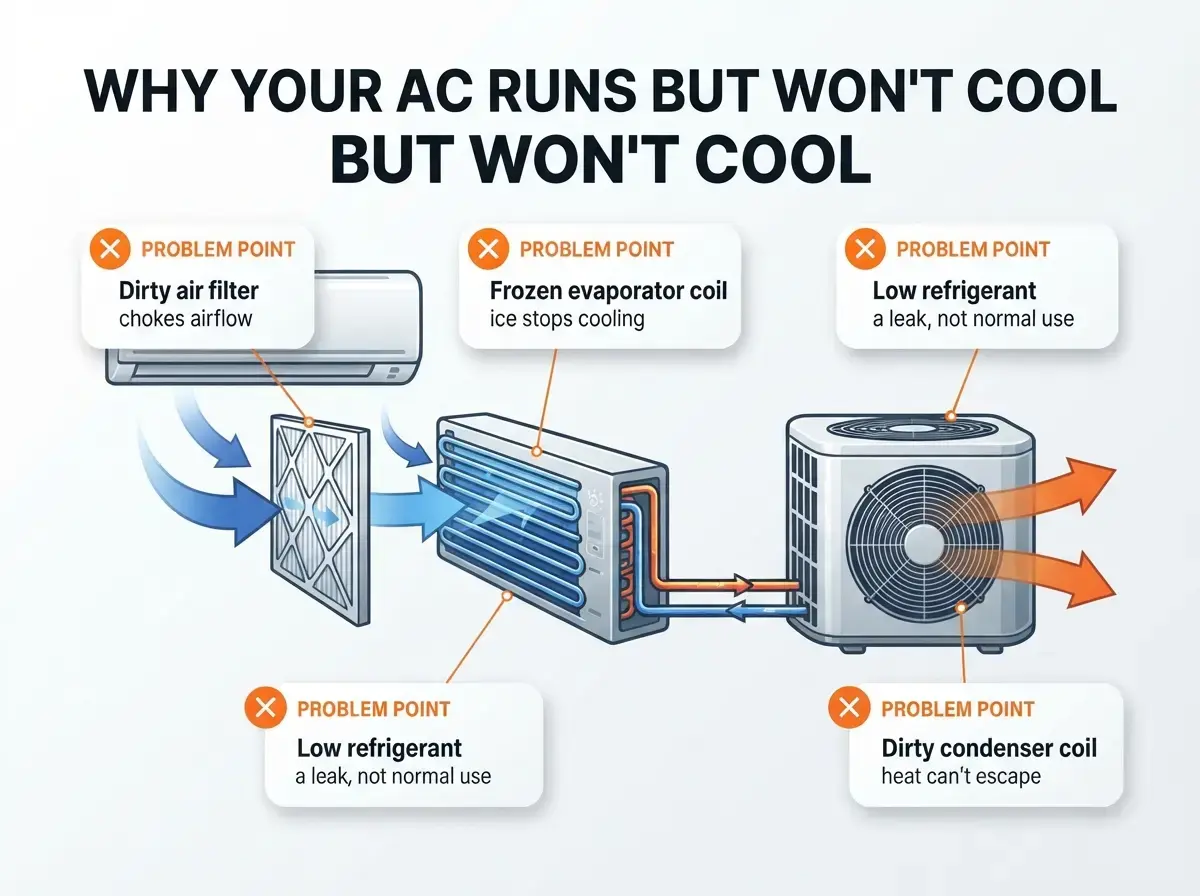
If your system is running but the air coming out feels warm, you’re not alone. It’s a common problem many homeowners experience during the hottest months of the year, and the cause is usually one of a few common issues.
Most AC systems stop cooling because of the same underlying mechanical or airflow problems. Knowing what to look for can help you identify the issue sooner, avoid unnecessary stress, and decide when it’s time to call a professional.
Dirty or Clogged Air Filter
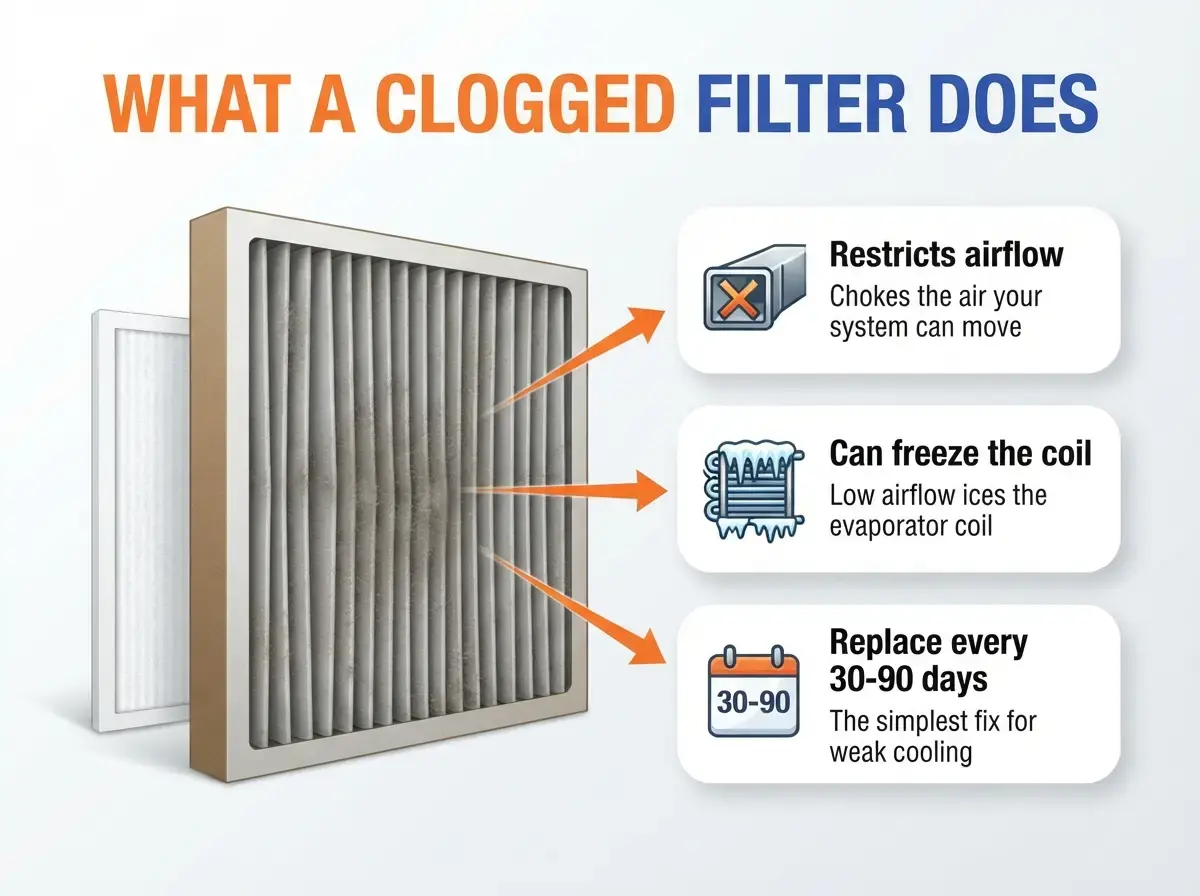
When your AC isn’t cooling effectively, the air filter is the first place you want to check. Dirty air filters create poor airflow, and when they get clogged with dust and debris, they can restrict airflow enough to cause a frozen coil. The result is weak airflow at your vents, causing rooms to stay warm no matter how low you set the thermostat.
A clogged filter also forces your system to run longer without cooling your home effectively, increasing wear on important components and driving up energy costs.
Most filters should be replaced every 30-90 days. If yours looks gray and packed with debris, it may be the only thing preventing you and your household from enjoying cool, comfortable air again.
Frozen Evaporator Coil
A frozen evaporator coil is exactly what it sounds like. When the coil freezes, heat transfer stops completely. Ice builds up on the coil inside your air handler, blocking the heat transfer process entirely. The system keeps running, but no cool air reaches your living space.
You might notice ice forming on the refrigerant lines near the indoor unit, or water pooling around the base of the unit as the ice melts. Reduced airflow from a dirty filter is one of the most common triggers for a frozen evaporator coil, though refrigerant problems can also cause frozen coils, which is why these two problems often show up together. If you see frozen coils, turn off the AC before calling for service.
Low Refrigerant or a Refrigerant Leak
Refrigerant allows your air conditioner to absorb heat from inside your home, and it does not get used up during normal operation. If the charge is low, that always means there is a leak in the system that West Haven AC repair professionals need to locate and fix. Low refrigerant reduces the system’s ability to absorb heat from the air inside, so refrigerant issues often lead to weaker cooling.
Common signs of low refrigerant include ice buildup on refrigerant lines, which may also point to restricted airflow, and warm air from the vents. Low refrigerant can also cause the evaporator coil to freeze. Common signs of low refrigerant include:
- Hissing or bubbling sounds near the indoor or outdoor unit
- Ice forming on the refrigerant lines
- Air from the vents that feels only slightly cooler than room temperature
If you notice any of these signs, the solution is not a DIY repair. Handling refrigerant requires an EPA Section 608 certification, and fixing the problem involves more than simply adding refrigerant. A qualified HVAC technician must locate and repair the leak before recharging the system to the proper level.
Dirty Condenser Coil or Blocked Condenser Unit
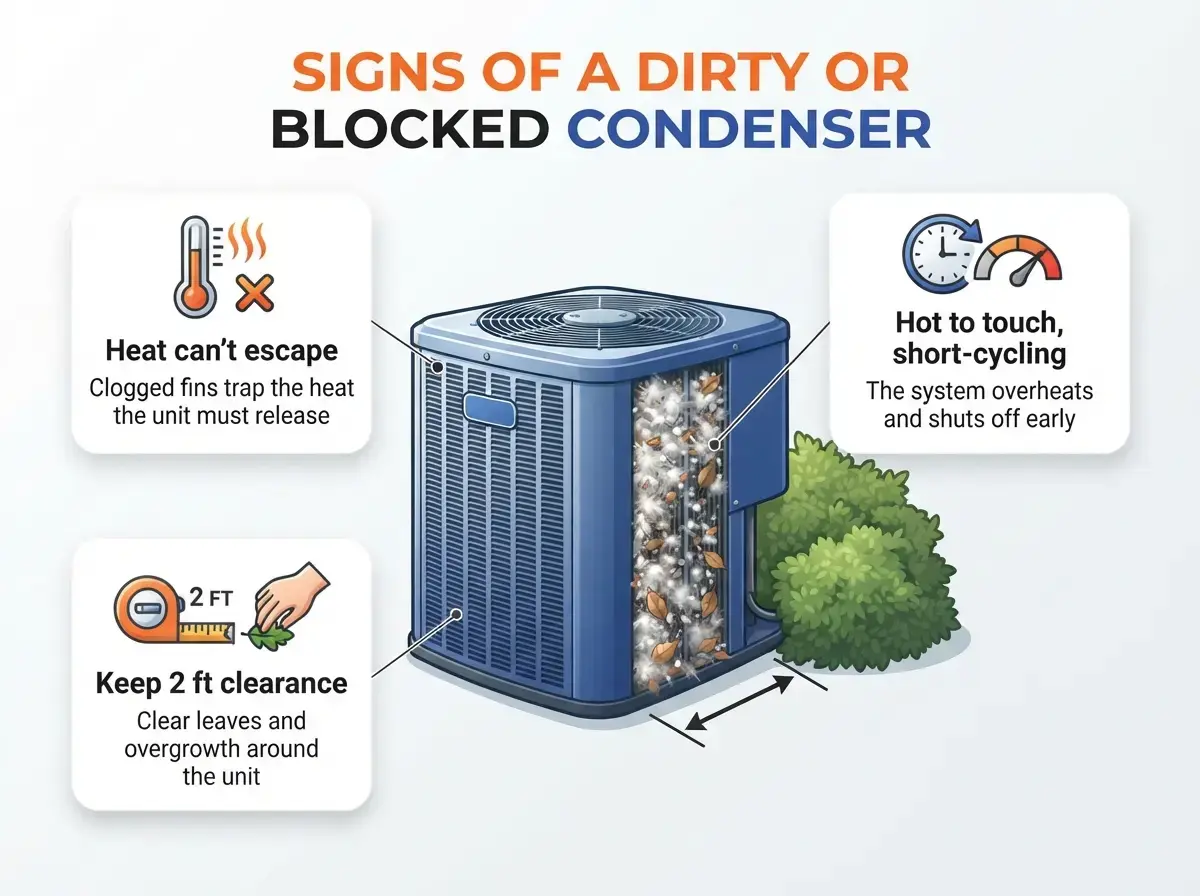
Your outside unit must release heat effectively for the system to cool properly. When the condenser coils get coated in dirt, or the fins get clogged with debris, that heat has nowhere to go. In West Haven’s dry, dusty summers, outdoor units can accumulate buildup faster than homeowners expect.
Signs of a dirty condenser coil include the outdoor unit feeling excessively hot to the touch, the system short-cycling, or warm air blowing from vents despite the unit running. Keeping at least two feet of clearance around the unit and clearing debris around the outdoor unit, since leaves and overgrowth can block airflow and reduce cooling efficiency, can help, but heavy buildup typically needs attention from heating and cooling repair professionals because dirty condenser coils can prevent heat dissipation and make the system overheat and struggle.
READ MORE: Everything You Need to Know About Mold and Air Conditioning
Electrical and Mechanical Failures That Cut Cooling
Not every cooling problem traces back to a dirty filter or a refrigerant leak. Sometimes the air conditioning system fails because an electrical or mechanical component has given out. These failures tend to be less obvious than the causes covered above and often require professional AC repair services in West Haven to diagnose and fix properly.
Tripped Circuit Breaker
Checking the circuit breaker is one of the first things to do before calling a technician. If your AC stopped running suddenly, head to your electrical panel and look for a breaker that has flipped to the middle or off position. Reset it to the on position and see if the system comes back on. Frequent breaker trips usually point to electrical problems within the system.
If it trips off again immediately, stop there. A circuit breaker that keeps going off signals an underlying problem with the system’s electrical components, and resetting it repeatedly can cause further damage. That’s a call for a licensed HVAC technician.
Failed Capacitor
The capacitor is a small cylindrical component inside the AC outdoor unit that gives the compressor and fan motor the electrical jolt they need to start. When it fails, the system may hum but never actually kick on. You might hear a clicking sound as the system tries to start, or notice the outdoor unit sitting completely still while the indoor air handler keeps running.
Capacitor failure is one of the more common AC electrical faults technicians see during summer service calls. It’s not a homeowner repair. Capacitors store a significant electrical charge even when the system is powered off, making them genuinely dangerous to handle without proper training and equipment.
Signs Your Compressor May Be Failing
The compressor powers the cooling process inside your AC system. As it begins to wear out, your air conditioner will often show noticeable signs that something is wrong.
- Loud banging, clanking, or repeated clicking from the outdoor unit
- The outdoor unit not running while the indoor air handler continues to operate
- Warm air blowing from your vents even though the system appears to be running normally
Compressor issues are serious and always require a professional diagnosis. When you spot these early signs, it gives a technician the best chance to assess your options before the situation gets worse.
Thermostat and Ductwork Problems Homeowners Often Miss
Not every cooling problem is caused by a major mechanical failure. Sometimes, the issue comes down to something much simpler, like an incorrect thermostat setting or restricted airflow caused by your ductwork.
Thermostat Settings
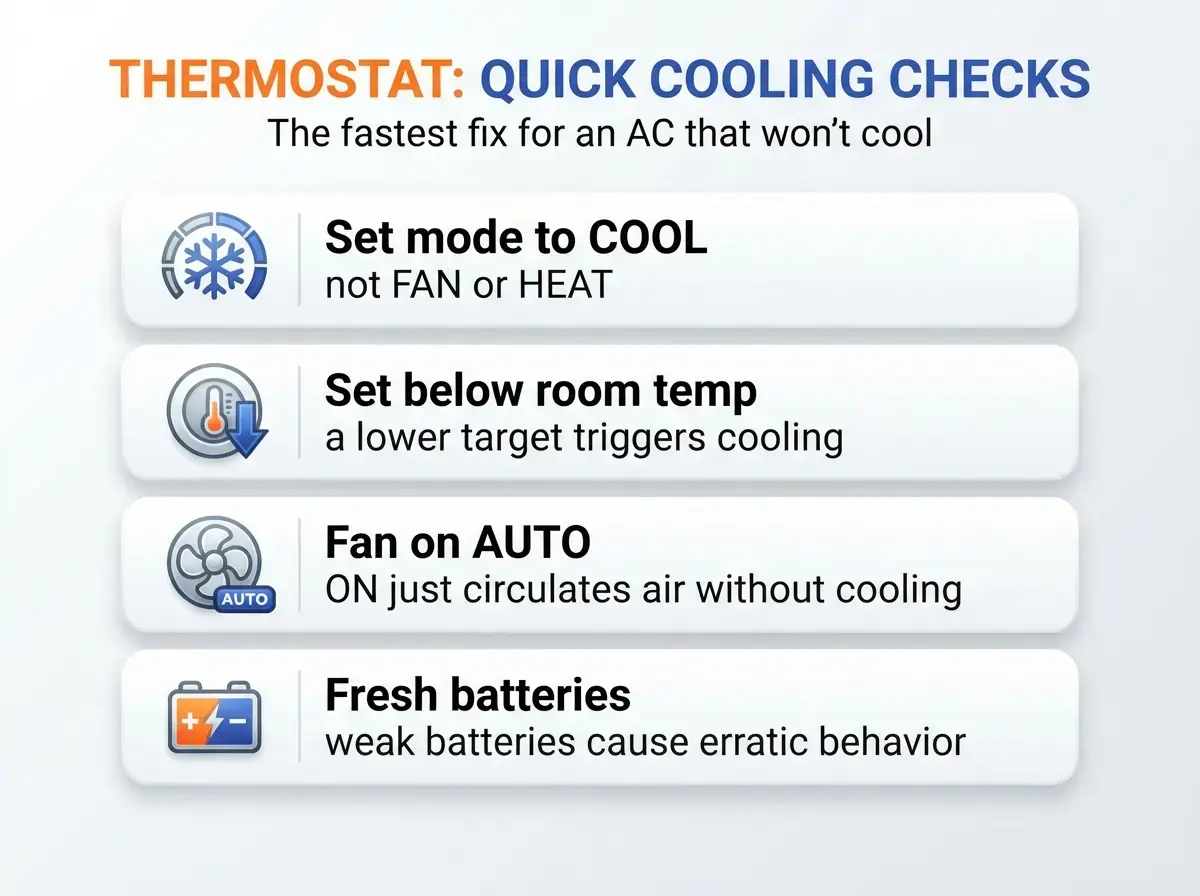
Before assuming something is broken, check your thermostat settings and make sure the system is set to cool. It may sound cliché, but thermostat settings are one of the most common reasons a system runs without cooling.
Make sure the mode is set to COOL, not FAN or HEAT, confirm the target temperature is set below the current room temperature, and verify the fan setting is AUTO rather than ON. A system stuck in fan-only mode will circulate air without cooling it at all. A malfunctioning thermostat can misread room temperature and interrupt the cooling cycle.
Dead Batteries
Dead or weak batteries are another quick fix worth checking. When the thermostat’s batteries lose charge, it can miscommunicate with the system or stop responding entirely. Swapping in fresh batteries takes less than a minute and occasionally resolves what feels like a serious problem.
Leaky Ducts
If your thermostat checks out but certain rooms still feel warm, your ductwork may be the issue. Leaky ducts allow cooled air to escape into attics, crawl spaces, and wall cavities before it ever reaches your living areas. This inefficiency causes the cooling system to overwork, yet fails to keep your home consistently cool.
Blocked Return Vents
Blocked or closed return vents create a different problem. Return vents pull warm air back into the system to be cooled and recirculated. When they’re blocked by furniture, rugs, or closed off entirely, the result is an airflow restriction that starves the system; like a dirty air filter, blocked returns can restrict airflow enough to cause freezing. Without enough airflow, the evaporator coil can freeze over and shut down cooling altogether.
Walk through your home and confirm all return vents are open and unobstructed. If duct leaks are suspected, that diagnosis is best left to a professional inspection.
What Homeowners in West Haven Can Check Before Calling
Before calling an HVAC technician, there are a few simple checks you can do yourself. These quick inspections can help identify common problems and may even save you an unnecessary service call.
- Air Filter: Pull it out and look at it. If it is gray, packed with debris, or visibly clogged, replace it before anything else. A dirty air filter is one of the fastest ways to kill airflow and trigger a frozen evaporator coil.
- Thermostat Settings: Confirm the mode is set to COOL, the target temperature is below the current room reading, and the batteries are fresh. A thermostat stuck in fan-only mode will leave the AC running without cooling a single room.
- Circuit Breaker: Go to your electrical panel and check the AC circuit. A tripped breaker will sit in the middle or off position. Reset it once. If it trips again, stop and call a technician.
- Outdoor Condenser Unit: Walk outside and check that the unit is actually running. Clear away any plants, debris, or dirt buildup within two feet of the unit. A blocked condenser coil cannot release heat properly.
- Supply and Return Vents: Walk through every room and confirm all vents are open and unobstructed. Furniture, rugs, and closed registers all restrict airflow and put unnecessary strain on the system.
- Indoor Air Handler: Look at the unit for visible ice on the coil or refrigerant lines. Ice anywhere on the system means cooling has already stopped working correctly.
- Water Around the Unit: Check for water leaks around the unit. Leaking water often signals a need for repair.
- Unusual Sounds: Note any clicking, banging, or hissing before your technician arrives. That detail helps narrow the diagnosis quickly.
If none of these checks point to an obvious fix, the problem likely requires professional equipment for effective diagnosis. Reach out to schedule West Haven AC repair and get a technician on-site before the heat gets worse.
How West Haven Summers Push AC Systems to Their Limits
Summer in West Haven can put your air conditioning system under constant pressure. Long stretches of hot weather force your AC to work harder, increasing wear on critical components. As highlighted in the National Weather Service’s heat safety guidelines, reliable cooling becomes even more important during periods of extreme heat.
Utah’s Dry Heat and Temperature Swings
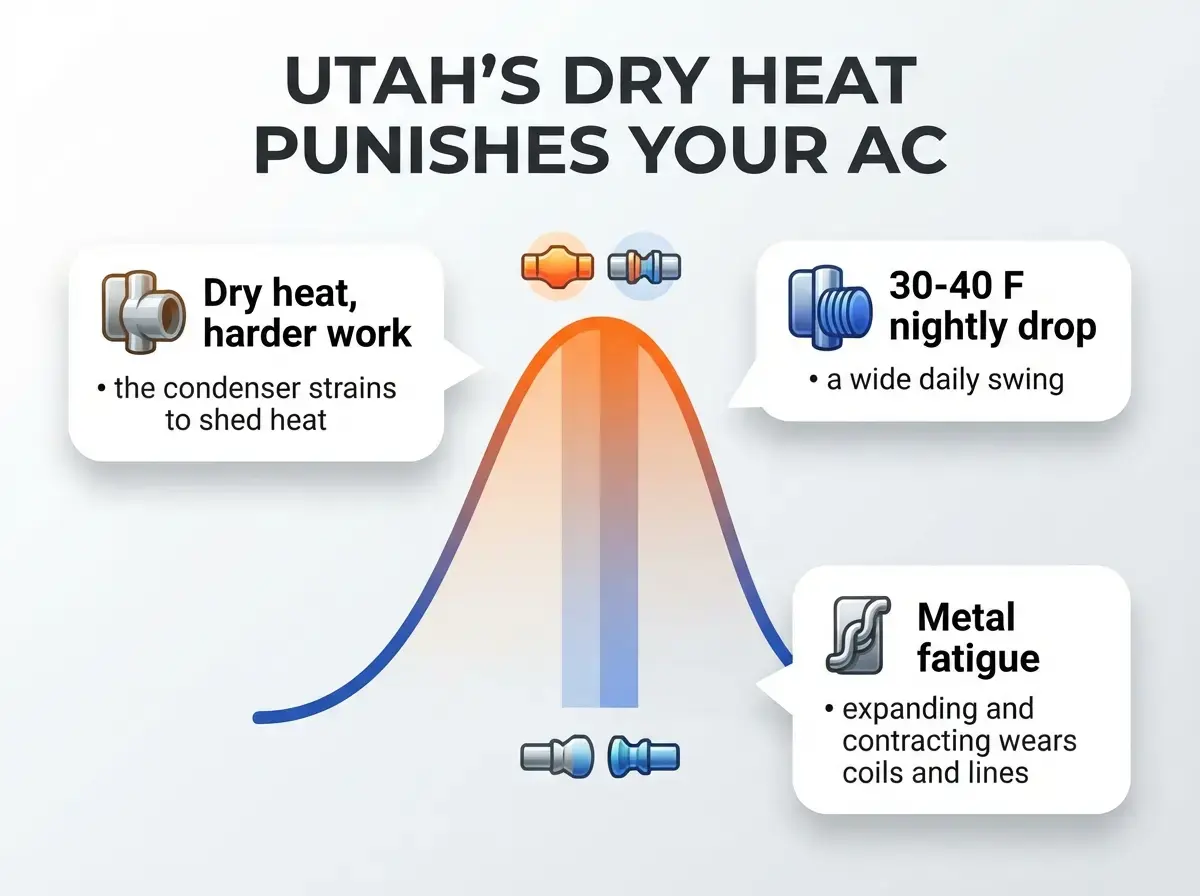
Utah’s low humidity changes the equation for your AC in important but often overlooked ways. In humid climates, moisture in the air actually helps dissipate heat. In West Haven’s dry conditions, your condenser coil has to work harder to expel heat from the refrigerant, which means the compressor runs longer and under greater strain to maintain the same result.
Then there are the temperature swings. West Haven nights can drop 30 to 40 degrees below the afternoon peak. That repeated cycle of heating and cooling causes components to expand and contract constantly, accelerating wear on connections, coils, and refrigerant lines over time. A system that handles one hot summer reasonably well may show serious signs of aging after several seasons of that thermal stress.
When an Undersized or Aging System Cannot Keep Up
An aging system already operating near its limits will struggle to recover once afternoon temperatures peak. Regular maintenance helps an ac unit more reliably reach its expected 10-15 year lifespan. Undersizing, however, is a separate problem entirely.
If your air conditioner never seems to catch up, even after servicing, the issue may be its capacity. A system that’s too small for your home will work continuously but still struggle to deliver consistent comfort, regardless of maintenance or repairs.
An HVAC technician in West Haven can assess whether your hvac system is appropriately sized for your home’s square footage and insulation, or whether the equipment itself has simply reached the end of its useful life.
Should You Repair or Replace Your AC?
Recurring AC repairs can eventually cost more than they’re worth. A commonly used industry guideline for evaluating older air conditioners is the $5,000 Rule. Multiply your system’s age by the estimated repair cost. If the total exceeds $5,000, replacing the unit is generally considered the more cost-effective long-term investment.
To put that in perspective, consider the following comparison:
| System Age | Estimated Repair Cost | Age x Repair Cost | Recommendation |
| 5 years | $400 | $2,000 | Repair likely worthwhile |
| 10 years | $300 | $3,000 | Repair likely worthwhile |
| 12 years | $500 | $6,000 | Replacement worth considering |
| 14 years | $600 | $8,400 | Replacement typically preferred |
Systems older than 10 to 15 years that require major component work are often more economical to replace than repair. For example, a compressor replacement on an aging unit can cost nearly as much as a new system, without the efficiency gains or the remaining lifespan that comes with new equipment.
Reports from Lennox show that most AC units last between 10 and 15 years under normal conditions. As systems approach the end of that expected lifespan, major repairs become more frequent, and replacing the entire cooling system often delivers better long-term value than continuing to invest in costly fixes.
Delaying the replacement comes with its own costs. A failing system draws more energy to produce less cooling, which shows up on your utility bill every month. It also puts stress on surrounding components, increasing the risk of a cascade failure during peak summer heat when you can least afford it.
A licensed HVAC technician can review your system’s age, efficiency rating, and repair history to give you an honest assessment. If replacement does make sense, we offer financing options for AC repair or replacement to make that decision easier on your budget.
READ MORE: Benefits of Upgrading Your AC Systems
Preventative Maintenance Prevents Most of These Problems
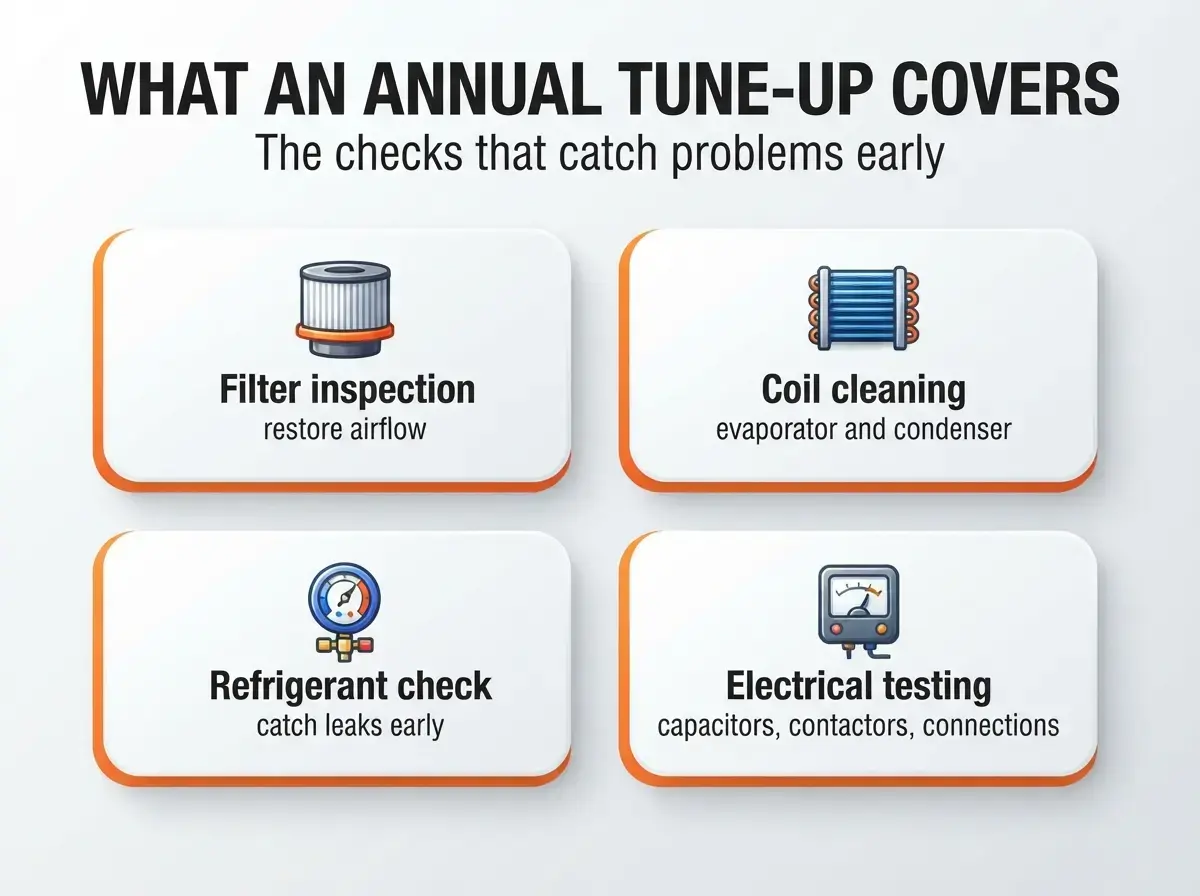
Ready for the good news? Many of the AC problems covered in this guide are preventable. Routine maintenance helps catch issues like dirty filters, low refrigerant, and worn components before they lead to costly breakdowns, and changing air filters every 30-90 days helps your system run more efficiently and keep cooling properly.
ASHRAE maintenance standards for residential HVAC recommend annual or bi-annual tune-ups that include filter inspection, evaporator coil and condenser coil cleaning, refrigerant level checks, and electrical component testing. That kind of systematic check helps reduce AC repair frequency by catching problems early, which is what separates a system that fails in July from one that runs clean all summer.
In West Haven, heading into peak summer without a maintenance visit is a gamble. Annual maintenance is the best way to catch cooling problems before they escalate during cooling season.
Comfort Solutions offers maintenance plans built specifically for Utah homeowners. If you want problems caught early, a plan is the most practical way to make that happen consistently.
Learn more about our HVAC maintenance services
Get Your West Haven Home Cool Again
Most AC cooling failures come down to a handful of fixable causes such as a clogged filter, a frozen coil, low refrigerant, or a worn electrical component. Some of those checks are safe to handle yourself, while others need a licensed HVAC technician with the right tools and training.
At Comfort Solutions, we’ve been serving West Haven homeowners for over two decades, with 24/7 emergency service available whenever you need us. If your system is still not cooling after running through the basics, we are ready to help.
Reach out to our team today for fast, professional AC repair you can count on.
Frequently Asked Questions
Why Is My AC Suddenly Not Cooling?
Sudden cooling loss, including warm or even hot air from the vents, is often a sign your ac isn’t cooling because of a clogged air filter, a tripped circuit breaker, a frozen evaporator coil, or a refrigerant leak. Check the filter and breaker first. If the problem continues, schedule a professional inspection.
What Is the $5,000 Rule for AC?
The $5,000 Rule is an industry guideline for deciding between repair and replacement. Multiply your system’s age by the repair cost. If the total exceeds $5,000, replacement is often the better long-term investment.
What Is the 3 Minute Rule for AC?
The 3 Minute Rule recommends waiting at least three minutes before restarting your air conditioner after it shuts off. This allows refrigerant pressure to stabilize, helping protect the compressor from unnecessary strain and premature wear.
How Can I Tell If My AC Compressor Is Blown?
Common signs of a failing compressor include warm air from the vents, unusual clicking or banging noises, frequent breaker trips, or an outdoor unit that won’t run. A professional diagnosis from an experienced HVAC technician is needed to confirm the problem, since frequent breaker trips often point to electrical problems within the system.
How Often Should I Replace My AC Air Filter?
Most air filters should be replaced every 30-90 days, depending on the filter type, household size, and indoor air quality, though homes with pet hair may need more frequent replacement. Regular replacement helps maintain airflow, improve efficiency, and reduce unnecessary wear on your system.
When Should I Call an HVAC Technician?
Some issues may have a simple diy fix, but refrigerant issues, frozen coils, and repeated electrical problems should be handled by a professional HVAC technician. Prompt service can prevent more extensive and expensive repairs.
Recent News

Furnace Tune-Up Cost in Sandy, UT: What Homeowners Need to Know
September 28, 2026

How Much Does It Cost to Replace a Furnace in Sandy, Utah: A Homeowner’s Guide
September 23, 2026
How Long Do Furnaces Last for Salt Lake City Residents? A Guide to Warning Signs and Replacement Timing
September 7, 2026
How to Improve Indoor Air Quality During Utah’s Wildfire Season
August 28, 2026
AC Stopped Working in Ogden? Common Causes and What to Do Next
August 24, 2026
HVAC Maintenance Services in West Haven, Utah: Fall Checklist for Homeowners
August 19, 2026