Serving The Wasatch Front Area



Back to Blog
How Much Does an AC Installation Cost in West Haven, Utah?
July 9, 2026
Installing a new air conditioner is one of those home upgrades that feels like it should be simple, until you start comparing prices. One quote comes in thousands of dollars higher than another, and suddenly you’re wondering what you’re actually paying for.
Here’s the thing: The total cost isn’t based on the equipment alone.
Home size, system efficiency, ductwork condition, labor, permits, and even Utah’s climate all influence the final price.
Understanding those factors before you request estimates makes it much easier to spot a fair quote, avoid unnecessary upgrades, and choose a system that fits both your home and your budget.
This guide covers everything you need to know before scheduling an AC installation in West Haven, from what really influences the cost to how to pick the right company for the job.
What West Haven Homeowners Typically Pay for AC Installation
For most homes in West Haven, Utah, central air conditioning installation runs between $3,500 and $7,500. If your home requires extensive ductwork, electrical upgrades, or a larger system, you can expect the final cost to be over $12,000.
For comparison, national AC installation cost data puts the average central AC install somewhere between $3,600 and $8,200. West Haven sits comfortably within that range for standard jobs. However, Utah’s arid climate and high elevation can require larger tonnage to keep up with the cooling demand of your home’s cooling needs, which affects the final price you’ll pay.
Every quote you receive will reflect three main cost buckets:
- Equipment: The AC unit itself, sized by tonnage to match your home.
- Labor: The total time needed for installation, which varies based on system complexity and site conditions.
- Additional Work: Obtaining permits, electrical upgrades, and ductwork modifications if needed.
| System Type | Typical Installed Cost |
| Window or portable unit | $300 – $1,500 |
| Single-zone mini-split | $2,000 – $5,000 |
| Central AC (standard home) | $3,500 – $7,500 |
| Central AC (larger or complex install) | $8,000 – $12,000+ |
One thing you should know before moving forward is that the right system size cannot be determined through guesswork. Choosing a system that’s too large or too small can reduce efficiency, increase energy costs, and shorten the lifespan of your equipment.
A proper manual J load calculation accounts for your home’s square footage, insulation, window placement, and local climate.
If any technician doesn’t perform this calculation before recommending a cooling system for your home, you’ll likely end up with oversized or undersized equipment. Either option can lead to premature system wear later, making this step especially crucial.
AC Installation Cost by System Type
Not all AC systems are priced the same. The type of system you choose has the biggest single impact on your total cost for an AC installation, often more than labor or permits. If something goes wrong after installation, having access to emergency heating and cooling repairs can also help minimize costly downtime. Here is a breakdown of the three main options you should consider as a homeowner in West Haven.
If you want more background before diving into numbers, this overview of how central air conditioning works is a useful starting point.
Central Air Conditioning
In West Haven, a central AC is the most common system due to its ability to cool an entire home efficiently. For most standard installs, the total cost lands between $3,500 and $7,500. That range covers the unit, labor, and basic connections to existing ductwork.
Your final installation cost is mainly influenced by:
- The system’s tonnage (cooling capacity).
- Its SEER2 efficiency rating.
- The condition of your existing ductwork.
A higher SEER2 rating means better efficiency and lower monthly bills, but the equipment costs more upfront.
Air conditioners with variable-speed compressors sit at the top of the price range, though they handle Utah’s dry summer heat more consistently than single-stage systems. If you’re planning AC installation in West Haven and your ducts need repairs or replacement, expect to add $1,500 to $3,000 or more to the total.
Ductless Mini-Split Systems
A ductless mini-split usually costs between $2,000 and $5,000 per zone installed. Since it doesn’t rely on ductwork, it’s an excellent option for garages, basements, additions, and older homes where installing new ducts would be expensive.
The biggest tradeoff is cost as you add more rooms. A single-zone mini-split is relatively affordable, but installing separate indoor units throughout the home can increase the total cost quickly.
While mini-splits generally offer higher SEER2 ratings than central AC systems, proper sizing is still essential. In Utah’s dry, high-elevation climate, the system should be matched to your home’s actual cooling load rather than square footage alone.
Heat Pump Systems
Heat pumps carry the highest upfront cost, typically $4,000 to $10,000 or more for installation, but they handle both heating and cooling in one system. That dual function makes them worth considering when exploring HVAC services in West Haven, where temperatures vary greatly from summer highs to winter lows.
ENERGY STAR-certified heat pumps may also qualify for federal tax credits, which can reduce your net spend. Depending on the model you choose, those savings can offset a meaningful portion of the initial installation cost.
Variable-speed compressors are common in heat pump systems and improve efficiency across Utah’s wide seasonal temperature swings. If you’re weighing long-term value, choosing the right air conditioner for your specific home setup is worth the extra research time.
READ MORE: Know When to Upgrade Your AC and the Benefits
What Drives the Cost Difference in West Haven Installs
AC installation pricing is rarely one-size-fits-all. Even homes in the same neighborhood can receive very different quotes depending on several key factors. These include:
Home Size and Tonnage Requirements
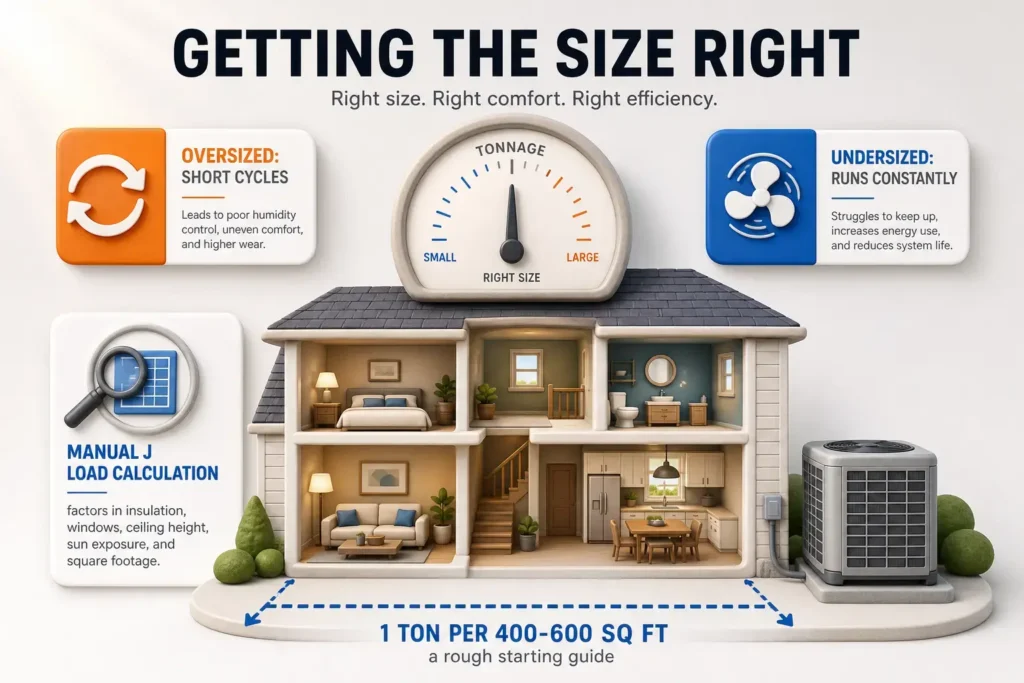
Tonnage is the starting point for any cost estimate. As a rough guide, most homes need about one ton of cooling capacity per 400 to 600 square feet.
The combination of West Haven’s dry climate, intense sun exposure, and high elevation means that the rule of thumb does not always hold. A home with poor insulation or significant south-facing windows may need more tonnage than its square footage suggests.
A proper Manual J load calculation removes the guesswork from system sizing, because a proper load calculation is used to size AC by factoring in window area, insulation levels, ceiling height, sun exposure, and square footage so the equipment is the right size. Without it, oversized units short cycle, while an undersized system runs constantly and can’t keep up on hot days.
Ductwork Condition and Installation
This is the cost variable that catches the most West Haven homeowners off guard, especially those with older homes. For starters, if your existing ducts are leaking, undersized, or deteriorating, a new AC unit will not perform the way it should.
Duct sealing or partial replacement typically adds $1,000 to $2,500 to a project. Full ductwork installation in a home that has none can run $2,000 to $5,000 or more, depending on the layout and accessibility of the space.
Any reputable contractor should inspect your ducts before quoting. If that step is skipped, ask why before moving forward.
Efficiency Ratings and Equipment Tier
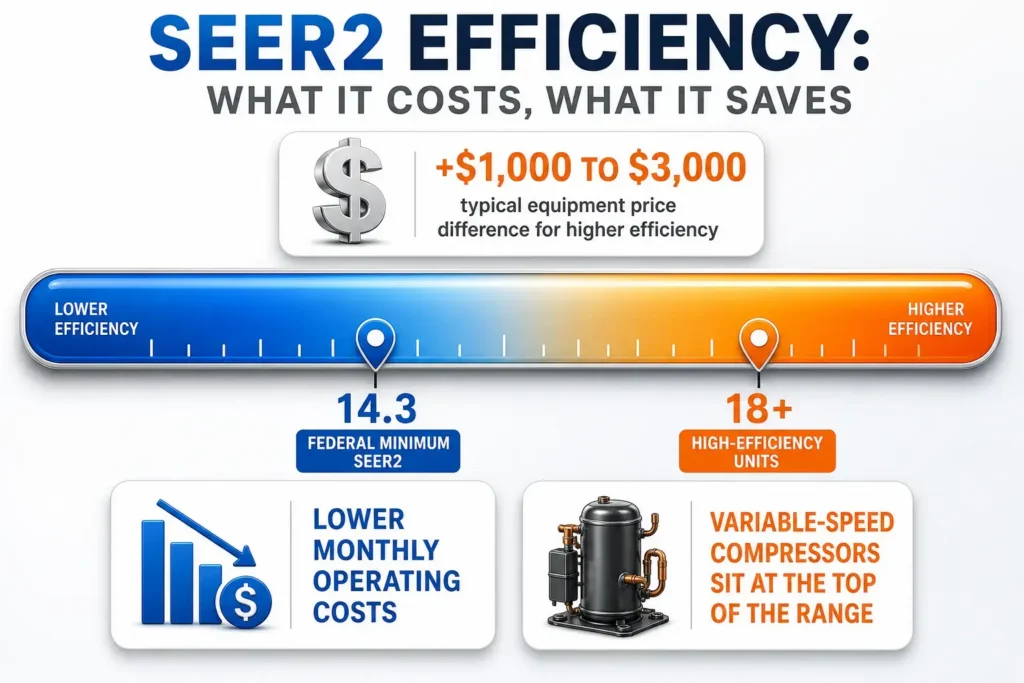
The federal minimum SEER2 rating for most regions is 14.3. High-efficiency units can reach 18 SEER2, sometimes exceeding that depending on the model.
The difference in efficiency also means a price difference of roughly $1,000 to $3,000 on the equipment itself, but higher-efficiency units lower your monthly operating costs, which can make the upgrade financial sense during West Haven’s long cooling season.
That’s not all. Another feature that affects both upfront cost and long-term comfort is the compressor technology. Variable-speed compressors sit at the top of the price range and offer the most consistent comfort in Utah’s dry summer heat. Duct sealing and insulation can cost between $1,000 and $3,000, while full duct installation remains a separate, larger expense.
For a detailed look at how these cost differences break down, this AC installation cost breakdown is a helpful reference.
Labor, Permits, and Electrical Upgrades
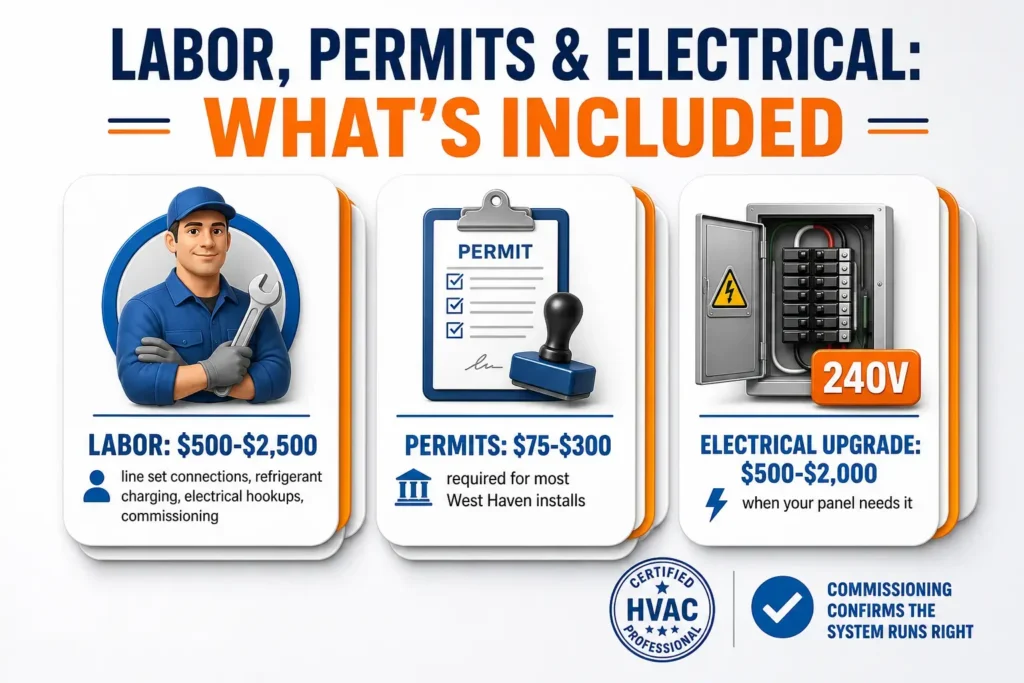
Labor for a standard install typically runs $500 to $2,500. The cost typically covers line set connections, refrigerant charging, electrical hookups, and system commissioning, plus matching the indoor unit to the outdoor unit, checking outdoor placement and access, and protecting the manufacturer’s warranty with quality workmanship from certified technicians.
Some homeowners often assume commissioning is just another unnecessary add-on, but that’s far from the truth.
Commissioning is the calibration step that confirms the system is operating correctly before the technician leaves, and it should be included in any professional quote. Paying more upfront for a higher-efficiency system can also make financial sense if you expect heavy cooling use through West Haven’s long cooling season.
Permits in West Haven, Utah generally cost $75 to $300. And, if your home isn’t already equipped for it, meaning your electrical panel needs an upgrade to support 240V service, budget an additional $500 to $2,000 for that work.
How to Lower Your AC Installation Cost in West Haven
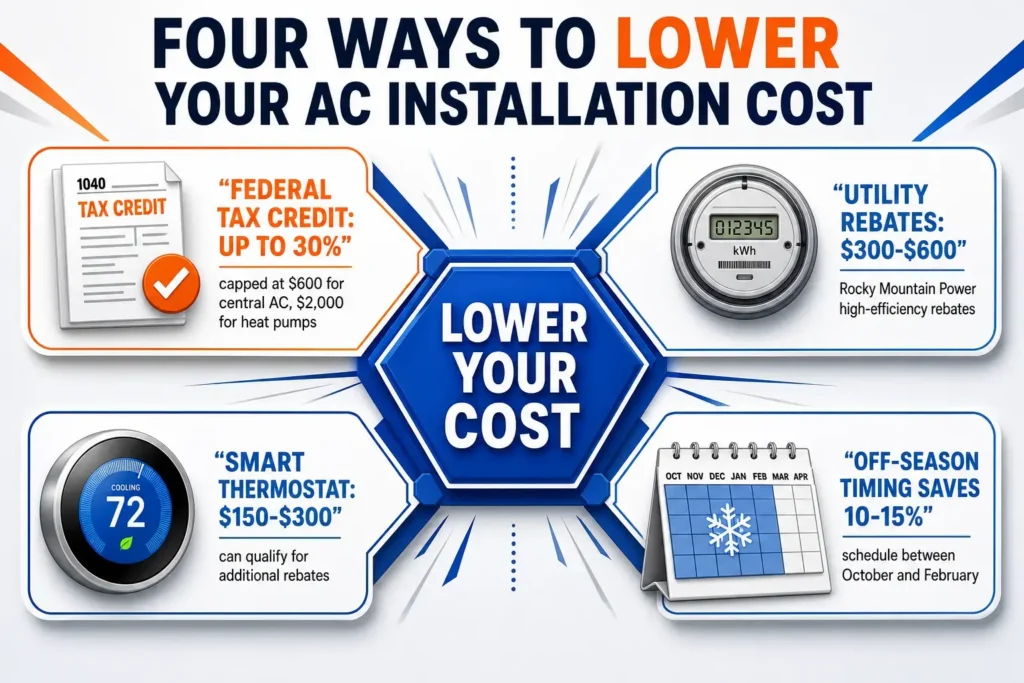
There are several legitimate ways to lower your AC installation cost. Knowing where those savings come from can make a noticeable difference before you sign a contract.
Federal Tax Credits and Utah Rebates
The Inflation Reduction Act offers a tax credit worth up to 30% of the cost of qualifying ENERGY STAR-certified equipment, capped at $600 for central AC units and $2,000 for heat pumps. That’s a direct reduction in what you owe at tax time, not just a deduction.
Before you make a final decision, check with Rocky Mountain Power and Dominion Energy Utah (formerly Questar Gas) for utility rebates on high-efficiency systems. These programs change periodically, so confirming availability before you buy is worth the five-minute call. The federal tax credits for energy-efficient home upgrades page on ENERGY STAR’s website lists current qualifying equipment and credit amounts.
A smart thermostat add-on runs $150 to $300 at installation and can qualify for additional rebates while lowering your monthly operating costs over the life of the system.
Timing Your Install for Off-Season Savings
HVAC contractors in West Haven, Utah, are busiest from May through August. Scheduling your install between October and February could reduce your total spend by 10 to 15%, simply because demand drops and contractors have more availability and it is often easier to schedule permits and inspections.
Getting three or more quotes is standard advice, but in Utah, you should prioritize contractors who perform a Manual J load calculation rather than quoting by rule of thumb.
Accurate sizing protects you from overpaying for equipment you do not need. Rocky Mountain Power offers rebates of $300–$600 for high-efficiency systems, and combined incentives can reduce net cost by several hundred to over a thousand dollars.
When you’re ready to compare options in Weber County, get in touch with Comfort Solutions for a walkthrough and a free written quote based on your home’s actual cooling needs before work begins.
READ MORE: How to Integrate HVAC Components With Interior Design
The $5,000 Rule: Should You Repair or Replace?

Not sure whether to fix your aging system or plan your ac replacement and schedule the install during the off-season? There’s a simple formula that helps you make an informed decision about which option offers better long-term value.
Multiply the repair cost by the system’s age in years. If that number exceeds $5,000, replacement is generally the smarter financial move.
Here’s how it plays out in practice:
- A $300 repair on a 10-year-old system equals $3,000. Repair makes sense.
- A $600 repair on a 12-year-old system equals $7,200. Replacement is the better value.
Central air conditioning systems typically last 15 to 20 years with proper maintenance. The good news is that Utah’s dry climate tends to be gentler on equipment than the climate in humid regions, so well-maintained systems in West Haven often reach the higher end of that range.
That said, certain factors tip the decision toward replacement regardless of the formula:
- R-22 refrigerant systems, which have been phased out and are increasingly expensive to service.
- Frequent breakdowns that add up in repair costs year over year.
- Rising energy bills that suggest declining efficiency.
- Aging ductwork that undermines system performance.
- An older furnace that may not match a new ac system well in efficiency or airflow.
On HVAC system cost, a new high-efficiency system with a strong SEER2 rating often pays back the cost difference within 5 to 8 years through lower energy bills. The heating and cooling energy efficiency guidance from the U.S. Department of Energy is a useful reference when running those numbers. If you’re still weighing your options, the first-time AC buyer checklist walks through what to consider before committing to a new system, and homeowners can schedule a free in-home walkthrough in Weber County to get a clear quote before work begins.
Get the Right System at the Right Price in West Haven
AC installation cost in West Haven, Utah comes down to three things: the right system type, accurate sizing for your home, and a contractor who’s upfront about what the job actually involves. Get those right, and there are no surprises on the final invoice.
At Comfort Solutions, we’ve spent decades helping Utah homeowners make confident HVAC decisions. We live here, we know this climate, we know these homes, and we give you a quote that reflects your actual cooling load, not a ballpark guess.
Reach out today for an accurate, no-surprise estimate on your West Haven installation.
Frequently Asked Questions
How Much Should an AC Unit Cost to Install?
For most West Haven homes, a standard central AC installation costs between $3,500 and $7,500. Larger homes, premium equipment, or projects requiring ductwork or electrical upgrades can increase the total to $12,000 or more.
How Much Is a New AC Unit for a 2,000 Square Foot Home?
A 2,000-square-foot home typically needs a 3—3.5-ton air conditioner. Installed costs usually range from $4,500 to $8,000, depending on the system type, efficiency rating, and whether any ductwork upgrades are required.
What Is the Best Month to Buy an HVAC System?
The best time to buy is typically September through November, when contractor demand slows after summer. Scheduling during the off-season often provides greater availability, more competitive pricing, and additional time to compare installation quotes.
Is It Cheaper to Run a 110V or 220V Mini-Split?
A 220V mini-split is generally more efficient and less expensive to operate over time. While 110V systems work well for smaller rooms, 220V models are better suited for larger spaces and longer daily runtime.
How Long Does AC Installation Take?
Most residential AC installations are completed within one day, although larger systems or projects involving ductwork, electrical upgrades, or unexpected site conditions can take two days or longer to finish properly.
Does a Higher SEER2 Rating Save Money?
Yes. A higher SEER2-rated system uses less electricity to produce the same cooling, reducing monthly utility costs. Although the upfront price is higher, the energy savings can offset the difference over the system’s lifespan.
Should I Replace My Ductwork When Installing a New AC?
Not always. If your existing ductwork is properly sized and in good condition, it can often be reused. However, damaged, leaking, or undersized ducts should be repaired or replaced to maximize your new system’s performance.
Recent News
Furnace Tune-Up Cost in Sandy, UT: What Homeowners Need to Know
September 28, 2026

How Much Does It Cost to Replace a Furnace in Sandy, Utah: A Homeowner’s Guide
September 23, 2026
How Long Do Furnaces Last for Salt Lake City Residents? A Guide to Warning Signs and Replacement Timing
September 7, 2026
How to Improve Indoor Air Quality During Utah’s Wildfire Season
August 28, 2026
AC Stopped Working in Ogden? Common Causes and What to Do Next
August 24, 2026
HVAC Maintenance Services in West Haven, Utah: Fall Checklist for Homeowners
August 19, 2026