Serving The Wasatch Front Area


Back to Blog
Who to Call for Furnace Repair in Sandy?
November 6, 2026
It’s a cold Sandy morning; your thermostat says the heat is on, and the vents are blowing cold air. Do you call a plumber, an electrician, or the first company that appears when you search “furnace repair near me”? The wrong call can cost you time when your home is already getting colder.
If you’re wondering who to call for furnace repair, start with a qualified, properly licensed HVAC contractor experienced in diagnosing and repairing furnaces. The exception is a suspected gas leak or carbon monoxide emergency, when you should leave the home and contact emergency responders first.
At Comfort Solutions, we help Sandy homeowners move from a worrying symptom to a clear diagnosis and practical repair options. Here’s how to decide whom to call, how urgently to act, and what to expect before approving the work.
Key Takeaways
- Call a licensed HVAC contractor for a furnace that won’t ignite, heats unevenly, short cycles, or stops working. A general handyman isn’t a substitute for furnace-specific expertise.
- If you smell gas or a carbon monoxide alarm sounds, leave the building immediately and call 911 from a safe location.
- During a Sandy cold snap, a complete loss of heat deserves prompt attention; ask whether a company actually offers after-hours dispatch before relying on a 24-hour listing.
- Verify Utah licensing, insurance, relevant experience, diagnostic fees, written estimates, and repair warranties before authorizing work.
- Check simple thermostat, filter, and power issues only when it’s safe, and use preventive maintenance to reduce avoidable breakdowns.
Who Should You Call When Your Furnace Stops Heating?
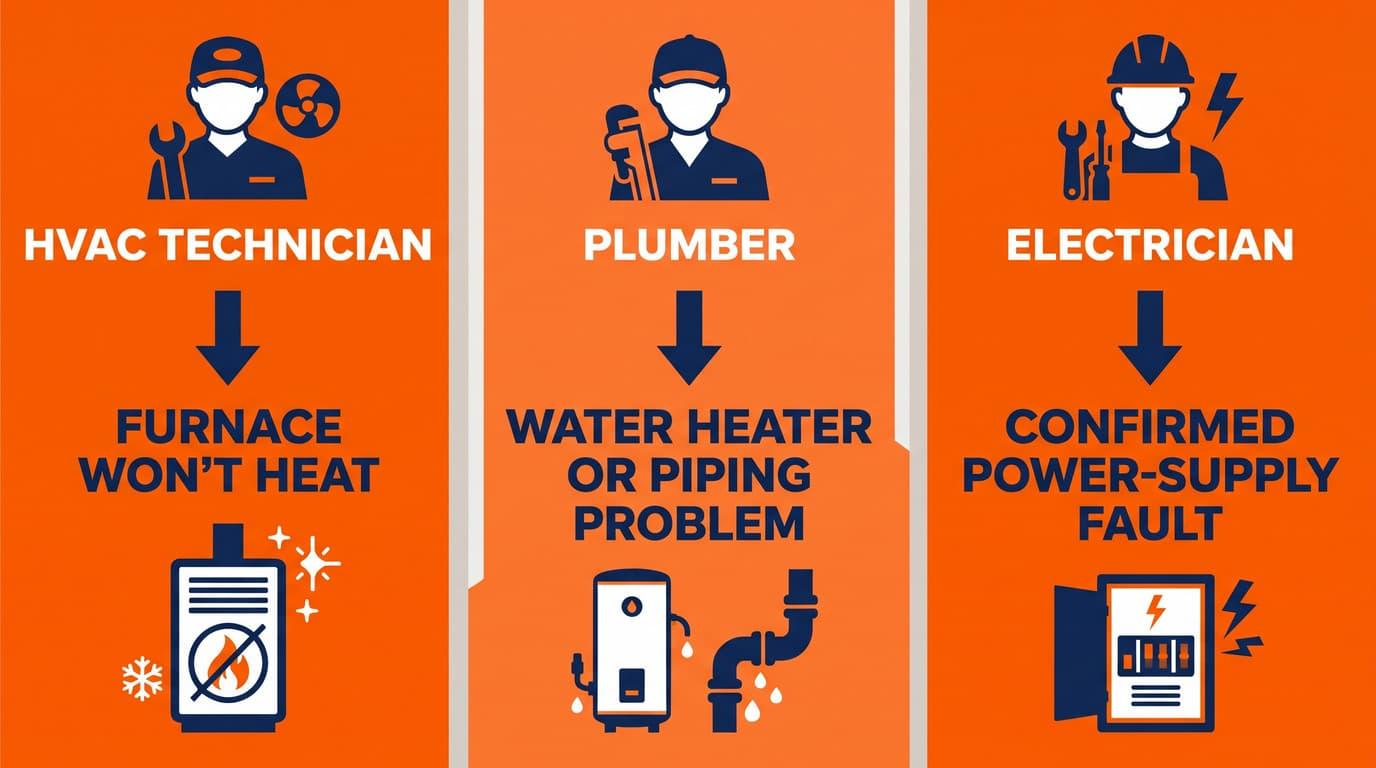
For most furnace problems, call an HVAC company experienced in residential heating repairs. Its technicians can assess ignition, airflow, thermostats, venting, and safety controls together.
A plumber may handle a separate water-heater or piping problem, and an electrician may address a confirmed power-supply fault. But when the furnace itself won’t heat, start with HVAC expertise.
If your furnace has a manufacturer, installer, or home warranty, check whether you must use an authorized provider or obtain approval first.
When a Furnace Problem Needs Emergency Help in Sandy
Not every no-heat call is a safety emergency, but some warning signs change whom you should contact. The first priority is separating a hazardous situation from an equipment failure that an HVAC professional can investigate.
Gas Smells or Carbon Monoxide Alarms: Leave First
If you suspect a gas leak, don’t use switches or flames or stay inside to troubleshoot. Leave immediately, then call 911 and your gas utility from a safe location. If a carbon monoxide alarm sounds, get everyone into fresh air, call 911, and don’t reenter until emergency personnel say it’s safe.
The U.S. Consumer Product Safety Commission explains that carbon monoxide is colorless and odorless and can cause headache, dizziness, weakness, nausea, and confusion. Suspected exposure requires fresh air and an immediate call to 911, even when no furnace problem is visible.
A strong burning smell, visible smoke, or signs of fire also call for immediate caution. If you suspect a fire or an unsafe condition, leave and contact emergency services rather than waiting for a repair appointment.
No Heat During a Freeze: Ask About Emergency Furnace Repair
If there’s no immediate hazard, a no-heat outage is an HVAC service issue. During a Sandy freeze, call promptly, especially if someone at home is vulnerable to cold. For less urgent issues such as uneven heating or recurring cycling, schedule a diagnostic visit before the problem worsens.
When requesting emergency furnace repair, ask about actual overnight availability, dispatch fees, and parts. Searches for “24-hour furnace repair” or “same day service” don’t guarantee an immediate appointment.
If your home is becoming dangerously cold, arrange a safe alternative place to stay while repairs are scheduled. Never use an oven, outdoor grill, or portable generator indoors to heat the house; the CPSC’s carbon monoxide guidance explains why combustion equipment can pose a serious poisoning risk.
Match Common Furnace Symptoms to the Right Next Step
Different furnace faults can produce similar symptoms. This table helps you choose the next step, not diagnose the part, because furnace repair services involve diagnosing and fixing heating issues rather than guessing at parts.
| What you notice | Safe first check | Who to call |
|---|---|---|
| No heat or cold air | Confirm thermostat is set to HEAT and above room temperature | HVAC technician if heat does not return |
| Frequent on-off cycling | Check an accessible filter for heavy dirt | HVAC technician for repeated cycling |
| Weak or uneven airflow | Check filter and unobstructed supply/return vents | HVAC technician if airflow remains poor |
| Rattling, banging, or screeching | Note when the sound happens; avoid opening equipment | HVAC technician; stop using if unsafe |
| Furnace fails to ignite | Do not bypass controls or repeatedly attempt a manual relight | HVAC technician |
| Gas smell or CO alarm | Leave immediately; do not troubleshoot | Gas utility or 911 from outside |
When you call, describe what you noticed, when it started, and whether the thermostat or display shows an error. Common furnace repairs often start with inspection of ignition systems and safety controls. Those details help the technician prepare without assuming the cause before an inspection.
Why Your Furnace May Run Without Heating Your Home
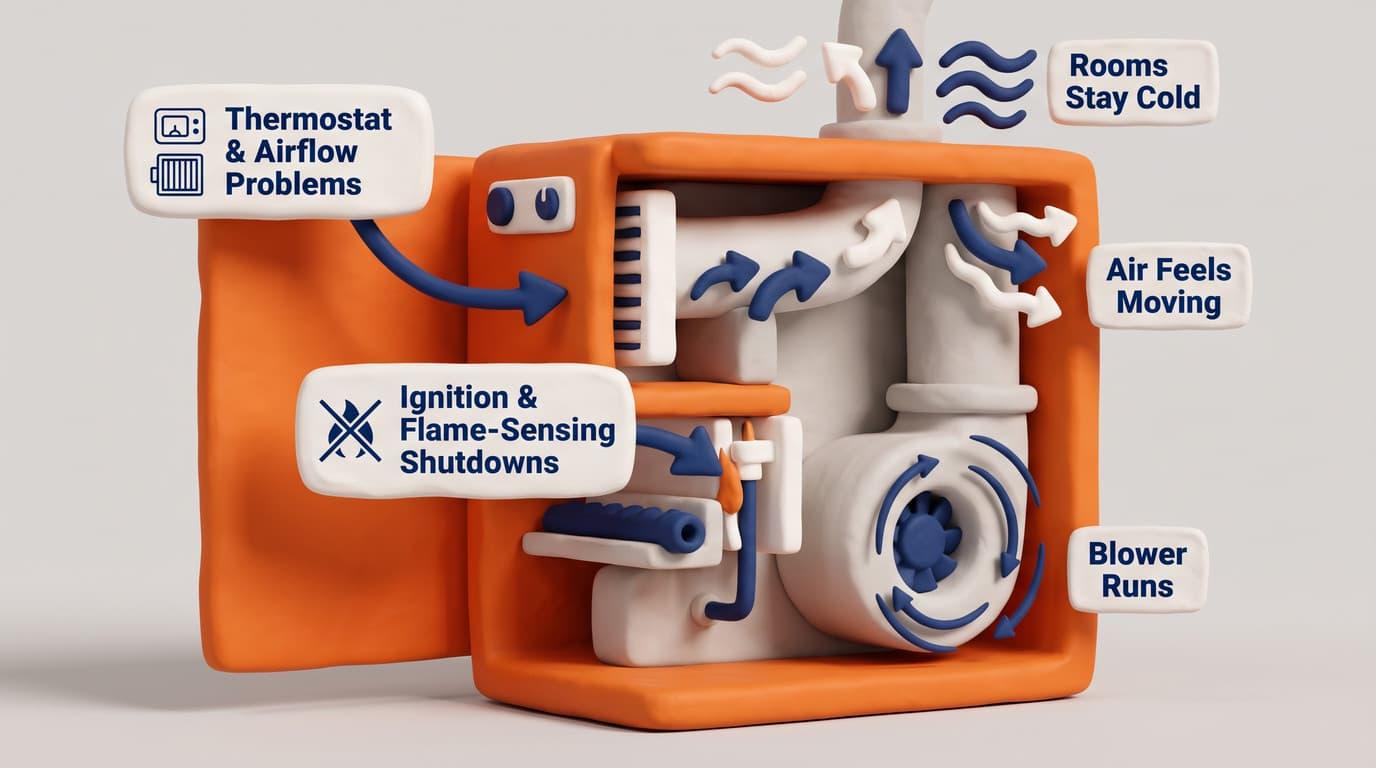
A furnace may sound like it’s working even when it isn’t heating. You might hear the blower and feel air through the vents while the rooms stay cold. Moving air and producing heat are separate functions, and knowing which one is happening helps the technician narrow furnace and heating systems faults without you opening the equipment.
Thermostat, Airflow, and Indoor Air Quality Problems
An incorrectly set thermostat can make a working furnace seem unresponsive. A clogged filter or blocked return vent can restrict airflow, leave rooms uncomfortable, and sometimes contribute to overheating and shutdowns. If replacing an accessible dirty filter doesn’t help, the technician can check for other airflow or control issues.
Ignition, Flame-Sensing, and Safety Shutdowns
A furnace that starts, stops, and tries again may have an ignition problem. An ignitor or flame sensor could be involved, but safety controls can also stop operation when they detect a problem. Don’t repeatedly force a restart. A technician can test the startup sequence to identify the actual cause. They should run diagnostics before recommending replacement.
Before the visit, note whether the blower runs continuously, whether the vents ever deliver warm air, and whether the thermostat shows an error code. You can share those observations over the phone. Avoid opening the furnace cabinet or attempting to reset internal safety devices.
How to Choose a Trustworthy HVAC Services and Furnace Repair Company in Sandy
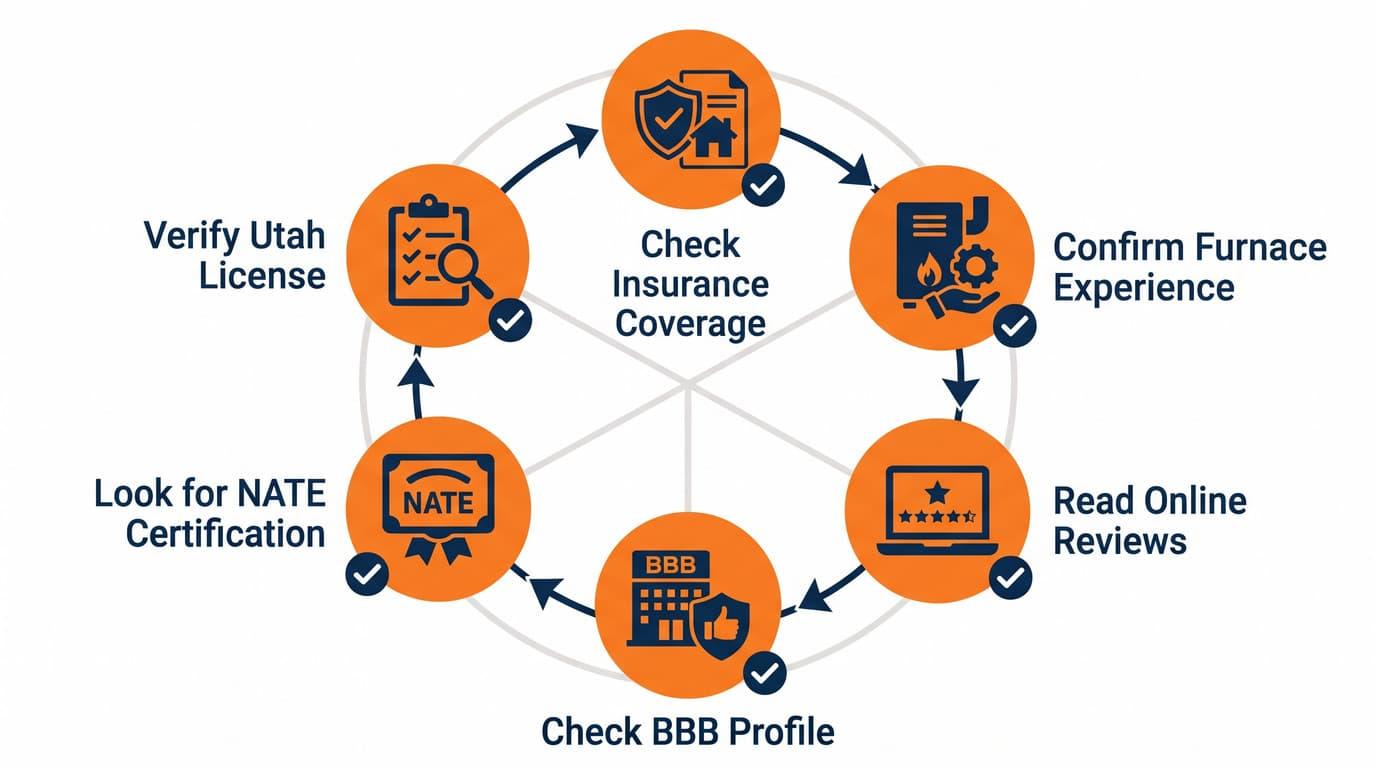
A “furnace repair near me” search offers options, not proof of qualifications. Vet the company before booking.
Verify Licensing, Insurance, and Furnace Experience
Utah’s Division of Professional Licensing offers a ‘Verify a License’ tool for checking contractor credentials and license status. Ask which license applies to the work, check that it is current, and request proof of general liability and workers’ compensation coverage as applicable.
Ask about experience with your furnace’s brand, ignition, venting, and controls, and whether specialized parts may be needed.
Use Reviews and Recommendations to Narrow the List
Ask Sandy neighbors for personal recommendations, since they’re a reliable way to find repair technicians, and read recent online reviews to evaluate HVAC contractors for communication, punctuality, follow-through, and how they treat customers, not just star ratings.
Check Better Business Bureau profiles for customer feedback and complaint history, and ask what warranty covers parts and labor. Local utility companies may publish preferred contractor lists, and NATE certification is worth looking for when comparing technicians.
Compare Written Estimates, Not Just the Lowest Price
Compare multiple itemized written quotes before choosing a technician. A written estimate should identify the fault, parts, labor, diagnostic fees, and conditions that could change the price, with upfront pricing that is itemized and in writing before repairs begin. Get a second opinion on a major repair, and choose a company that backs repair work and parts with warranties.
Avoid technicians who pressure you into immediate replacement without a diagnosis, as well as vague pricing or guaranteed fixes offered before inspection.
At Comfort Solutions, we evaluate Sandy heating problems and explain repair options with honest guidance so you can decide with confidence.
What to Ask Before Booking a Furnace Repair Appointment
Before booking, confirm these practical details:
- Availability: Can you respond today, and do you offer after-hours dispatch for urgent no-heat calls?
- Fees: Is there a diagnostic or trip charge, and does any portion apply toward an approved repair?
- Estimate: Will I receive the findings and an itemized written estimate with upfront pricing before repairs begin?
- Parts and warranty: Are the necessary parts available, and what coverage applies to the repair?
- Approval: Will you contact me with clear, honest communication before performing additional chargeable work?
For urgent calls, ask whether the first visit includes repairs or diagnosis only.
What Happens During a Professional Furnace Repair Visit?
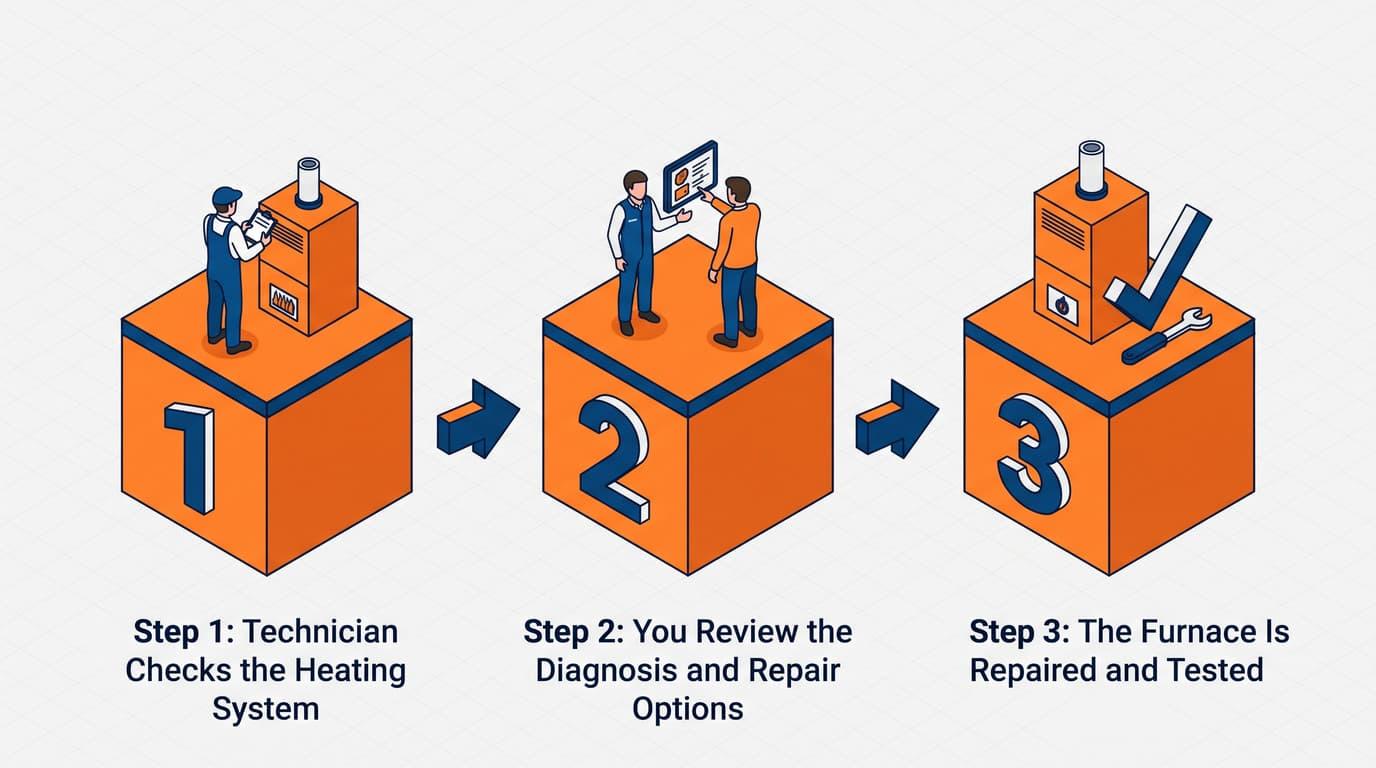
A furnace repair visit involves more than replacing a suspected part. The technician should find why the system stopped heating, explain the remedy, and test the result. Understanding that process helps you recognize thorough service.
The Technician Checks the Heating System
The technician checks whether the thermostat calls for heat and the furnace has power and fuel. They’ll observe startup and airflow, then run diagnostics and test components related to the symptoms, potentially including the ignitor, flame sensor, blower, venting, and safety controls. Testing helps distinguish the actual fault from similar-looking problems.
You Review the Diagnosis and Repair Options
Once the cause is identified, the technician should explain the findings and provide a written estimate for parts and labor. Ask whether the repair can be completed that day, whether parts must be ordered, and what warranty applies. You can then approve the work knowing the likely cost and timing.
If the diagnosis raises reliability concerns, ask the technician to explain the findings. We cover repair versus replacement below.
The Furnace Is Repaired and Tested
After approval, the technician completes the repair and tests an operating cycle. They should verify heating, thermostat response, and relevant safety controls. Ask what failed, what was repaired, and what warning signs to watch for.
A repair visit may also reveal a separate comfort issue, such as uneven airflow or poor indoor air quality. Those concerns don’t automatically mean your furnace needs more repairs. If you need help evaluating ventilation, air conditioning, or other heating and cooling equipment, our Sandy HVAC services can help you plan the appropriate next step.
When Is a Furnace Repair Worth It Instead of Replacement?
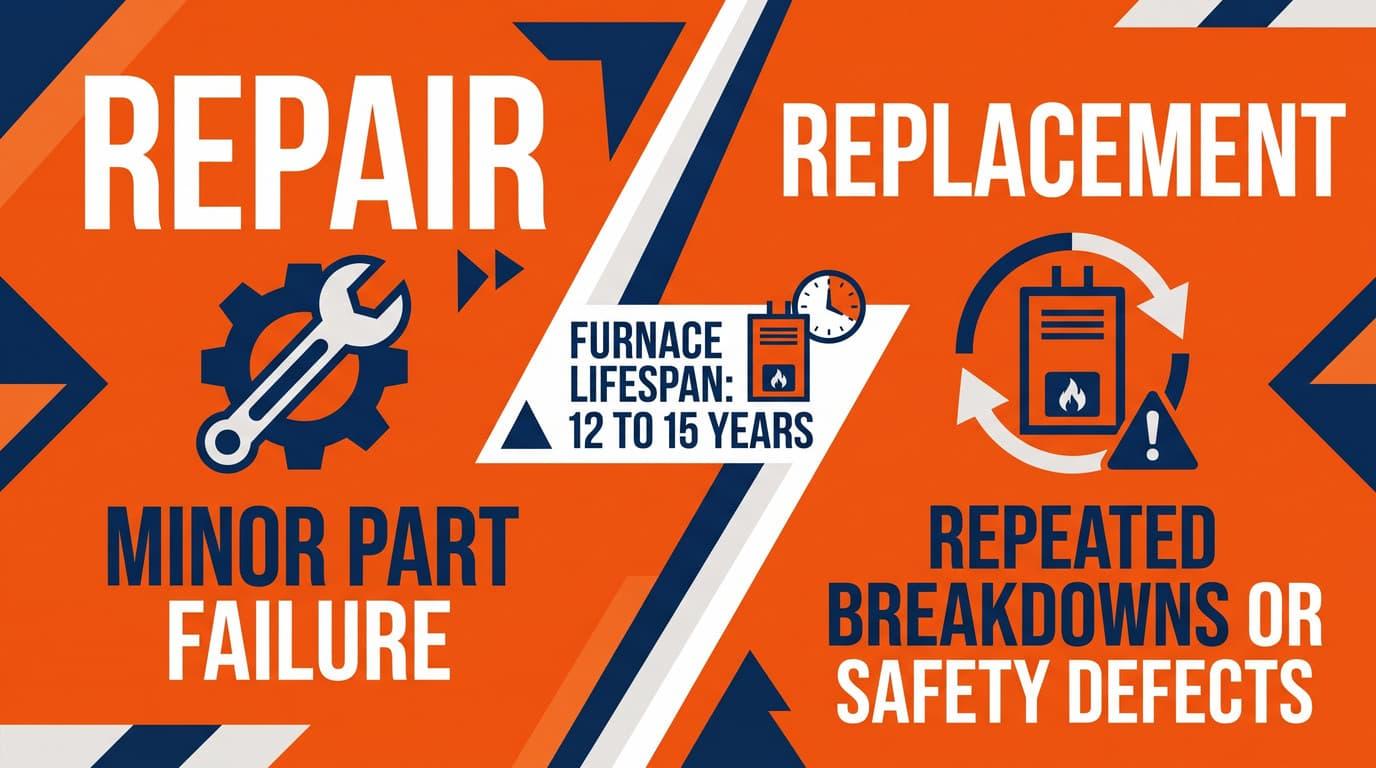
Repair versus replacement should follow diagnosis, not age alone. A failed minor part may be economical to fix; repeated breakdowns or serious safety defects can change the calculation. The question is whether a repair will restore dependable heat at a reasonable cost.
Compare repair cost with the furnace’s condition, breakdown history, energy performance, and likely remaining life. HVAC systems typically last 12 to 15 years, so weigh the repair against the age and condition of your current system. If replacement is recommended, request a separate quote and an explanation of why another repair would be poor value or whether replacement would be more cost effective. That gives you a basis for deciding without pressure.
During a winter outage, ask whether repair can restore heat promptly or requires ordering a part.
Explore My Furnace Replacement Options
Safe Furnace Checks You Can Make Before the Technician Arrives
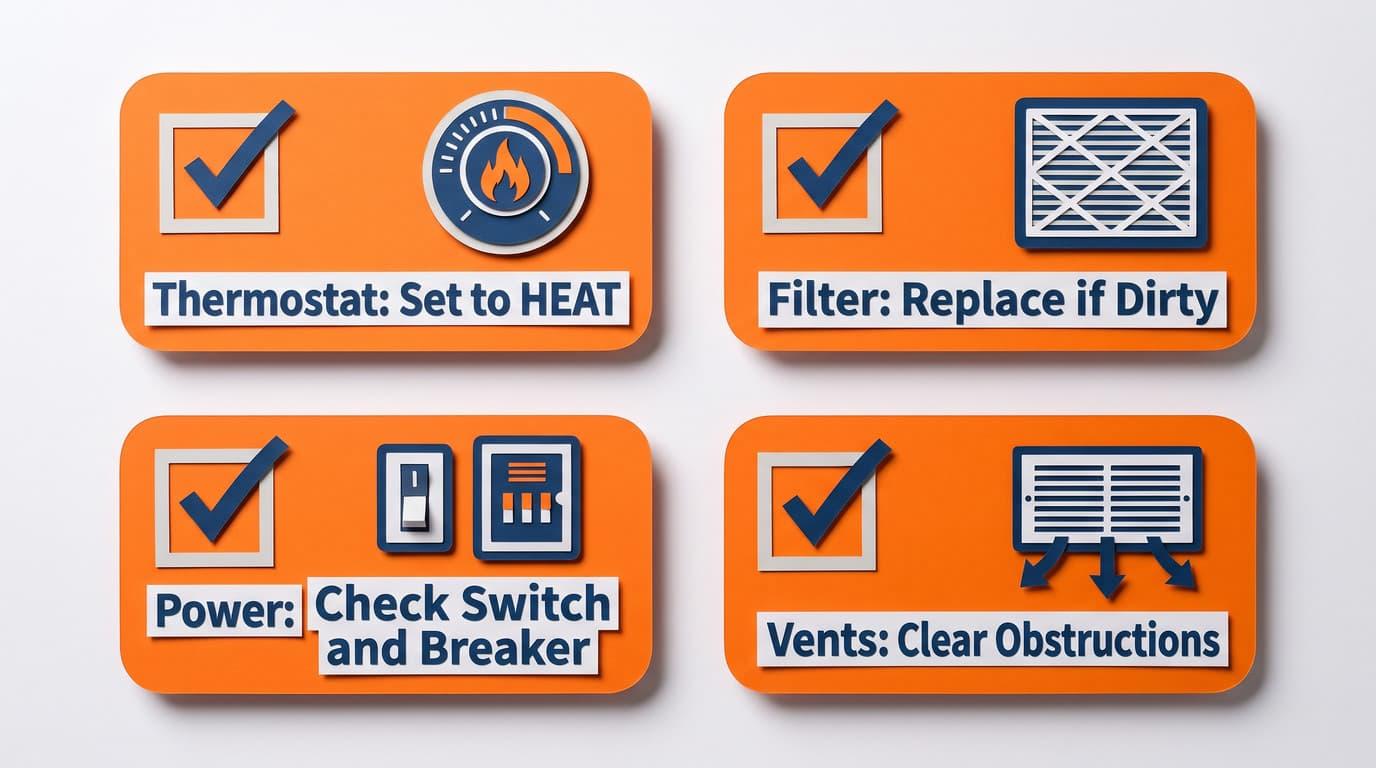
If there’s no gas odor, CO alarm, smoke, or other danger, try these checks without removing panels:
- Thermostat: Make sure it’s set to HEAT, the target temperature is above room temperature, and replace batteries if the model uses them.
- Filter: Check an accessible filter and replace it if it’s visibly dirty, following the manufacturer’s instructions.
- Power: Check whether the furnace switch is on and whether a circuit breaker has tripped. Don’t repeatedly reset a breaker that keeps tripping.
- Vents: Confirm that furniture or stored items aren’t blocking supply and return vents.
If heat doesn’t return, stop troubleshooting. Never bypass safety switches or work on internal gas or electrical components.
How Routine Maintenance and Furnace Tune Up Help Prevent Repeat Breakdowns
After a repair, seasonal maintenance can help catch small issues before Sandy’s coldest weather and routine maintenance can prolong the life of your furnace. During a furnace tune-up, a technician may check the filter and airflow, inspect ignition and safety controls, and assess the system’s heating operation to improve heating-system efficiency and overall HVAC lifespan, which can help prevent costly repairs. These checks can identify developing problems, although maintenance cannot prevent every breakdown, and proper installation and regular service also reduce strain on major components such as the compressor.
Our Comfort Care Membership includes two HVAC tune-ups and one basic fireplace tune-up each year, helping homeowners keep maintenance on schedule.
Keep My Furnace Maintenance on Track
Get Reliable Furnace Repair Help in Sandy from a Family Owned Business
Knowing who to call for furnace repair makes a no-heat problem easier to manage. Call an HVAC contractor for equipment faults, emergency responders for gas or CO dangers, and review a written diagnosis before approving repairs.
At Comfort Solutions, our family owned business is family owned and operated, and our team helps Sandy homeowners restore reliable heating with professional service, clear diagnoses, and practical repair recommendations. If your furnace is struggling, schedule an assessment before a small problem becomes a winter breakdown.
Schedule My Sandy Furnace Repair
Frequently Asked Questions About Furnace Repair in Sandy
Here are five more things Sandy homeowners often ask before booking service.
Can I Stay Home While My Furnace Is Being Repaired?
Usually, yes, if there is no suspected gas leak, carbon monoxide exposure, smoke, or other unsafe condition. The technician may need access to the thermostat, furnace, and nearby electrical equipment. Follow any safety instructions given during the visit.
Will My Homeowners Insurance Pay for Furnace Repair?
Routine wear and mechanical breakdowns are generally not covered by standard homeowners insurance, but damage from a covered event may be. Review your policy and ask your insurer before assuming a repair qualifies.
Why Is Furnace Repair So Expensive?
Furnace repair costs reflect diagnostic time, skilled labor, parts, and sometimes after-hours dispatch. HomeAdvisor’s furnace repair cost guide reports labor rates around 50–150 per hour, although actual rates vary by location and job. Ask for an itemized estimate so you can distinguish diagnostic fees from repair costs.
Can a Furnace Repair Affect My Manufacturer Warranty?
It can, depending on the warranty terms and the repair performed. Keep your equipment model and serial numbers handy, and ask whether the contractor is authorized to perform covered work and whether the required parts qualify.
What Information Should I Have Ready When I Call?
Share your address in Sandy, the furnace brand and approximate age if known, what the system is doing, when the problem began, and whether any error code appears. Mention if the household has urgent heating needs so the dispatcher can explain available appointment options.
Recent News
How Long Does It Take to Install a Furnace? A Sandy Homeowner’s Guide
November 3, 2026
Should I Replace 20 Year Old Furnace? A guide for Sandy Homeowners?
October 22, 2026
How Much Does Furnace Repair Cost in Sandy, Utah?
October 22, 2026

Furnace Tune-Up Cost in Sandy, UT: What Homeowners Need to Know
September 28, 2026
How Much Does It Cost to Replace a Furnace in Sandy, Utah: A Homeowner’s Guide
September 23, 2026
How Long Do Furnaces Last for Salt Lake City Residents? A Guide to Warning Signs and Replacement Timing
September 7, 2026