Serving The Wasatch Front Area



Back to Blog
How Long Do Furnaces Last for Salt Lake City Residents? A Guide to Warning Signs and Replacement Timing
September 7, 2026
If your furnace is getting older, every strange noise, slow heating cycle, or unexpectedly high utility bill can make you wonder the same thing: Is this the winter it finally gives out?
Most furnaces don’t suddenly become “old” at a specific age. Their condition depends on how they were installed, how often they’ve been maintained, how hard they work each winter, and what repairs they’ve already needed.
That matters even more in Sandy, where heating systems have to work harder to keep homes comfortable through months of cold-weather demand.
A well-maintained furnace typically lasts 15 to 20 years, although some systems can last longer under the right conditions.
Instead of treating that range as an expiration date, think of it as the point at which you should start paying closer attention to reliability, comfort, and repair history.
Comfort Solutions can help you figure out what those numbers mean for the furnace in your Sandy home. We look at the system’s age, condition, repair history, airflow, and current heating performance rather than recommending replacement based on age alone. That gives you a clearer picture of whether your furnace still has useful life left or whether it is smarter to start planning before winter forces the decision.
Key Takeaways
- The average furnace life is about 15 to 20 years with proper installation and maintenance.
- Sandy’s winter heating demand can add substantial runtime, so calendar age is only one part of furnace lifespan.
- Poor airflow, neglected maintenance, duct leakage, incorrect sizing, and installation problems can make a furnace work harder than necessary.
- Rising heating costs, uneven temperatures, frequent repairs, short cycling, and new noises can signal that replacement is getting closer.
- ENERGY STAR recommends considering replacement once a furnace is more than 15 years old, especially when repair needs and energy bills are also increasing. That guidance is a starting point for replacing an older furnace in Sandy as bills and repairs climb.
What Is the Average Furnace Lifespan?
For most homeowners, 15 to 20 years is a useful planning window rather than a firm expiration date. Some systems continue operating beyond that range, while others develop costly problems earlier.
Think about two furnaces installed in Sandy during the same year. One has received regular maintenance, has good airflow, and heats a well-sealed home.
The other has spent years operating with restricted airflow, leaky ducts, and recurring repairs. Their installation dates may match, but their actual conditions can be very different.
What matters most is how reliably the furnace heats your home, how often it needs attention, and what it costs to keep running.
Does Sandy’s Climate Affect Furnace Lifespan?
Yes. Climate affects how much your heating system has to run, and total runtime matters because every heating cycle adds use to burners, blowers, ignition components, electrical parts, and other moving components.
Sandy Homes Face Real Winter Heating Demand
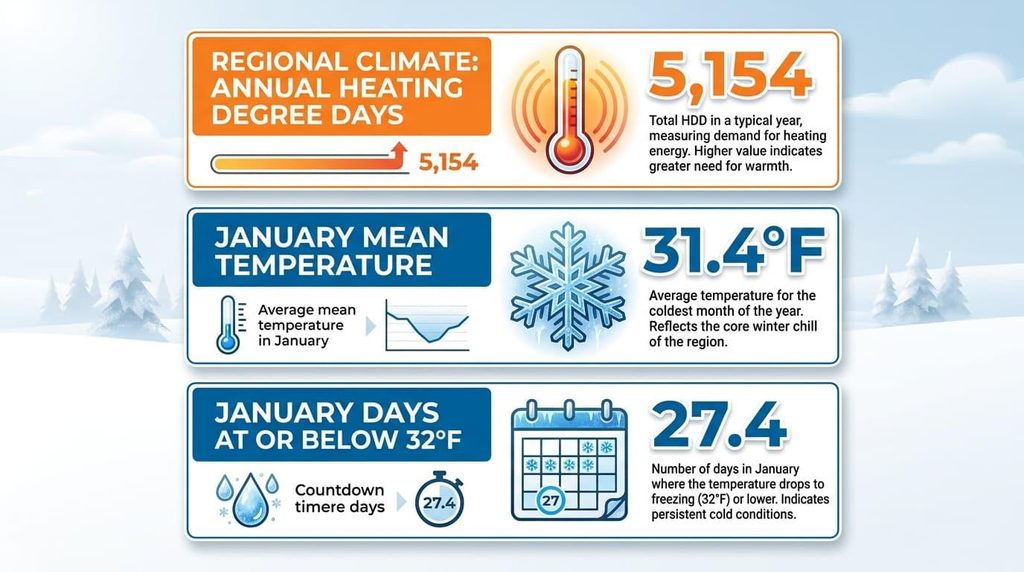
Anyone who has lived through a Wasatch Front winter knows the furnace isn’t sitting idle for months at a time. Nearby Salt Lake City climate data gives useful regional context: NOAA climate normal record 5,154 annual heating degree days using a 65°F base, a 31.4°F January mean temperature, and an average of 27.4 January days with minimum temperatures at or below 32°F.
Those readings come from Salt Lake City International Airport rather than Sandy itself, so they should be treated as regional context rather than Sandy-specific weather measurements. They still show why heating systems across the Salt Lake Valley spend a meaningful part of the year working to keep homes comfortable.
For your furnace, the concern isn’t just one unusually cold night. Wear accumulates across thousands of heating cycles over many winters. A system that already has airflow problems, poor sizing, or worn components may feel that workload sooner than one operating under better conditions.
If the furnace is running longer or struggling to reach the thermostat setting, an inspection can determine whether Sandy’s winter workload is exposing an age-related issue, restricted airflow, or another heating problem.
What About Utah’s Winter Inversions?
Sandy homeowners are also familiar with Utah’s winter inversion season. The Utah Department of Environmental Quality reports that a typical Utah winter has about five to six multi-day inversion episodes and an average of 18 days when PM2.5 levels exceed the national standard.
An inversion doesn’t directly shorten furnace life, but it may prompt homeowners to monitor indoor air quality and air filters more closely as part of routine maintenance.
A dirty or clogged filter can restrict airflow, increase furnace runtime, increase motor wear, and raise energy use, according to the U.S. Department of Energy. If your air filters load quickly in winter, replace filters regularly rather than waiting for a fixed calendar date.
What Can Shorten Furnace Lifespan?

Sometimes an aging furnace is blamed simply because of its age. In reality, several problems can make a system work harder than necessary long before it reaches the end of its expected lifespan.
Poor Installation or Incorrect Sizing
A furnace needs to match your home’s heating needs. An oversized furnace can short cycle, which adds wear and tear and may shorten system life. If it is undersized, it may struggle to catch up during colder periods.
Installation quality matters too. ENERGY STAR reports that improper HVAC installation can reduce system efficiency by up to 30% and may shorten equipment life. Square footage alone is not enough, so an HVAC professional should perform a load calculation before a replacement is installed correctly. That is one reason a replacement should be properly selected and installed for the home rather than treated as a simple equipment swap.
Restricted Airflow
Your furnace needs steady airflow to move heat through your home, and restricted airflow helps keep the furnace running efficiently only when filters are clean. When a dirty filter restricts that airflow, clogged air filters can increase strain, causing the system to run longer and operate under additional stress.
ENERGY STAR recommends monthly checks during periods of heavy use, and basic maintenance requirements include checking air filters during those higher-demand months and cleaning or replacing the filter when it becomes dirty. The exact replacement frequency still depends on your filter type, pets, dust, household conditions, and HVAC setup.
Leaky Ductwork
If some rooms in your Sandy home consistently feel colder than others, the furnace itself may not be the only problem, since issues in the air ducts can also cause uneven heating and extra runtime. ENERGY STAR estimates that about 20% to 30% of the air moving through a typical duct system can be lost through leaks, holes, and poor connections.
That can leave you turning up the thermostat because the bedroom still feels cold while the furnace keeps running to compensate. Over time, unnecessary runtime increases system usage. Before assuming the furnace simply needs replacement, it makes sense to look at the equipment and air distribution system together.
Skipping Furnace Maintenance
It’s easy to postpone routine maintenance and annual maintenance when the system seems to be working normally. The problem is that developing issues are usually easier to address before they become the reason your house suddenly has no heat.
Annual pre-season maintenance gives a technician a chance to inspect heating-specific items such as gas connections, burner combustion, controls, electrical connections, and the heat exchanger before the busiest part of winter.
Annual inspections help catch problems early and can help homeowners save money on larger repairs. Regular maintenance cannot guarantee a particular lifespan, but it can help catch wear before a smaller issue becomes a more expensive one. Schedule annual furnace maintenance to keep the system safe and efficient.
How Can You Tell Your Furnace Is Getting Old?
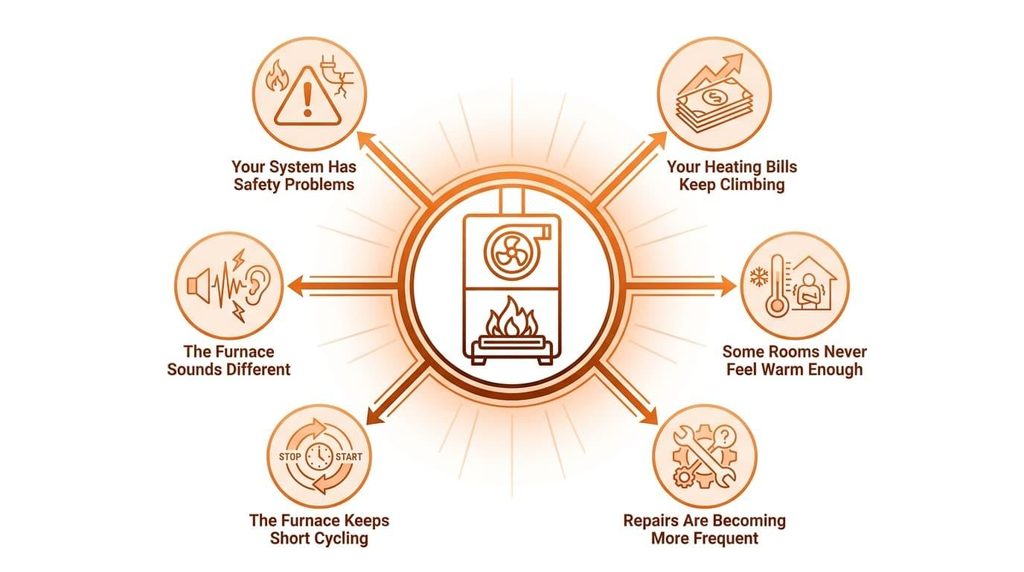
A furnace nearing the end of its useful life usually gives you more information than its age alone.
One warning sign does not automatically mean you need replacement, but when an older furnace starts showing several problems at once, the pattern becomes harder to ignore.
Your Heating Bills Keep Climbing
If your utility bill rises but your thermostat habits have not changed, the furnace may be operating less efficiently than it once did. Before blaming the furnace alone, also consider fuel rates, insulation, duct leakage, thermostat settings, and other household changes.
Some Rooms Never Feel Warm Enough
New or worsening temperature differences between rooms can indicate declining furnace performance, airflow restrictions, duct problems, or equipment sizing issues. A noticeable change is worth investigating, especially if the system previously heated the home evenly.
Repairs Are Becoming More Frequent
One repair doesn’t make an older furnace a bad investment. Typical furnace repair costs can range from $100 to $3,000, depending on the issue.
By comparison, furnace replacement usually runs from $2,500 to $7,500, which is why repeated breakdowns can shift the decision away from another fix. But if you feel like you’re calling an HVAC technician every winter, then the decision is no longer about a single failed part.
It becomes a question of how much more money you want to invest in equipment that may already be nearing the end of its normal service life.
The Furnace Keeps Short Cycling
A furnace shouldn’t repeatedly turn on and shut off every few minutes. Short cycling can be caused by airflow, control, thermostat, sizing, or other equipment issues. Because repeated cycling adds operational stress, it’s worth diagnosing the underlying cause rather than waiting for it to disappear.
The Furnace Sounds Different
You know what your home normally sounds like. If your furnace suddenly starts making strange noises, such as banging, squealing, rattling, grinding, or another unfamiliar sound, something has changed. That doesn’t automatically mean replacement, but it deserves professional attention.
Your System Has Safety Problems
Safety concerns move the conversation beyond comfort. Combustion problems, gas issues, or a cracked heat exchanger are examples of serious issues that need immediate professional evaluation. If you suspect a gas or carbon monoxide problem, don’t wait for the next scheduled tune-up.
When to Replace a Furnace
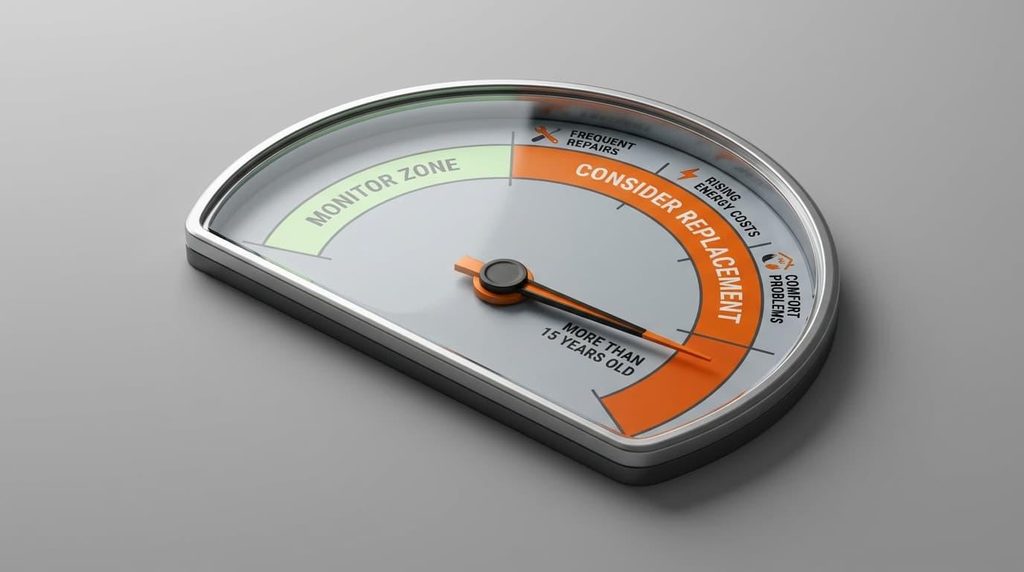
Knowing when to replace furnace equipment is rarely as simple as reaching one specific age. ENERGY STAR recommends considering replacement once a furnace or boiler is more than 15 years old. It also points to frequent repairs, rising energy costs, and comfort problems as reasons to have aging equipment evaluated.
For older units with repeated issues, it is often less cost effective to keep repairing them than to invest in a new unit.
The word “considering” matters. A furnace turning 15 does not suddenly become useless. Instead, that age is a sensible time to monitor the system more closely and think through what you would do if a major repair were needed.
Ask yourself whether the furnace has become less reliable, whether repairs are more frequent, whether comfort has changed, and whether another repair is likely to buy you meaningful additional life. Those questions usually tell you more than the age printed on the equipment.
When Should You Start Comparing New Furnaces?
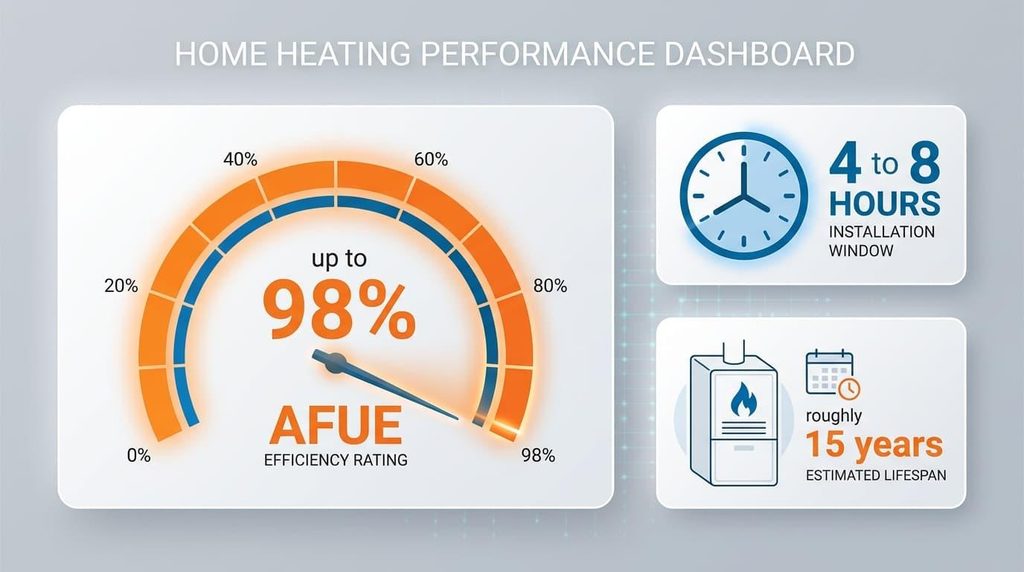
You don’t need to wait until the furnace stops working. Once a system reaches roughly 15 years and starts showing other signs of age, it’s reasonable to begin comparing replacement options while you still have time to make a calm decision.
Waiting until your furnace quits during a cold Sandy night changes the situation. Instead of comparing equipment thoughtfully, you are trying to get the heat back on as quickly as possible. Planning early gives you time to consider sizing, efficiency, ductwork, installation needs, financing, and your household budget.
One of the key factors when comparing a new furnace is the efficiency rating, often measured by annual fuel utilization efficiency, and some modern furnaces can reach up to 98% AFUE.
A high-efficiency furnace may come with a higher initial cost, but it can deliver long-term energy savings, lower utility bills over time, and some models may qualify for utility rebates.
Making that decision before it becomes an emergency gives you more time to compare the value of another repair with the benefits of replacement.
Some high-efficiency gas furnaces may also last longer with good care than lower-efficiency models. Comfort Solutions has served Utah homeowners since 2000 and is the largest Trane Comfort Specialist in the Rocky Mountain region.
Our team evaluates your Sandy home’s heating needs, ductwork, and existing system before recommending properly sized replacement equipment. Professional installation matters because new furnace installation usually includes removal, setup, calibration, and testing, and often takes 4 to 8 hours.
Explore Sandy furnace installation
How to Help Your Furnace Last Longer
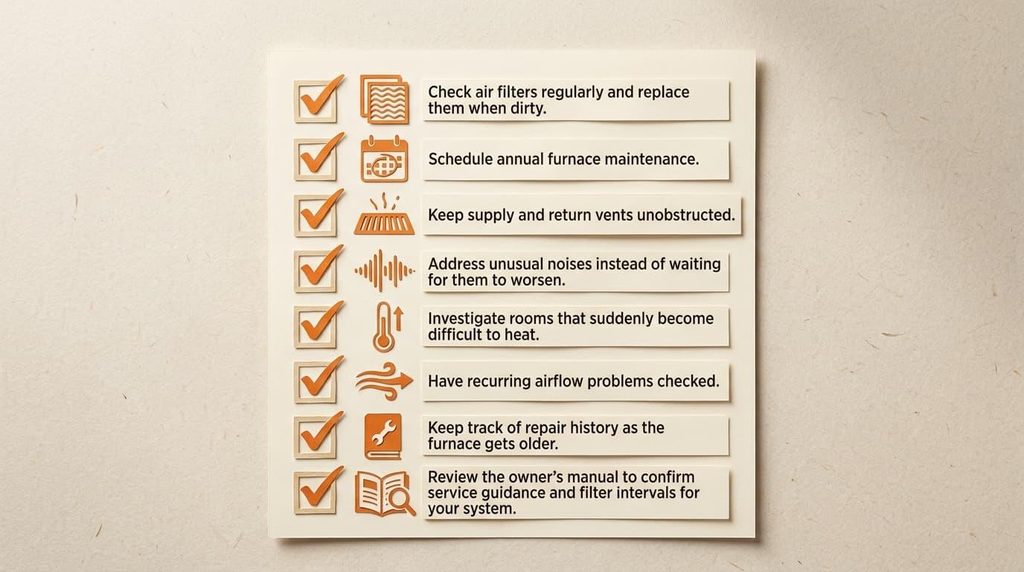
You can’t prevent normal aging, but you can avoid making your furnace’s job harder than necessary. Focus on the conditions that support proper airflow, steady operation, and early problem detection.
- Check air filters regularly and replace them when dirty.
- Schedule annual furnace maintenance.
- Keep supply and return vents unobstructed.
- Address unusual noises instead of waiting for them to worsen.
- Investigate rooms that suddenly become difficult to heat.
- Have recurring airflow problems checked.
- Keep track of repair history as the furnace gets older.
- Review the owner’s manual to confirm service guidance and filter intervals for your system.
These habits aren’t a promise that your furnace will last 20 or 30 years. They simply provide the equipment with better operating conditions and give you more warning when performance starts to change.
Why Sandy Homeowners Choose Comfort Solutions
When your furnace is aging, the last thing you need is pressure to replace equipment before you understand what’s actually wrong.
Comfort Solutions has served Utah homeowners since 2000 and now supports communities across the Wasatch Front.
Our team works with homeowners who are trying to decide whether an older system still warrants another repair or it’s time to start planning for a replacement. We focus on the condition of your equipment, how your home is heated, and the options that make sense for your situation.
Don’t Let Your Furnace Choose the Timing for You
For most homeowners, 15 to 20 years is the practical range to keep in mind, but the condition of your furnace matters more than hitting an exact birthday.
If your furnace is getting older, you don’t need to assume the worst every time it makes a new sound. But you also don’t have to wait until you wake up to a cold Sandy home before asking what comes next. Pay attention to repair history, heating costs, comfort, airflow, and how reliably the furnace can keep your family warm all winter long.
At Comfort Solutions, we help Sandy homeowners understand what their current systems are doing before a breakdown forces a rushed decision. We assess the furnace’s repair history, energy use, airflow, heating performance, and overall reliability to determine whether another repair makes sense or it’s time to consider replacement.
Frequently Asked Questions About Furnace Lifespan in Sandy, UT
Here are a few of the most common questions Sandy homeowners may have.
How Long Do Furnaces Last in Utah?
Most well-maintained furnaces have an average lifespan of 15 to 20 years, although individual systems can last longer. A furnace’s life expectancy depends on maintenance, airflow, installation quality, and overall wear. Utah’s winter heating demand can increase how much a furnace runs, so actual condition, maintenance history, installation quality, and airflow matter just as much as age.
Can a Furnace Last 30 Years?
Some furnaces can last that long, but homeowners shouldn’t plan around it. The usual planning range is still 15 to 20 years. If your system is already beyond that range, its current condition matters more than trying to reach a specific age.
Should I Replace a 15-Year-Old Furnace?
Not necessarily. 15 years is a good point to begin paying closer attention to repair frequency, energy use, comfort, and overall system condition.
A reliable furnace may still have useful life left, but you should have a plan in place before a major failure forces the decision. If replacement looks likely, comparing modern furnaces early gives you more time to choose the features and efficiency level that fit your home.
How Often Should Furnace Filters Be Checked?
Check the filter regularly during the heating season and replace it when it becomes dirty. The right schedule depends on your filter type, household, pets, dust levels, system use, and indoor air quality needs.
Does Cold Weather Shorten Furnace Life?
Cold weather can indirectly affect furnace lifespan because higher heating demand leads to more runtime. That makes proper sizing, airflow, maintenance, and installation especially important in places where the furnace works hard every winter.
Is It Better to Replace Before Winter?
You don’t have to replace a working furnace simply because winter is approaching. However, researching your options before an older system fails gives you more time to compare equipment, installation needs, and costs without a cold house making the decision for you.
Recent News

Should I Replace 20 Year Old Furnace? A guide for Sandy Homeowners?
October 22, 2026

How Much Does Furnace Repair Cost in Sandy, Utah?
October 22, 2026

Furnace Tune-Up Cost in Sandy, UT: What Homeowners Need to Know
September 28, 2026

How Much Does It Cost to Replace a Furnace in Sandy, Utah: A Homeowner’s Guide
September 23, 2026

How to Improve Indoor Air Quality During Utah’s Wildfire Season
August 28, 2026
AC Stopped Working in Ogden? Common Causes and What to Do Next
August 24, 2026