Serving The Wasatch Front Area



Back to Blog

How Much Does It Cost to Replace a Furnace in Sandy, Utah: A Homeowner’s Guide
September 23, 2026
If you’re asking, “How much does it cost to replace a furnace?” homeowners in Sandy, Utah, can generally expect to pay between $4,000 and $12,000. The final price depends on your home’s size, the furnace you choose, and the complexity of the installation. A straightforward gas furnace replacement with existing ductwork in good condition may cost less, while changes to venting, ductwork, or difficult installation access can increase the total.
Several factors influence where your project falls within that range, including furnace type, efficiency rating, labor, permits, and installation requirements. National averages can provide a starting point, but they do not always reflect local labor costs, code requirements, or the conditions found in Sandy homes.
In this guide, we’ll explain the main factors that affect furnace replacement cost in Sandy, Utah, so you can better understand what goes into a quote and what to consider before replacing your system.
What Determines Furnace Replacement Cost in Sandy?
A furnace replacement quote involves more than the equipment itself. Even for a 2,000-square-foot home, a contractor should use a Manual J load calculation to determine the heating capacity your house actually needs. Square footage alone cannot account for insulation, windows, air leakage, orientation, or Sandy’s winter conditions.
Additional installation costs may include labor, permits, old furnace removal, ductwork changes, venting, drainage, gas-line adjustments, and difficult access. The Air Conditioning Contractors of America’s quality installation standard uses load calculations to guide equipment selection rather than relying on floor area alone.
Nine common cost factors explain why one replacement project may cost considerably more than another:
| Cost Factor | What Changes The Price | What To Verify |
| Heating capacity | Higher BTU (British Thermal Units) output can increase equipment cost | Capacity matches the load calculation |
| Efficiency | Higher AFUE ratings generally cost more | The quoted rating appears in writing |
| Performance tier | Two-stage and variable-speed systems cost more than single-stage models | The added control addresses a comfort need |
| Labor cost | Installation time increases with access and modifications, and labor typically accounts for 30% to 50% of the total replacement price at about $75to $100 per hour | Labor appears separately on the quote |
| Permit cost | Local requirements affect filing and inspection charges | The contractor identifies who obtains the permit |
| Old furnace removal | Removing the existing furnace requires labor and compliant handling, with disposal often costing $50 to $300 | Removal and disposal are included |
| Ductwork | Transitions, leaks, or damaged sections require additional materials | Modifications have a defined scope |
| Venting and drainage | Condensing furnaces may require compatible venting and a condensate drain | Both components are identified |
| Site complexity | Attic access, combustion air, and gas-line changes increase labor | Site-specific work appears before approval |
BTU capacity describes heat output, but the right size depends on your home’s heating needs. An oversized furnace may cycle too often, while an undersized system may struggle in cold weather. Homeowners considering which heating components to change should also confirm that existing ductwork can support the new system.
Higher AFUE means more fuel becomes usable heat. ENERGY STAR’s furnace efficiency criteria vary by furnace type and region, so consider the rating alongside fuel type and installation requirements. Written allowances and change-order terms can also make quotes easier to compare.
Furnace Types and Furnace Installation Costs
Installed prices vary by fuel source, equipment type, and the work required to connect the new furnace. A basic single-stage natural gas furnace may fall toward the lower end of the gas range when existing ducts, gas service, and venting are suitable for the replacement.
This Old House’s guide to furnace installation costs provides published cost ranges by fuel type:
| Furnace Type | Installed Cost Range | Main Installation Consideration |
| Natural gas furnace | $3,800 to $10,670 | Gas connections, combustion air, and venting |
| Electric furnace | $1,700 to $6,750 | Electrical capacity and local operating cost |
| Propane furnace | $3,400 to $7,135 | Fuel storage, piping, and venting |
| Oil furnace | $6,140 to $9,800 | Tank condition, fuel lines, and venting |
| Wood furnace | $2,600 to $12,500 | Fuel handling, storage space, and venting |
Natural gas is common along the Wasatch Front where utility service is available. Replacing an existing gas unit can limit conversion work, but venting requirements still depend on the new furnace’s efficiency tier. A high-efficiency condensing furnace may require compatible exhaust materials and condensate management, which can increase installation costs. By comparison, electric furnaces cost less to buy in many cases but may cost more to run depending on local electricity rates and climate.
Gas equipment also differs by ignition system, while performance tiers affect comfort independently of AFUE. Two-stage and variable-speed systems generally cost more than single-stage equipment but can provide more controlled operation and consistent comfort.
When comparing furnace types, keep these factors in mind:
- Installation requirements can change the final price significantly.
- Equipment cost does not always reflect long-term operating costs.
- Converting fuel types may require additional plumbing, electrical, venting, or storage work.
- The best comparison includes both the equipment and the full installation scope.
Propane and oil systems can also exceed general planning ranges when fuel-system or venting changes are needed. Before choosing a furnace, compare the installation requirements with expected energy use and long-term operating costs, since fuel choice affects both installed price and operating cost for natural gas furnaces and other systems.
When an Older Furnace Needs Repair or Replacement
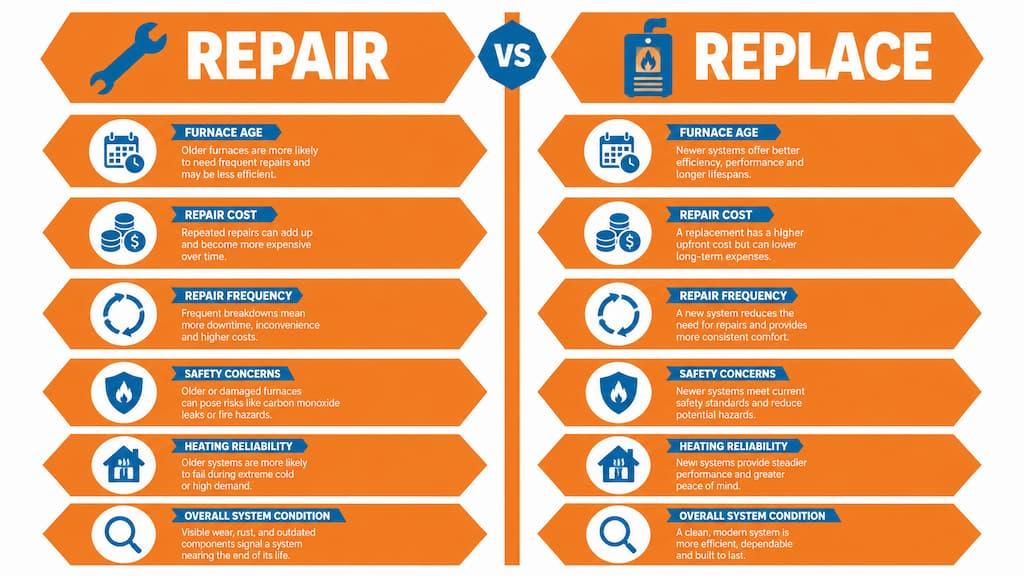
Furnaces typically last 15 to 20 years, but age alone shouldn’t decide whether to repair or replace a system. A 30-year-old furnace may be difficult to justify repairing, while a smaller repair on an older but well-maintained system may still make sense.
Several factors can help determine which option is more practical:
- Furnace Age: Most residential furnaces have a limited service life, so replacement becomes more worth considering as a system gets older. Comfort Solutions’ guide to how long furnaces last explains how maintenance and operating conditions can affect that timeline.
- Repair Cost: Compare the repair estimate with the cost of a replacement. Angi’sfurnace installation cost guide recommends considering replacement when repair expenses become significant compared with a new system. Cost alone, however, shouldn’t override safety concerns.
- Repair Frequency: One inexpensive repair may restore heat, but frequent repairs and repeated breakdowns can be a sign that replacement makes more sense. A written diagnosis should identify the failed component and explain the furnace’s overall condition.
- Safety Concerns: A confirmed cracked heat exchanger requires immediate professional attention because it can allow combustion gases to enter the air stream. A yellow pilot light can indicate potential carbon monoxide production and should be evaluated by a qualified technician rather than judged on repair cost alone.
- Heating Reliability: Consider how confidently the furnace can handle another Sandy winter. Frequent failures, inconsistent heating, dust and soot buildup in the home, or rising energy bills may indicate that the current furnace is failing and that replacement offers a more dependable long-term solution.
- Overall System Condition: Ductwork, airflow, efficiency, and other components are also important. Understanding the common repair and replacement myths can help homeowners recognize situations where repairing or replacing may be appropriate.
Ultimately, the decision should consider cost, safety, condition, and expected remaining service life together.
Comfort Solutions can help you evaluate your furnace’s condition and determine whether repair or replacement makes more sense for your home. Our experienced HVAC technician team can assess your current furnace, explain your options, and provide a clear recommendation based on your heating needs and budget.
Schedule Your Furnace Assessment
What Separates a Good Furnace Quote From a Bad One
A good furnace quote should clearly define the equipment, installation work, and responsibilities involved. A weak quote may provide one total price without explaining how the system was sized, what installation work is included, or how warranty coverage is handled. It should also separate the equipment itself, which often runs $1,500 to $4,000 before installation extras are added.
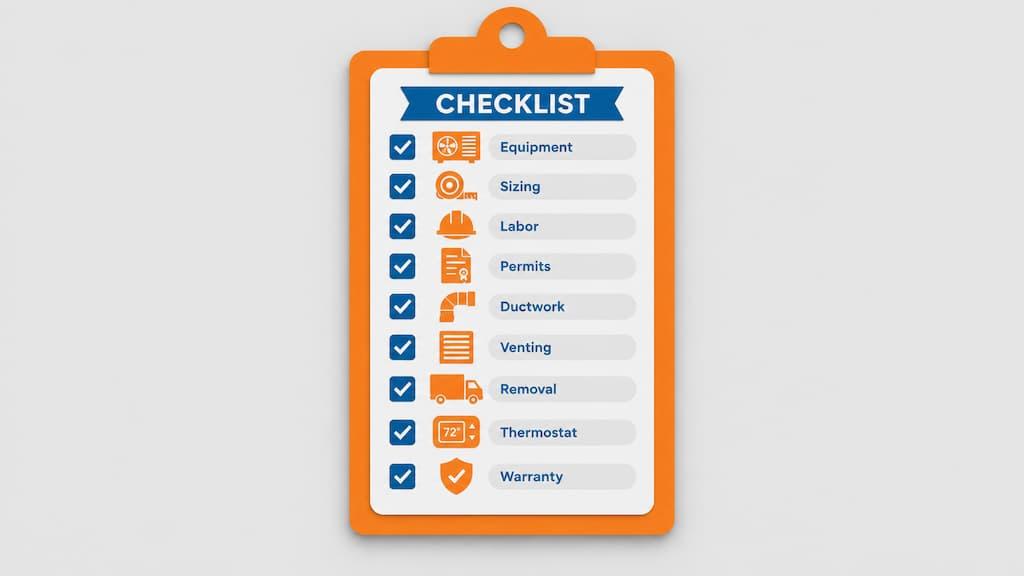
A comparable quote should identify:
- Equipment: Model, heating capacity, performance tier, AFUE rating, and efficiency level.
- Sizing: Manual J load calculation and key design assumptions.
- Labor: Included installation work, how additional work is priced, and whether professional installation is included to protect safety, code compliance, and warranty coverage.
- Permits: Filing, inspection, and responsibility for corrections.
- Ductwork: Required transitions, repairs, sealing, or airflow modifications.
- Venting: Exhaust, combustion air, and condensate requirements.
- Removal: Old furnace disconnection, hauling, and disposal.
- Thermostat: Compatibility with the new system, since thermostat upgrades can add $100 to $400.
- Warranty: Parts and labor coverage, registration requirements, and exclusions.
A load calculation is especially important because square footage alone cannot determine the right furnace size. Insulation, windows, air leakage, and solar exposure can all affect heating needs, meaning two homes with similar floor plans may require different equipment.
Warranty terms also deserve a closer look. Manufacturer warranties may cover parts, while contractor warranties may cover labor, so confirm who handles diagnosis, replacement labor, and related materials if a covered component fails. Qualified furnace installers can also explain what must be documented to keep coverage valid.
The lowest upfront price isn’t always the lowest long-term cost. Higher-efficiency equipment may reduce fuel use, but the value depends on installation cost, utility rates, and heating demand, so the highest rating is not always the best fit. Heat pumps also have different operating and electrical considerations and should be evaluated separately.
At Comfort Solutions, we take a thorough and transparent approach to furnace replacement and upgrades, but the above checklist can help you compare any furnace quotes on a more consistent basis. Differences in scope and installation complexity are one reason the new furnace cost can vary from quote to quote.
Why Utah’s Climate and Codes Change the Furnace Math
Furnace replacement in Utah involves more than choosing equipment and comparing prices. Proper sizing, efficiency, installation requirements, permits, and available incentives can all affect the total cost of a project.
Utah incentives may help with qualifying upgrades, but eligibility and program availability should be verified before you include them in your budget.
How Sandy’s Climate Affects Furnace Sizing
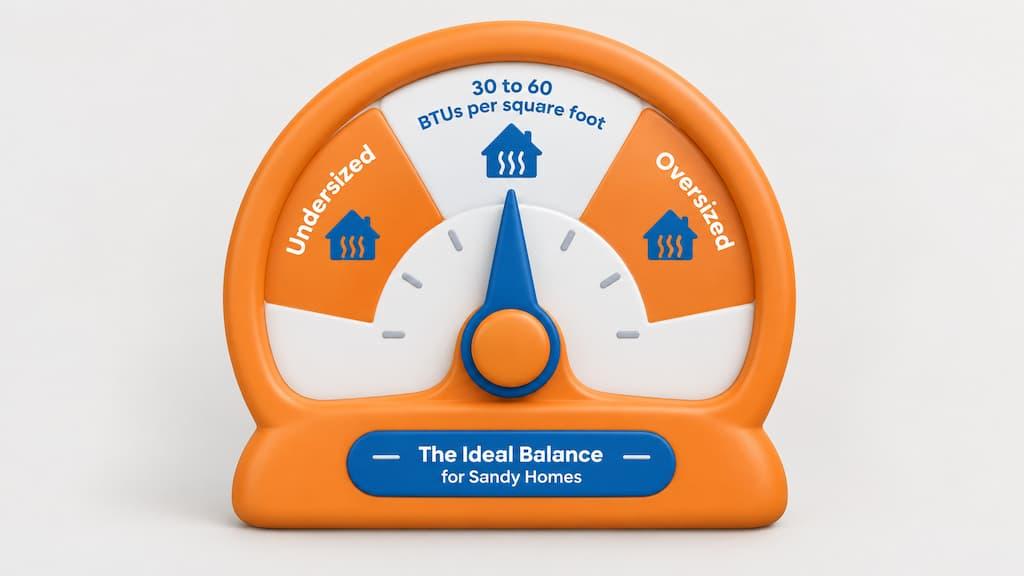
Sandy’s winter weather makes sizing mistakes more noticeable. An undersized furnace may struggle to maintain indoor temperatures during the coldest conditions, while an oversized system can cause short cycling, uneven heating, and unnecessary fuel use. Homes typically need about 30 to 60 BTUs per square foot, but Manual J calculations and local conditions should guide the final size.
Proper sizing should also account for airflow and duct performance so the furnace can heat homes effectively, rather than simply selecting a larger furnace to compensate for restricted ducts or poor distribution.
A heat pump can also be part of a Utah heating plan, but cold-weather performance, electrical capacity, and backup heat all affect the comparison. Homeowners considering a conversion should request a separate design and cost analysis rather than assume it will be a direct furnace replacement.
Utah Incentives and Installation Requirements
Utah’s home energy rebate programs are worth checking before approving an equipment purchase, since high efficiency furnaces may qualify for rebates or tax credits depending on current program rules. Funding, eligible products, program status, and household requirements can change, so confirm current terms directly with the state.
Federal incentives also require careful verification. The IRS has published energy-related tax credit guidance, but eligibility can depend on installation dates and current federal law. Qualifying systems are often based on annual fuel utilization efficiency, and high-efficiency models generally rate 96% or higher, while 90% to 98% AFUE equipment usually costs more upfront but can lower long-term utility bills through better energy efficiency. Some qualifying upgrades may offer rebates of up to $600 and save several hundred dollars a year, helping homeowners save money.
Contractors should not promise tax credit approval or deduct an incentive from a contract price unless the terms are confirmed.
A furnace replacement may also require a municipal permit and inspection covering:
- Fuel connections and gas-line work
- Venting and combustion air
- Electrical work
- Final inspection and sign-off
Requirements vary by municipality, so confirm which authority applies and who handles the permit.
Regular fall HVAC maintenance can also identify developing problems before winter arrives, giving homeowners more time to evaluate repair, replacement, or efficiency upgrades, and proper maintenance helps efficient equipment keep performing as intended.
Get a Furnace Replacement Quote You Can Actually Compare
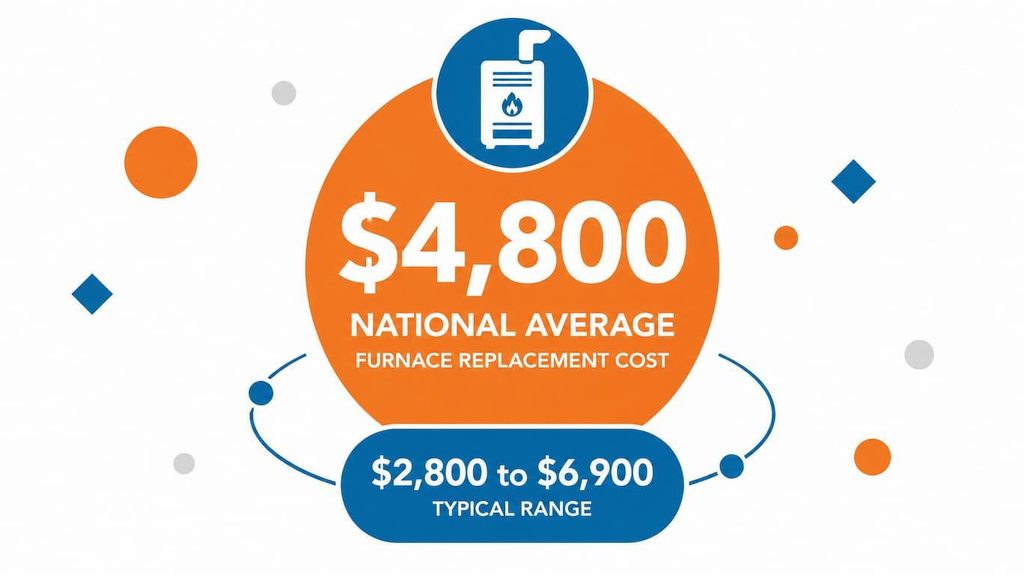
The best way to understand your furnace replacement cost in Sandy is to compare itemized quotes based on the same load calculation and installation scope. The national average cost to replace a furnace is about $4,800, with the average cost for many projects falling between $2,800 and $6,900 before local variables are applied. Look for clear details on equipment, labor, permits, removal, ductwork, venting, and warranty coverage so you’re comparing the full project rather than just the bottom-line price.
Proactive replacement also gives you time to review your options before a winter breakdown forces a rushed decision, and comparing quotes early can help most homeowners reduce the overall cost.
Comfort Solutions serves homeowners across Sandy and the surrounding Wasatch Front, and our Sandy furnace installation team can provide an in-home assessment and detailed quote based on your home’s heating needs.
When you’re ready to replace your furnace, our team can walk you through equipment options, installation requirements, and available financing so you know what to expect before work begins.
Get Your Furnace Replacement Quote
Frequently Asked Questions About Furnace Replacement in Sandy, Utah
Can the existing thermostat stay with a new furnace?
Sometimes. If the thermostat is compatible with the new furnace’s controls and wiring, it may not need replacement. Advanced equipment may require a compatible thermostat to access its full operating capabilities.
Should the furnace and air conditioner be replaced together?
Not automatically. Replacing both may make sense when the systems are similar in age or compatibility is a concern, but a functioning air conditioner can often remain in service independently.
How long should a homeowner wait before comparing bids?
You don’t need to wait for a complete failure. If your furnace is aging, repairs are becoming more frequent, performance is declining, or monthly energy costs are rising, start gathering information before replacement becomes urgent.
Can furnace replacement improve indoor air quality?
A new furnace can improve filtration and airflow when paired with compatible equipment and properly maintained ductwork. However, furnace replacement alone doesn’t address every indoor air quality concern in your home.
Does furnace replacement require changes to my ductwork?
Not always. Existing ductwork can often remain when it is properly sized and in good condition, though damaged ducts or airflow problems may require a full hvac system review during replacement planning. However, damaged, restrictive, or poorly configured ducts may need modifications during installation.
Is financing available for furnace replacement?
Financing options may be available for qualifying furnace replacement projects. Some homeowners also pair financing with rebates, tax credits, or broader home improvement budgeting plans to make the project more cost effective. Reviewing payment options before choosing equipment can help you understand the overall investment and select a system that fits your budget.
Recent News
How Long Do Furnaces Last for Salt Lake City Residents? A Guide to Warning Signs and Replacement Timing
September 7, 2026

How to Improve Indoor Air Quality During Utah’s Wildfire Season
August 28, 2026
AC Stopped Working in Ogden? Common Causes and What to Do Next
August 24, 2026
HVAC Maintenance Services in West Haven, Utah: Fall Checklist for Homeowners
August 19, 2026

Best AC for Ogden Home: The Homeowner’s Guide to Choosing the Right AC System
August 14, 2026
AC Installation Cost in Ogden, Utah: What Homeowners Can Expect to Pay in 2026
August 11, 2026