Serving The Wasatch Front Area


Back to Blog
How Long Does It Take to Install a Furnace? A Sandy Homeowner’s Guide
November 3, 2026
Your furnace is getting older, and another Sandy winter is approaching. Replacing it before a breakdown sounds sensible, but it raises a practical question: how long will your home be without heat?
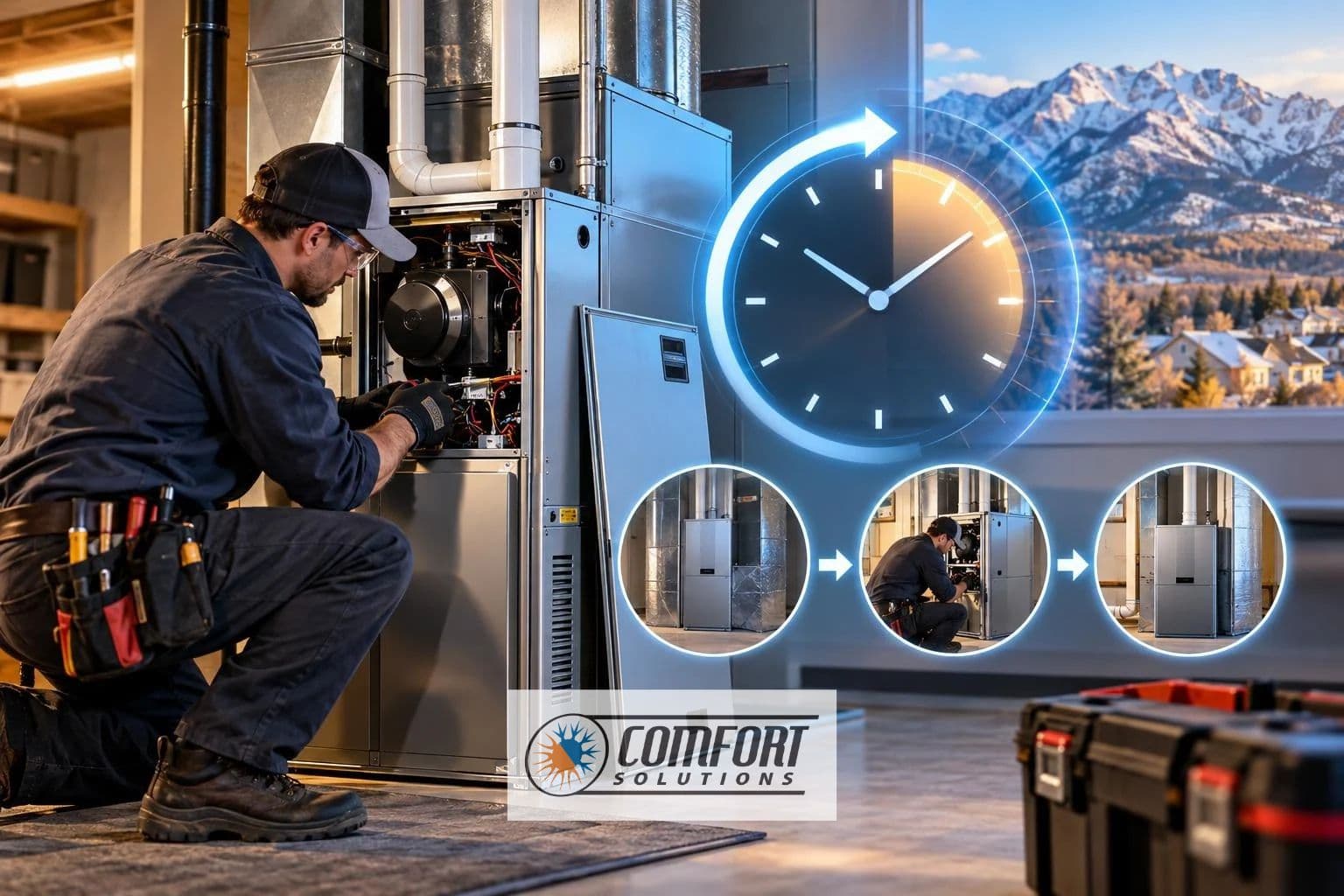
If you’re wondering, “How long does it take to install a furnace?” a straightforward replacement typically takes 4 to 8 hours, often within one working day. Jobs involving ductwork changes, new connections, or equipment relocation can take longer.
At Comfort Solutions, we help Sandy homeowners understand what their installation involves before the crew arrives. From choosing the right furnace to planning installation day, here’s what affects the timeline and how to prepare with confidence.
Key Takeaways
- A straightforward furnace replacement generally takes 4 to 8 hours, including removal, installation, and initial testing.
- First-time installations, equipment relocation, and major ductwork modifications may require more than one day.
- Assessment, equipment selection, permits, and scheduling add calendar time beyond the hours technicians spend onsite.
- Gas connections, venting, electrical compatibility, and access to the furnace can change the installation scope.
- Correct sizing and thorough safety testing matter more than finishing the installation as quickly as possible.
Furnace Installation Timeline: How Long Different Jobs Take
Your installation time can vary based on several factors tied to the home and job scope, including how much of the existing heating setup can be reused. Replacing a compatible unit is generally faster than adding a furnace where the required connections and infrastructure do not yet exist.
| Installation type | Estimated duration | What to expect |
|---|---|---|
| Standard furnace replacement | 4–8 hours | Straight replacements often take about 4 to 6 hours; many straightforward jobs still fall within the broader 4 to 8 hour range |
| Replacement with modifications | A full day or longer | Adjust ductwork, gas lines, venting, or electrical connections; complex installations may require 1 to 3 days to complete |
| Furnace relocation | Potentially multiple days | Move equipment and reroute supporting connections |
| First-time furnace installation | 1–3 days | Add required ductwork, fuel connections, venting, or electrical infrastructure |
According to HVAC.com’s furnace installation guide, a typical furnace installation takes about 4 to 8 hours. That estimate applies to the installation itself, not necessarily the time needed to choose equipment, schedule the work, or complete required approvals. Electric furnaces often take less time to install than gas furnaces because they do not require gas-line and venting work. For example, replacing an accessible basement furnace in Sandy may be a same-day job, while extensive ductwork changes or larger homes with complex ductwork can push the installation duration beyond one day.
What Can Add Hours to a Furnace Installation in Sandy?
The new furnace is only one part of the job. Before installation, technicians need to confirm that the surrounding ductwork, utilities, and installation area can support it. Those details explain why two otherwise similar homes may have different timelines.
Existing Ductwork and Airflow Requirements
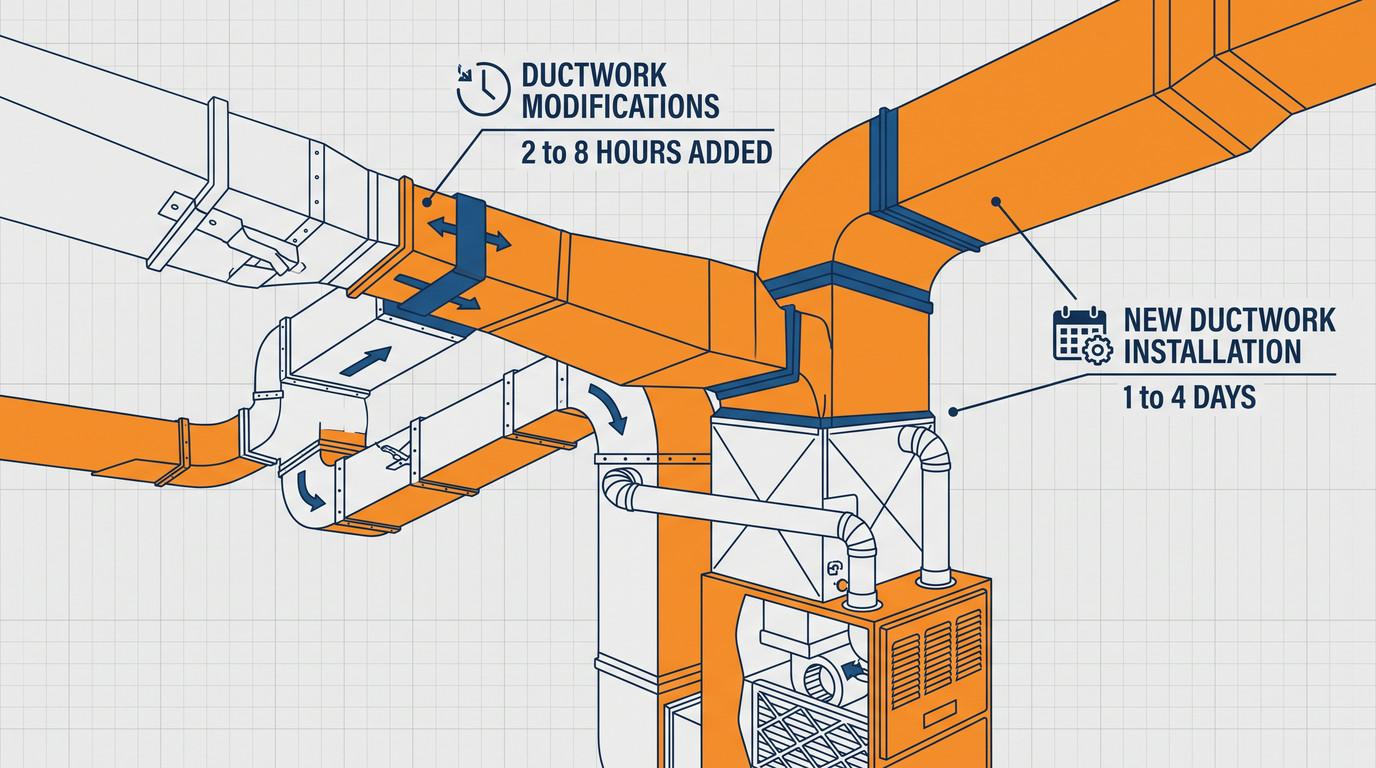
Your furnace depends on supply and return ducts to move heated air throughout the home. If those ducts are correctly sized, sealed, and compatible with the new equipment, connecting a replacement can be relatively simple.
Damaged, leaking, or undersized ducts may need adjustments first, and ductwork modifications can add about 2 to 8 hours to the installation time. HVAC.com notes that installing new ductwork can take 1 to 4 days, depending on a home’s size and layout, so major duct replacement or complex layouts can extend installation duration, especially when the home’s existing infrastructure needs adjustments to fit the new furnace. ENERGY STAR also explains that duct leakage wastes conditioned air. A new furnace does not, however, automatically require entirely new ductwork.
Gas Lines, Venting, and Electrical Modifications
Gas furnaces require safe gas line connections, adequate combustion air, and proper venting. If the new unit has different requirements, those connections must be modified before startup.
Moving from a conventional furnace to a high-efficiency model, for example, may require different venting and condensate drainage. Older wiring, thermostat controls, or other electrical systems may also need updates. These tasks can extend the job, but they help ensure the installation meets manufacturer requirements and applicable local codes. Technicians also verify that electrical and gas connections are safe before startup.
Furnace Location and Accessibility
An accessible basement or utility-room furnace is usually easier to replace than one in a cramped attic, crawlspace, or narrow closet. Tight clearances make it harder to remove the old unit, position the new equipment, and reach its connections. An early assessment lets the installation team plan for that work instead of discovering access limitations on installation day.
Furnace Type and Equipment Upgrades
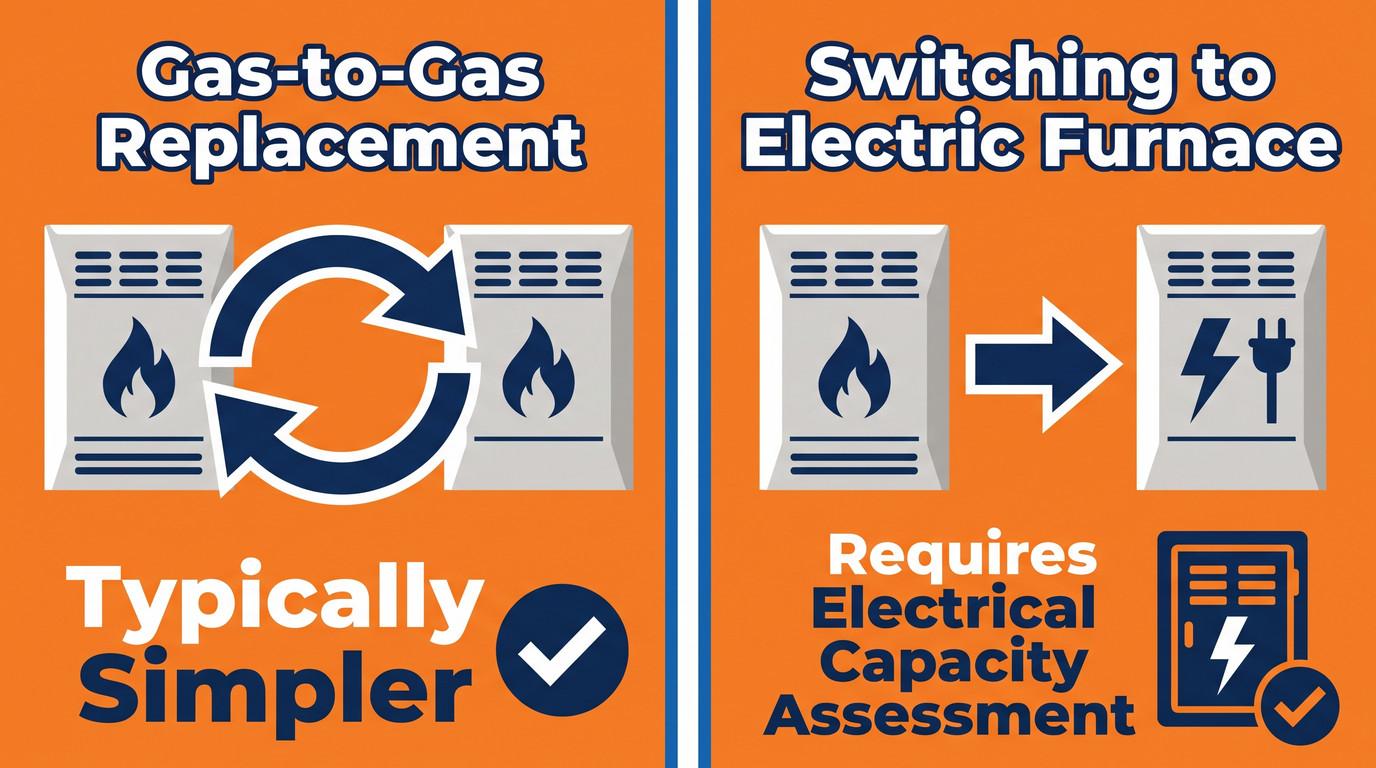
A compatible gas-to-gas replacement is typically simpler than changing the home’s heating configuration, though work on the broader HVAC system can take longer if the switch also requires upgrades. Switching to an electric furnace, for example, removes the need for a gas connection but may require an assessment of the home’s electrical capacity. The larger the change in equipment type, the more important it is to review compatibility before scheduling.
If you also want a heat pump or a new air conditioning system, technicians must evaluate shared airflow, controls, and equipment compatibility across the new HVAC system. Home size also affects installation time and complexity when added equipment must work with the same ducts and airflow. Combining projects can simplify coordination, but it is usually more involved than installing a furnace alone.
What Happens on Furnace Installation Day?
Once the scope is settled, the installation process follows a practical sequence, and installation day usually includes removing the old system and testing the new one. HVAC technicians also check ductwork and gas lines beforehand so the actual installation can go more smoothly. Trane’s HVAC Installation Guide for Homeowners outlines the key phases: assessing the home and ductwork, removing old equipment, installing the new system, testing it, and completing a final inspection as required. Here’s how those steps typically unfold for a furnace replacement.
Preparing the Work Area and Removing the Old Furnace
The team prepares the work area, shuts off the appropriate utilities, and disconnects the old furnace from its ductwork, fuel or electrical supply, and venting. Corrosion or limited clearance can make removal more involved than expected.
Positioning and Connecting the New Furnace
Technicians position the replacement and connect it to the supply and return ductwork. Different cabinet dimensions may require new duct transitions or sealing, even when the furnace stays in the same location. Proper placement also preserves equipment clearances and future maintenance access.
Completing Fuel, Venting, and Electrical Connections
The team completes the required gas or electrical connections, exhaust venting, and thermostat setup. Gas connections need appropriate leak checks, and combustion and venting arrangements must meet equipment specifications. Technicians also verify that the thermostat and controls are compatible with the new furnace before startup.
Testing the Furnace and Safety Controls
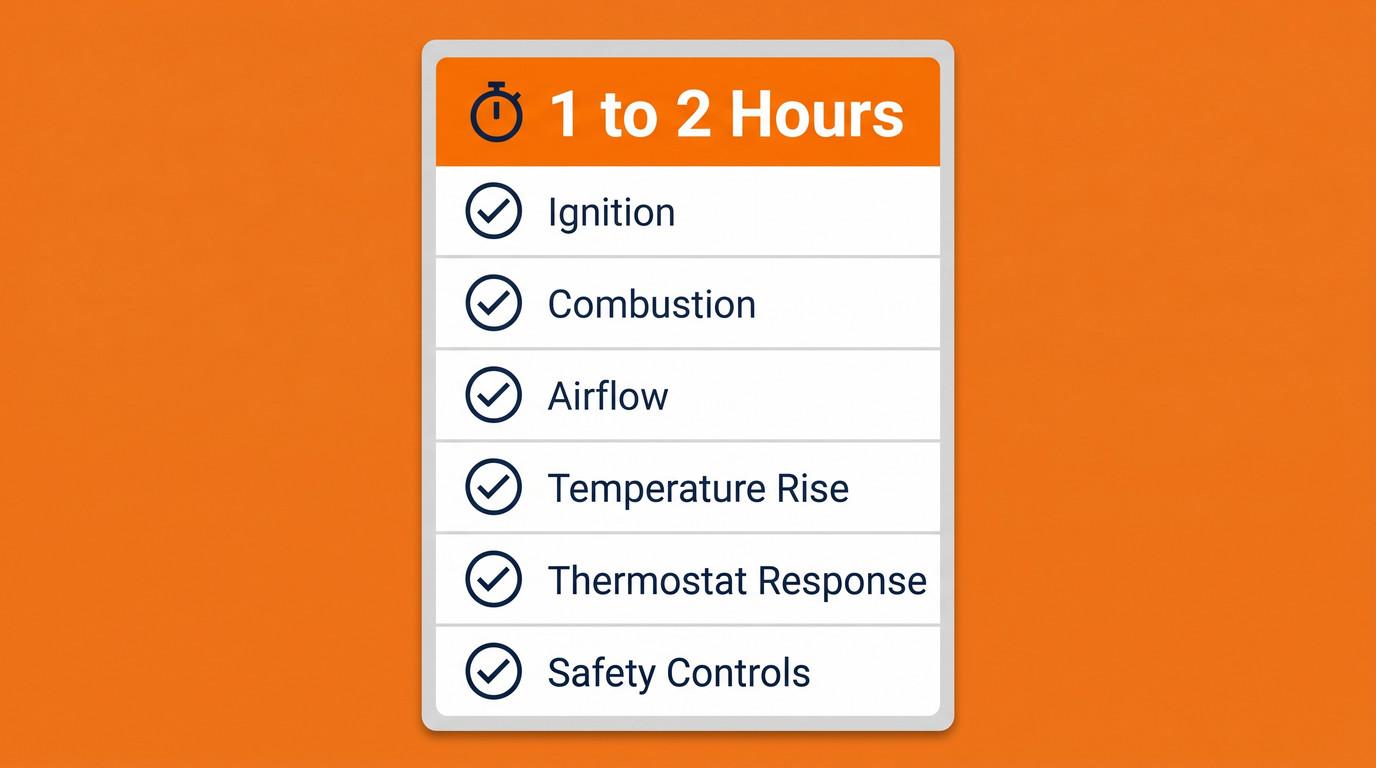
Before handing over the new system, technicians verify its operation. System testing and safety checks can take about 1 to 2 hours after installation, depending on the setup and any additional tasks. Depending on the furnace, checks include ignition, combustion, airflow, temperature rise, thermostat response, and safety controls. The U.S. Department of Energy identifies proper installation and maintenance as important to safe, efficient operation.
A furnace that starts is not necessarily one that has been fully commissioned. Testing is part of the installation, not a shortcut to skip when the day runs long.
Reviewing the New System With You
After testing, the technician explains thermostat operation, filter care, warranty paperwork, and basic upkeep, and this is the time to ask the hvac contractor how often to change filters and what maintenance schedule they recommend. This is also the time to confirm whether any municipal inspection is still outstanding and ask questions about the completed work.
How Early Should Sandy Homeowners Book a Furnace Installation?
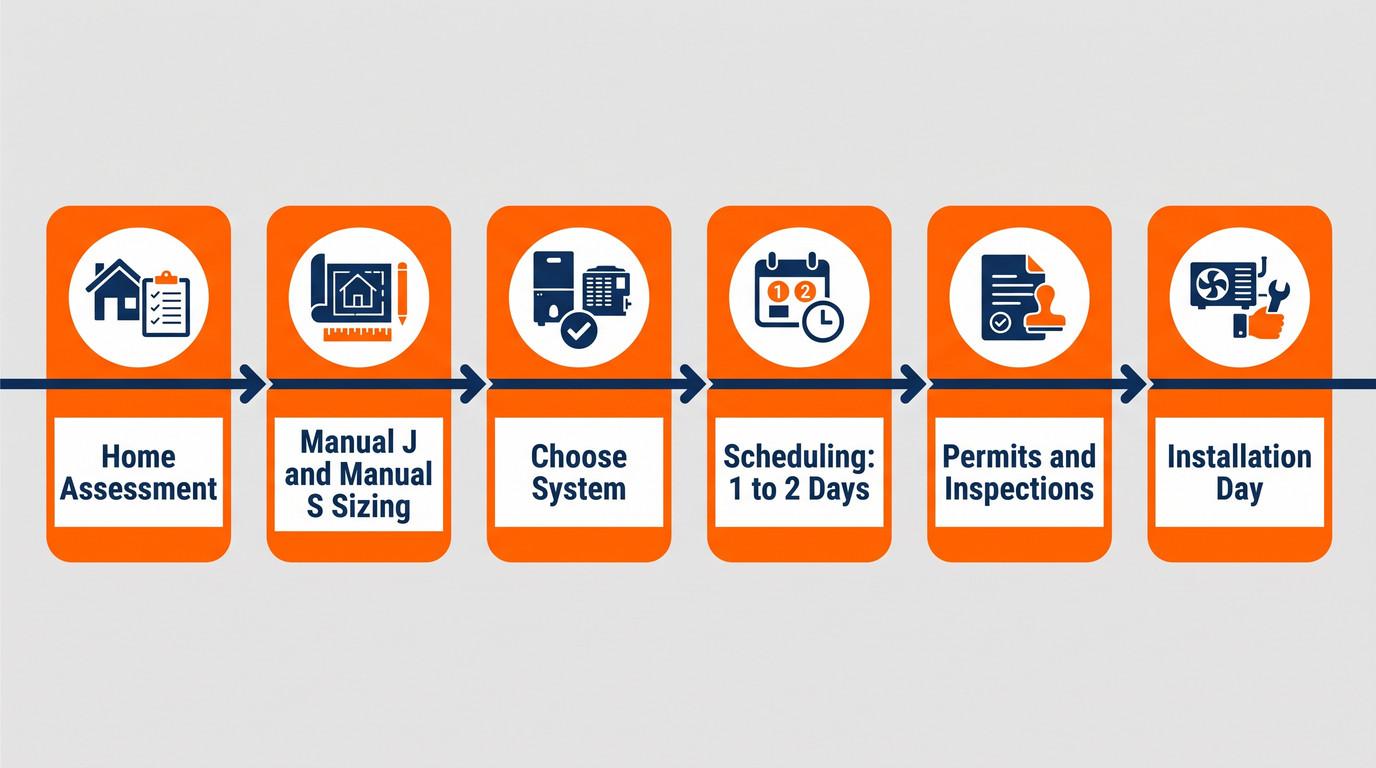
Installation day is only one part of the whole process. Assessment, sizing, equipment availability, and approvals can all affect when your home will actually have its new furnace.
Start With an Assessment and Proper Furnace Sizing
A home assessment by a professional hvac company should first determine the right furnace size your home needs, rather than simply ordering another furnace with the old unit’s capacity. The Air Conditioning Contractors of America provides Manual J and Manual S methods for assessing loads and selecting equipment. They account for factors such as insulation, windows, layout, and climate.
Proper furnace sizing is crucial for efficient heating and helps the furnace maintain consistent temperatures without unnecessary cycling. The assessment can also identify ductwork or connection changes that might otherwise cause delays on installation day. Before choosing the right system, consult multiple HVAC companies for quotes and options.
Plan Around Permits, Equipment Availability, and Winter Demand
Once you choose a system, scheduling depends on equipment availability, the installation team’s calendar, and the scope of work. Scheduling installation often takes 1 to 2 days after choosing a system, though the wait time may be longer during peak winter demand. Permits and inspections can delay installation timelines even when the onsite work itself is relatively short. A furnace might be installed in one day, for example, while the assessment, equipment order, and any necessary approvals take place on separate dates.
In Sandy, arranging a replacement before the coldest weather gives you room to compare system options with energy efficiency in mind, address upgrades, and review installation costs without the pressure of a sudden no-heat breakdown. At Comfort Solutions, we assess the existing system, explain the proposed work, and help you plan around a realistic installation window. Whether you need a compatible replacement or a new high-efficiency model, we want you to know what the job involves before work begins.
Plan My Sandy Furnace Installation
How to Prepare Your Sandy Home for Installation Day
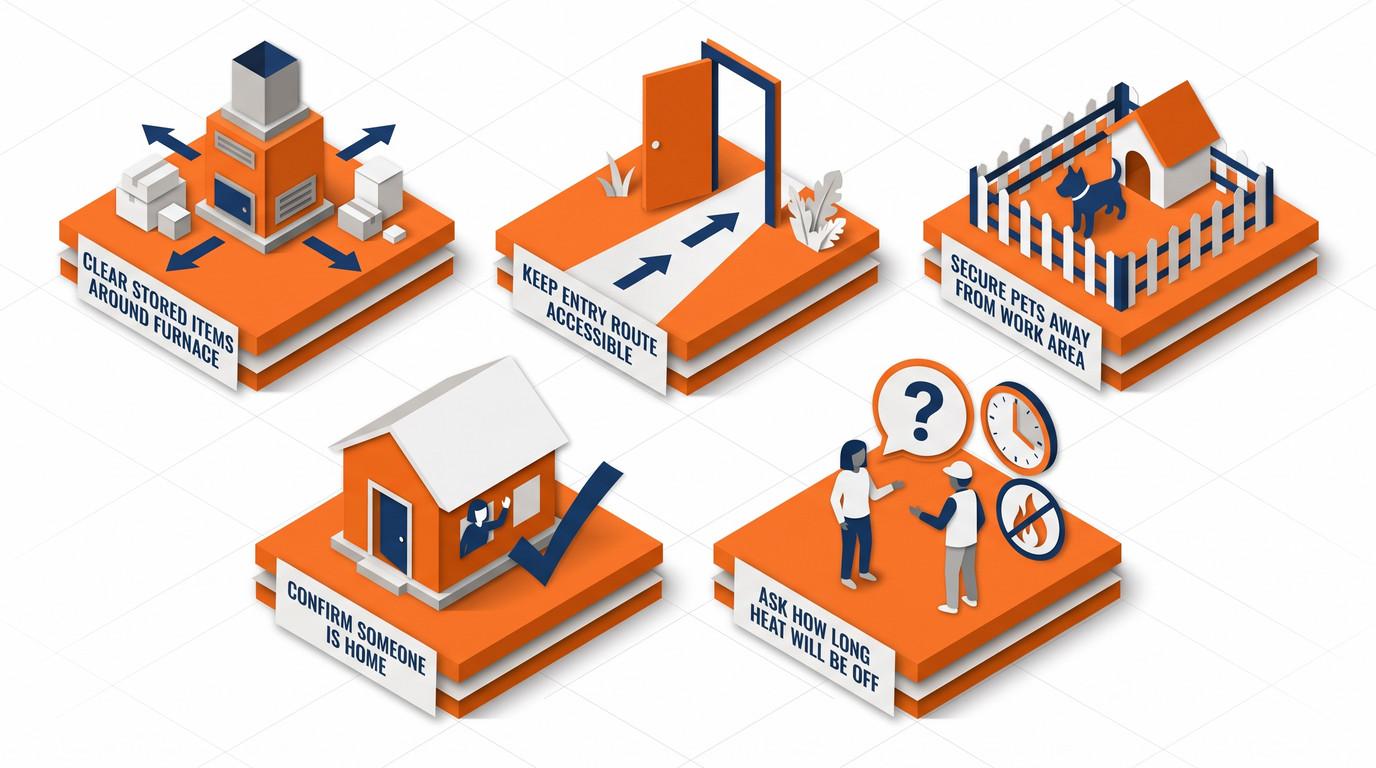
After the appointment is set, a little preparation can keep the crew focused on the work and help your household manage the temporary interruption to heating.
- Clear stored items and obstacles around the furnace.
- Keep the route between the entry and installation area accessible.
- Secure pets away from the work area and frequently opened doors.
- Confirm when someone must be home for access and the final walkthrough.
- Ask how long the heat is expected to be off, particularly during cold weather.
Review the written estimate as well. Check whether it includes removal, necessary modifications, thermostat setup, permits where applicable, and final testing. If the team discovers damaged venting, wiring, or duct connections after removing the old furnace, ask what changed, how it affects time and cost, and whether additional work needs your approval.
Keeping Your Newly Installed Furnace Efficient
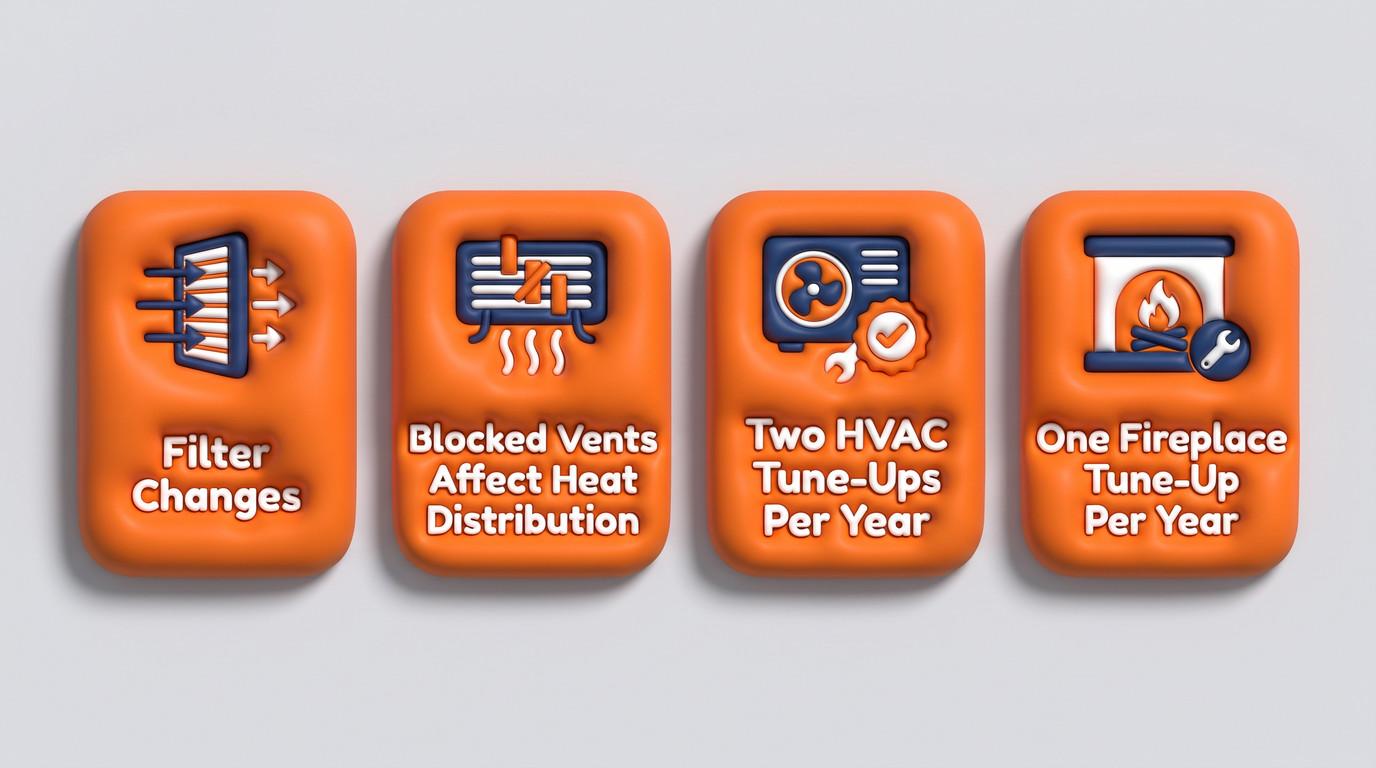
Once the system is running, the next priority is protecting its performance. With proper maintenance, regular service and timely filter changes help support performance and indoor air quality, while dirty filters restrict airflow, blocked vents interfere with heat distribution, and developing faults may be easier to address when identified during routine maintenance.
Follow the manufacturer’s filter guidance and schedule professional service as recommended. Comfort Solutions’ Comfort Care Membership includes two HVAC tune-ups and one basic fireplace tune-up each year, helping homeowners keep preventative care on the calendar instead of waiting for a problem.
Explore My Maintenance Options
Plan Your Furnace Installation Before Sandy’s Next Cold Snap
So, how long does it take to install a furnace? A straightforward replacement generally takes 4 to 8 hours, while ductwork changes, equipment upgrades, and other modifications can extend the installation. Understanding your home’s needs beforehand helps you plan around the temporary loss of heat and avoid last-minute surprises.
At Comfort Solutions, we’ve served Utah homeowners since 2000. Our HVAC technicians can assess your existing equipment, explain your options, and help you plan a properly sized installation. Whether you need furnace replacement or want to explore broader heating and air conditioning improvements, we can help you choose a practical next step for your Sandy home.
Frequently Asked Questions About Furnace Installation
Still sorting out the details before booking? These common questions cover what happens around installation day, from being home for the crew to paperwork after the new furnace is running.
Do I Need to Be Home During Furnace Installation?
Not necessarily for the full appointment. Someone may need to be there at the beginning to provide access and at the end for the walkthrough. Confirm your installer’s expectations when scheduling.
Will My Home Be Without Heat Overnight?
A straightforward replacement is often completed in one working day, but unforeseen issues can delay startup. During cold weather, ask your contractor what happens if the system cannot be safely commissioned that day.
What Happens to My Old Furnace After Installation?
Many HVAC contractors include removal and disposal as part of the installation service. Confirm that the written quote covers it rather than assuming it is included.
Does a New Furnace Installation Require an Inspection?
Requirements depend on the local jurisdiction, scope of work, and local building codes. Ask your contractor whether a permit is needed, who will arrange the inspection, and whether it will happen on installation day or at a later appointment. An inspection may be separate from the initial system testing. In some jurisdictions, permit scheduling or follow-up inspections can delay installation timelines.
When Does My New Furnace Warranty Begin?
Warranty start dates, registration deadlines, and coverage vary by manufacturer and model. Ask for the documentation and clarify whether parts and labor have different coverage terms.
Recent News
Should I Replace 20 Year Old Furnace? A guide for Sandy Homeowners?
October 22, 2026
How Much Does Furnace Repair Cost in Sandy, Utah?
October 22, 2026
Furnace Tune-Up Cost in Sandy, UT: What Homeowners Need to Know
September 28, 2026
How Much Does It Cost to Replace a Furnace in Sandy, Utah: A Homeowner’s Guide
September 23, 2026
How Long Do Furnaces Last for Salt Lake City Residents? A Guide to Warning Signs and Replacement Timing
September 7, 2026

How to Improve Indoor Air Quality During Utah’s Wildfire Season
August 28, 2026