Serving The Wasatch Front Area



Back to Blog
AC Stopped Working in Ogden? Common Causes and What to Do Next
August 24, 2026
Ogden summers can turn hot fast. One week you’re enjoying the canyon breeze, and the next, temperatures are pushing 95°F while dust settles across the valley. That’s often when homeowners discover their AC stopped working, right when they need it most.
So, what should you check before calling for AC repair?
The cause could be something simple, like a thermostat setting or clogged filter, or something more serious, such as a frozen coil, refrigerant leak, or failing compressor. Knowing the difference can help you avoid unnecessary troubleshooting and protect your system from further damage.
In this article, we’ll cover the most common causes, safe checks, warning signs, repair costs, and when replacement may make more sense.
Key Takeaways
- Check the thermostat, filter, breaker, and vents before calling for service.
- A dirty filter can restrict airflow and contribute to cooling problems.
- Wait at least three minutes before restarting the AC after a reset.
- Repeated breaker trips, frozen coils, or water require professional attention.
- Refrigerant leaks should always be handled by a certified HVAC technician.
- Repair costs depend on the failed part, system age, accessibility, and timing.
- Older systems with frequent repairs may make replacement worth considering.
What Can Cause Your AC to Stop Working?
When an AC suddenly stops working, the most common reasons are a thermostat issue, power interruption, clogged filter, frozen coil, blocked outdoor unit, or low refrigerant. Some are easy to check yourself, while others need a licensed technician, but finding the root cause matters more than a quick fix if you want the system to reliably produce cold air again.
Before calling for service, you can rule out a few simple problems without opening the equipment or handling electrical components. For example, checking your filter is a quick way to catch one of the common air conditioner mistakes that can restrict airflow and lead to bigger cooling problems.
Here’s how the most common causes break down:
| Cause | Safe to Check Yourself? | What to Do |
|---|---|---|
| Incorrect thermostat settings or dead batteries | Yes | Check the thermostat controls, make sure the thermostat is set to Cool and set correctly, and replace the batteries if the AC unit won’t operate |
| Tripped breaker or blown fuse | Yes, once | Reset the breaker one time; a blown fuse can prevent the air conditioner from turning on, so call a technician if it trips again |
| Clogged air filter | Yes | Replace the filter |
| Frozen evaporator coil | No | Turn the system off and let it thaw, then have the cause diagnosed |
| Blocked outdoor unit | Yes | Clear grass, dust, and debris from around the unit |
| Low refrigerant | No | Call a certified technician to locate and repair the leak |
Carrier’s AC troubleshooting guide covers many of these same checks. If your system is running but the house still isn’t cooling, our air conditioner cooling guide can help you narrow down what may be happening.
How Ogden’s Heat and Dust Can Strain Your AC
Ogden’s summer heat keeps cooling systems running for long stretches, and hot days put extra strain on the cooling system while dust settles on outdoor equipment. That combination can turn a minor maintenance issue into a breakdown, or even sudden AC failure, when the system is already working hard.
A system that gets little downtime during a hot afternoon has less room for problems to go unnoticed. Dust from nearby roads, construction, and dry conditions can collect on the condenser coil, making it harder for the unit to release heat. The compressor then has to work harder to maintain the desired temperature, increasing strain on the system.
Indoor filters can also collect dust quickly during summer. If you’re concerned about Utah indoor air quality issues, keeping filters clean and maintaining proper airflow can help your HVAC system operate more effectively.
For practical ways to stay comfortable when temperatures rise, these tips to stay cool during summer can also help reduce the load on your AC.
What to Check First When Your AC Stops Working
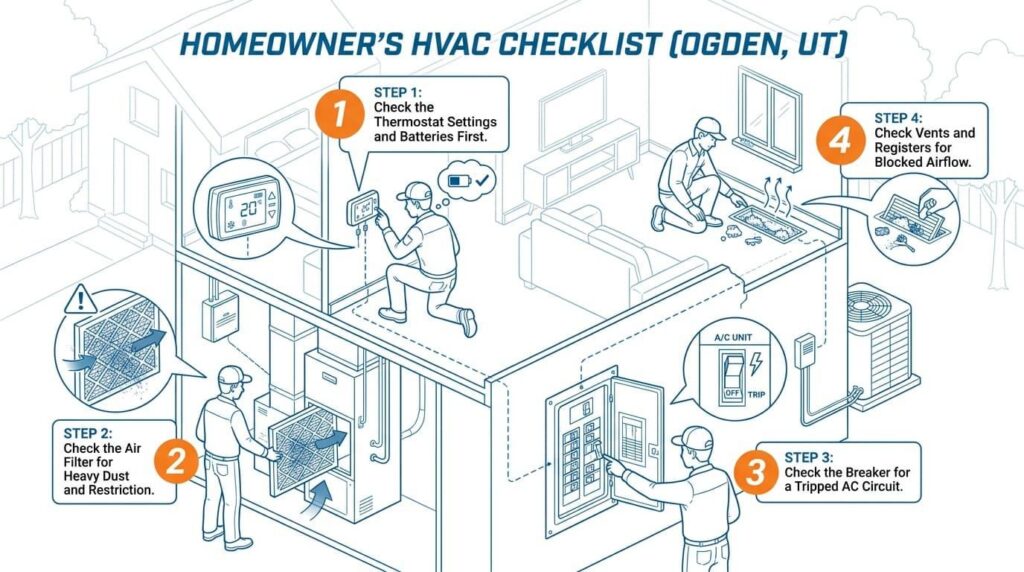
Four simple checks can help narrow down a no-cool problem in an Ogden home. These checks don’t require opening the equipment, handling electrical components, or working with refrigerant, so they’re safe for you to perform without any tools.
Check the Thermostat Settings and Batteries First
Start at the thermostat controls and confirm they’re set to Cool, not Off, Heat, or Fan Only. Set the temperature at least five degrees below the current room temperature. Thermostat errors or settings that are not set correctly can stop the system from blowing cold air. Then replace the batteries if the screen looks dim or blank. A changed setting or dead battery can make a working AC seem completely broken.
Check the Air Filter for Heavy Dust and Restriction
Pull out the air filter and hold it up to a light, since a dirty air filter is a common airflow restriction. If little or no light passes through the pleats, replace it. Changing air filters every 1-3 months helps maintain AC efficiency and reduce airflow-related shutdowns. Ogden’s dusty summer conditions can load filters faster than expected, and a heavily clogged filter can restrict airflow enough to contribute to a frozen coil. 1.
Check the Breaker for a Tripped AC Circuit
Look at the electrical panel for the breaker labeled for the air handler or outside unit. A tripped circuit breaker usually sits between the On and Off positions rather than lining up with the others. Repeated trips can point to power supply problems or other electrical issues, and the system may not be receiving power properly. You can check its position safely, but follow the reset steps in the next section before switching it back on. 1.
Check Vents and Registers for Blocked Airflow
Walk through the house and make sure supply registers are open and free of furniture, rugs, and boxes, and inspect the outdoor condenser unit for debris so airflow stays unobstructed. Check the return grille as well. A blocked outside airflow path around the outdoor condenser unit can reduce cooling performance. If airflow remains weak despite clear vents, look for warning signs like blocked vents or rooms that remain warm to determine if your air ducts need repair rather than assuming the AC itself has failed.
How to Reset Your AC Safely
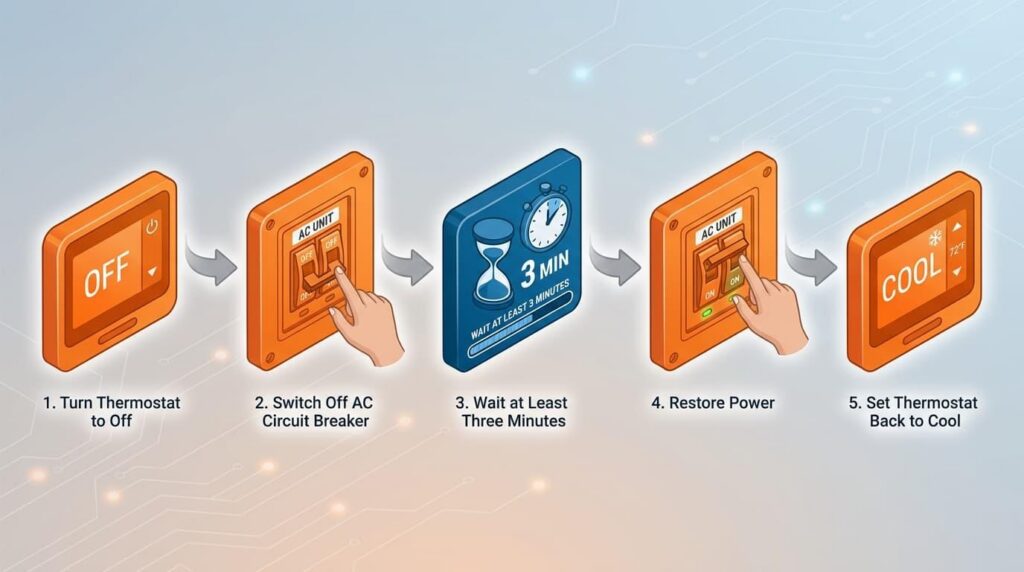
If your AC won’t start, you can try a simple power reset before calling for service. Turn the thermostat to Off, switch off the AC circuit breaker, wait at least three minutes, then restore power and set the thermostat back to Cool. This gives the system time to fully power down before you restart it.
Wait Three Minutes Before Restarting the AC
Leave the breaker off for at least three minutes before switching it back on. The pause gives refrigerant pressures inside the system time to equalize, reducing the strain on the compressor when it starts again.
Reset the breaker only once. If the AC starts and then stops again, or the breaker trips a second time, don’t keep resetting it. Loose wiring or other electrical faults can interrupt power to the system, and that kind of repeated failure points to an underlying problem that needs a professional inspection rather than another reset.
When to Stop Troubleshooting and Call an AC Pro
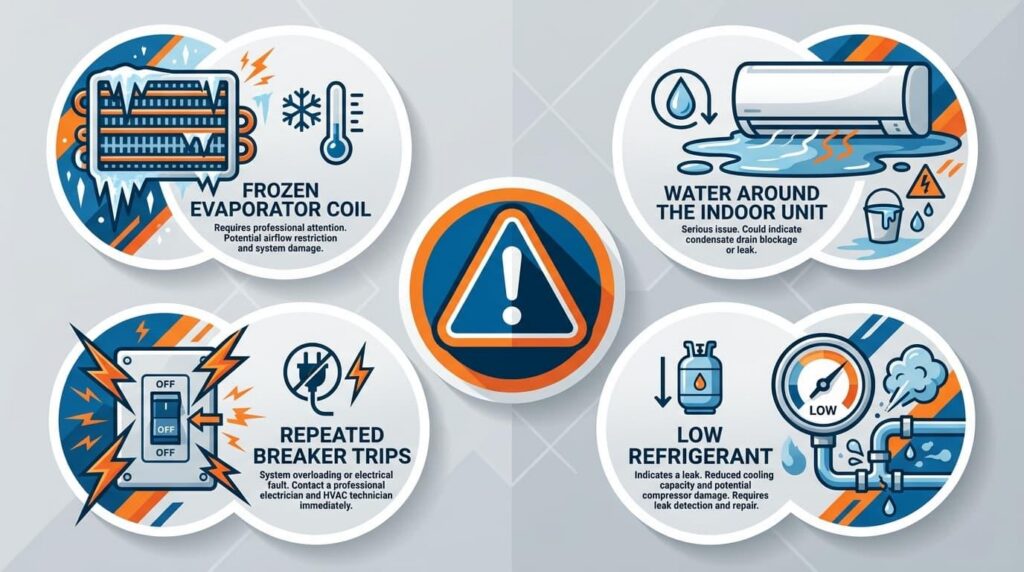
Some AC problems are easy to check yourself. Others are clear signs that it’s time to put the tools away and call a licensed HVAC technician. If you notice any of the symptoms below, don’t keep resetting or restarting the system hoping it will fix itself.
Frozen Evaporator Coil
Ice on the evaporator coil usually points to restricted airflow or low refrigerant, and ice buildup is a clear warning sign of freezing. Signs can include ice on the refrigerant lines or at the indoor air handler coil. Letting the coil thaw may get the system running temporarily, but the ice will likely return until the underlying problem is fixed. Our guides to the causes of frozen AC coils and signs ofcentral air ice problems explain what to look for.
Water Around the Indoor Unit
Your AC produces condensation as it cools your home. If algae, dust, or a failed condensate pump blocks the drain, a float switch can shut the system down to prevent water damage. If the shutdown keeps happening after the pan is emptied, it’s time for a technician to check the drain and pump.
Repeated Breaker Trips
One breaker trip can happen, but a second trip is a different story. It could point to a bad capacitor, faulty capacitor, compressor problem, or electrical short. Since the breaker is there to protect the system and your home, don’t keep resetting it. These are among the clearest professional AC repair reasons. These issues should be handled by an HVAC professional because repeated breaker trips often involve unsafe electrical components.
Low Refrigerant
Your AC doesn’t normally use up refrigerant, so a low charge usually means there’s a leak somewhere in the system. Handling and recovering refrigerant is regulated under federal refrigerant handling rules, so this isn’t a DIY repair or a quick fix and requires professional service. Refrigerant handling and leak repair should be left to a qualified HVAC technician, who can locate the leak, repair it, and recharge the system properly.
Factors That Affect AC Repair Costs in Ogden
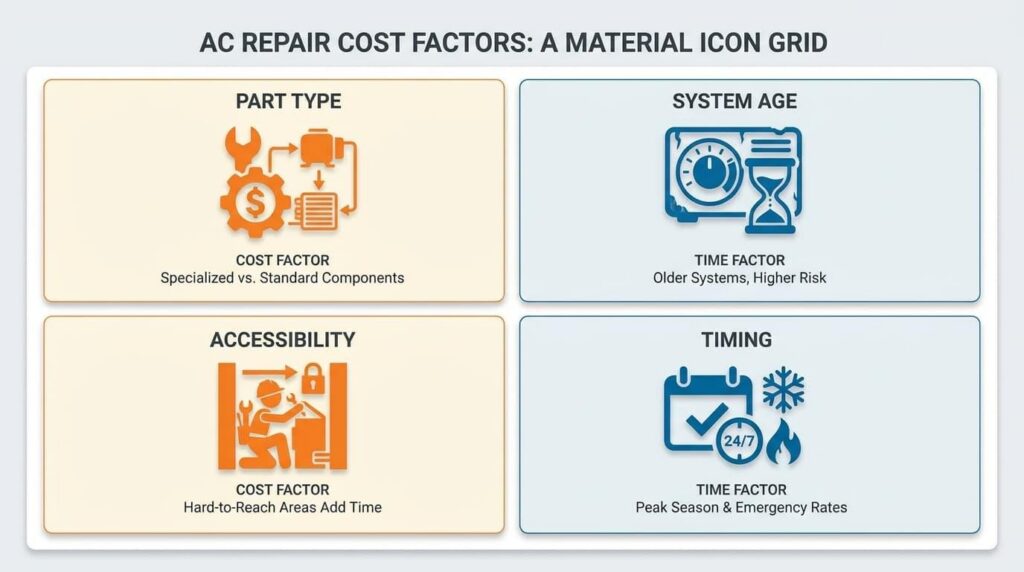
AC repair costs usually come down to two things: what failed and how much work it takes to reach and replace the part. The following factors can impact the final cost of your repair quote:
- Part: Capacitors and contactors generally cost less than compressors, coils, or refrigerant leak repairs.
- System Age: Older AC units may need discontinued or harder-to-find parts, which can add time and expense.
- Accessibility: Equipment in attics or crawl spaces can take longer to reach than a system installed in an open garage.
- Timing: After-hours, weekend, and holiday service may cost more than a scheduled daytime appointment.
Ogden’s summer heat can also affect when you need the repair. Peak heat weeks fill HVAC schedules quickly, so a problem that might be handled during a regular appointment can become more urgent when temperatures rise. Simple steps such as these tips to reduce cooling costs can also reduce the workload on your AC.
For rooms that consistently struggle to stay cool, the benefits of a ductless air conditioner may be worth considering.
Should You Repair or Replace an Aging AC System in Ogden?
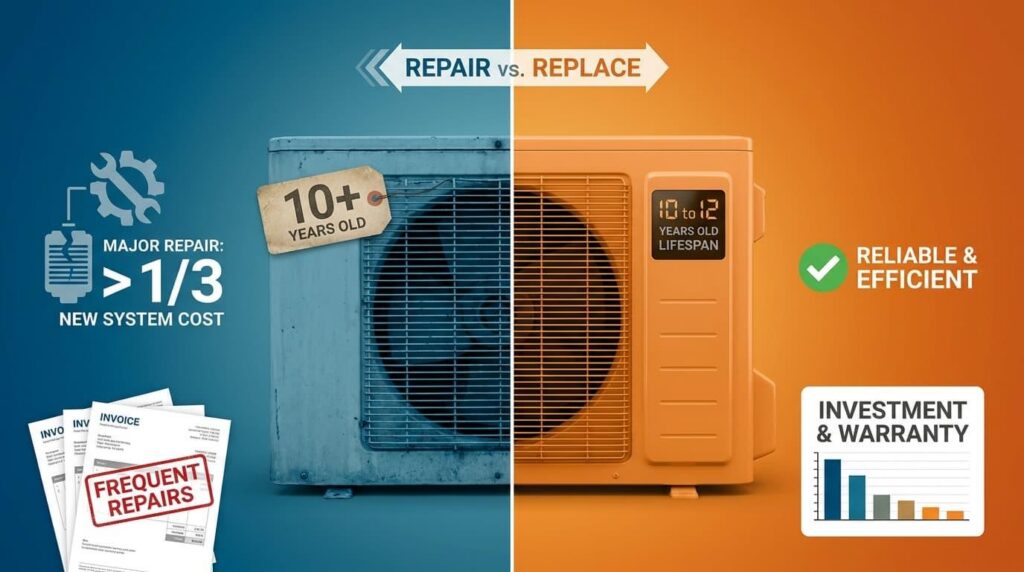
An older AC isn’t automatically a candidate for replacement. If the system is relatively young and a single repair restores reliable cooling, fixing it may make sense. Replacement becomes more appealing when the unit is aging, repairs are becoming more frequent, and efficiency is declining.
How AC Age Can Help Guide the Decision
ENERGY STAR recommends considering replacement when a central air conditioner is more than 10 years old. In Ogden, an AC that works hard through long, dusty summers may show signs of wear sooner. As equipment ages, expensive components such as compressors and coils can become more likely to fail.
Older systems can also become more expensive to operate as efficiency declines. When you’re weighing the numbers, AC repair vs replacement costs can help you compare the two options.
Frequent Repairs Can Also Tip the Scale
One repair doesn’t necessarily mean it’s time for a new system. But when breakdowns become a regular part of your cooling season, the costs can start adding up quickly.
A useful rule of thumb is to look closely at replacement when a major repair approaches a third of the cost of a new system, particularly if the AC is already more than 10 to 12 years old. Planning ahead also gives you more control over the timing, while the benefits of AC system upgrades can help you understand what a newer system may offer.
Simple Maintenance Habits for Ogden AC Systems
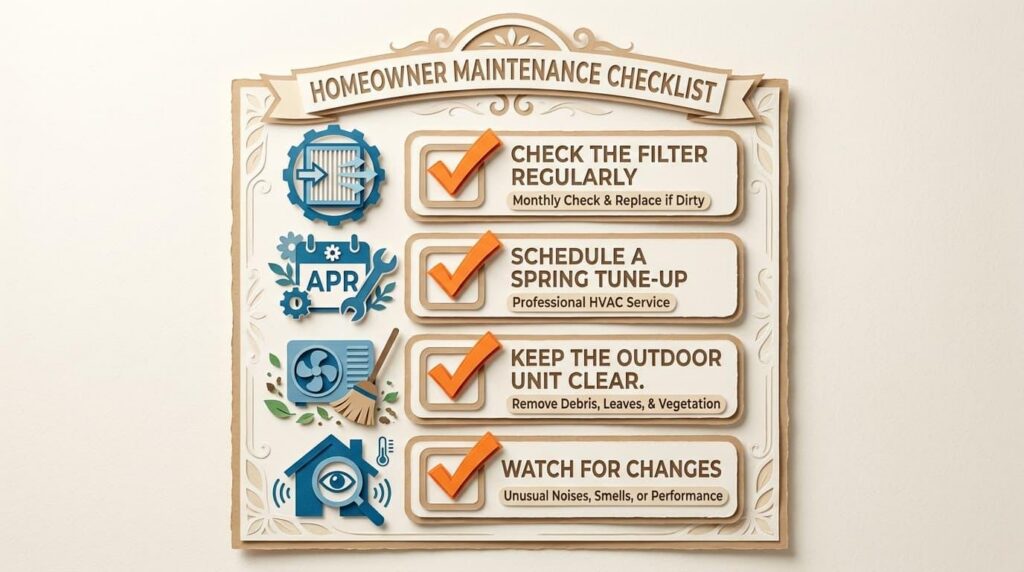
Regular maintenance is one of the best ways to prevent AC problems during Ogden’s long, dusty cooling season. Focus on keeping airflow open, giving the outdoor unit room to breathe, and catching small changes before they become bigger problems.
- Check the Filter Regularly: Look at the filter monthly during summer and replace it when it becomes visibly loaded so the system can keep moving cold air efficiently. The CPSC’s indoor air quality safety guide also covers the role filters play in keeping indoor air cleaner.
- Schedule a Spring Tune-Up: Have an HVAC technician check airflow, electrical components, and system performance before the first major heat wave.
- Keep the Outdoor Unit Clear: Trim grass and weeds, remove cottonwood fluff, and keep dust and debris from building up around the condenser. After shutting off power, you can use a garden hose to gently rinse dust from the outside unit.
- Watch for Changes: Longer run times, weaker airflow, unusual noises, or rising cooling costs can indicate that something needs attention.
A spring tune-up gives you a chance to catch worn components and airflow problems before the first major heat wave. Professional service can also spot early wear on the fan motor or condenser fan before it turns into a breakdown. See what a professional visit includes with our AC tune-up checklist and take care of smaller maintenance tasks throughout the season.
What to Know Before Calling for AC Repair
Four details can help your technician diagnose the root cause faster. Having these details ready can make the initial conversation much more useful.
Here’s what to have on hand:
- System Age and History: The installation year, brand, and approximate date of the last tune-up or repair.
- Checks You’ve Already Made: Thermostat settings, filter condition, breaker position, and whether your vents are open.
- Symptoms You’ve Noticed: Grinding or humming, burning or musty smells, ice on the coil or line set, water near the air handler, no airflow, or not blowing cold air.
- Timing and Pattern: When the problem started and whether it stays constant or appears during the hottest part of the day.
If you’ve noticed a musty smell, mention it when you call. It can point to moisture around the system, and these mold and air conditioning questions explain what may be involved.
Having this information ready gives your technician a clearer starting point and can help narrow down the issue before the visit.
Getting Your Ogden AC Back Up and Running
A little troubleshooting can often get an Ogden AC back on track, especially when the issue is a thermostat setting, dirty filter, tripped breaker, or blocked vent. But ice on the coil, repeated breaker trips, water near the air handler, refrigerant issues, or a compressor that hums without starting are signs to stop testing and bring in a professional.
Comfort Solutions has helped homeowners across the Wasatch Front diagnose and repair AC problems through every kind of summer heat. If your system still isn’t cooling after the basic checks, then it’s time to schedule a repair visit so a technician can identify the root cause and restore the reliable cooling your home deserves.
Getting it checked sooner can help prevent a small issue from turning into a more expensive repair.
Frequently Asked Questions About AC Stopped Working
How can you tell if an AC fuse is blown?
A blown fuse may have a cloudy or scorched appearance or a broken metal strip inside. If the thermostat calls for cooling while the outdoor unit stays silent, have a technician inspect it.
Where is my AC reset button?
Most central AC systems don’t have a labeled reset button. Some systems also have a disconnect box near the outdoor equipment that controls power to the unit. If yours doesn’t, the circuit breaker controls power to the system. Follow the proper shutdown and restart procedure before resetting it.
How can you tell if an AC compressor is blown?
A failing compressor may hum or grind before shutting down, repeatedly trip the breaker, or fail to start while the outdoor fan runs. A technician can confirm compressor failure with electrical testing.
Will an AC still run with a blown fuse?
The indoor blower may continue running while the outdoor unit remains off because they use separate electrical circuits. You’ll feel air from the vents, but it won’t be cold. Turn the system off.
Why is my AC running but not cooling?
An AC that runs without cooling may have restricted airflow, a frozen coil, low refrigerant, or a dirty outdoor coil. Check the filter and vents first, then call a technician if cooling doesn’t return.
Recent News

Furnace Tune-Up Cost in Sandy, UT: What Homeowners Need to Know
September 28, 2026

How Much Does It Cost to Replace a Furnace in Sandy, Utah: A Homeowner’s Guide
September 23, 2026

How Long Do Furnaces Last for Salt Lake City Residents? A Guide to Warning Signs and Replacement Timing
September 7, 2026

How to Improve Indoor Air Quality During Utah’s Wildfire Season
August 28, 2026

HVAC Maintenance Services in West Haven, Utah: Fall Checklist for Homeowners
August 19, 2026

Best AC for Ogden Home: The Homeowner’s Guide to Choosing the Right AC System
August 14, 2026