Serving The Wasatch Front Area



Back to Blog
HVAC Maintenance Services in West Haven, Utah: Fall Checklist for Homeowners
August 19, 2026
Fall in West Haven can quickly shift from air-conditioned weather to cold nights. That seasonal handoff puts both sides of your HVAC system to work, which makes early maintenance more useful than waiting until the air conditioner quits or the furnace fails.
This ultimate fall HVAC maintenance checklist is for West Haven homeowners who want a clear process for shutting down cooling equipment, testing the heating system, protecting indoor air quality, and deciding when to schedule professional HVAC maintenance services in West Haven, Utah.
Complete the safe homeowner checks first, then leave combustion, refrigerant, and electrical testing to experienced technicians.
Key Takeaways
The Ultimate Fall HVAC Maintenance Checklist
Work through these steps in order. Each item has a single purpose, so the checklist does not make you repeat the same inspection across multiple sections.
1. Replace or Inspect the Air Filter to Improve Indoor Air Quality
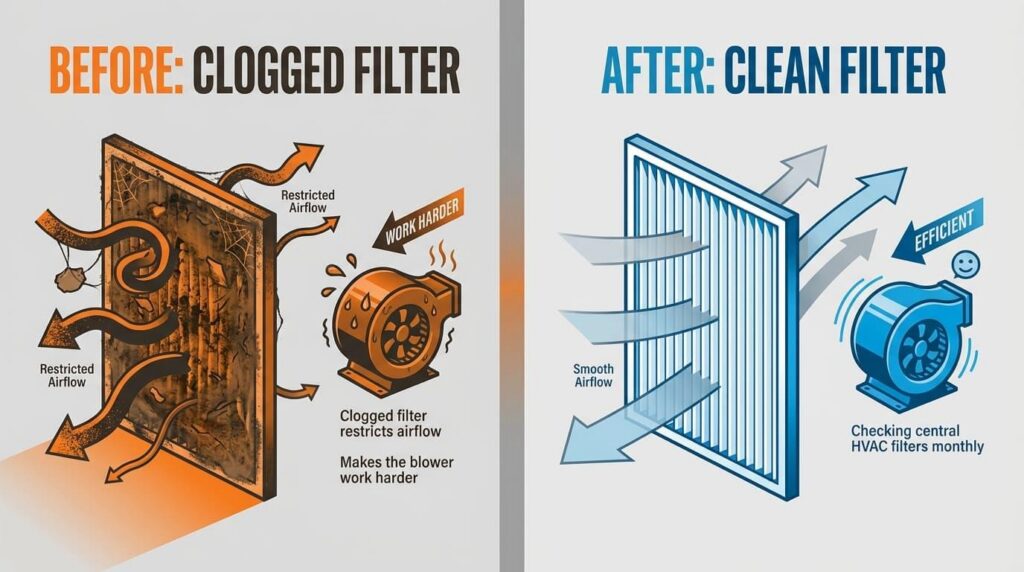
ENERGY STAR recommends checking central HVAC filters monthly and changing or cleaning them when needed. Homes with pets, remodeling dust, or heavier system use may need more frequent attention. A clean filter supports system efficiency and indoor air quality, but it does not replace duct cleaning or a full tune-up.
2. Clear Supply Vents and Return Grilles
Then run the fan and compare airflow from room to room. One weak vent may indicate a closed damper or a local blockage. Weak airflow throughout the home can indicate a dirty coil, a blower problem, a duct issue, or an unsuitable filter. Make a note for the technician instead of opening the system yourself.
3. Clean Around the Outdoor Unit
Do not bend the coil fins, spray electrical sections, or cover the unit with an airtight wrap that can trap moisture. If the outdoor unit belongs to a heat pump, keep it unobstructed because it may run throughout winter. Snow, leaves, and stored items should never block its airflow.
4. Confirm Whether You Have an AC System or Heat Pump
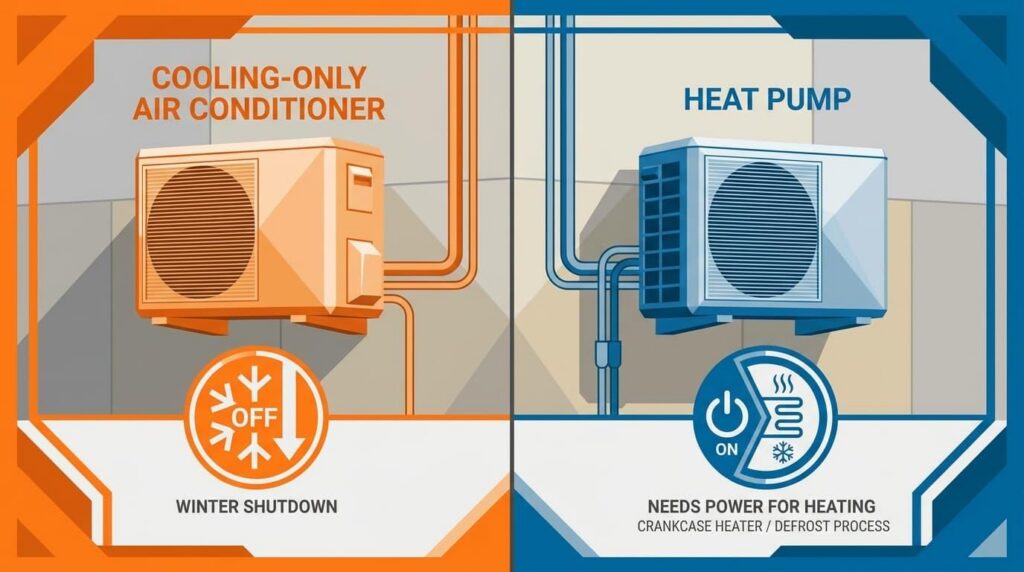
A cooling-only air conditioner may have manufacturer-specific instructions for winter shutdown. A heat pump needs power for heating and may also use energy for its crankcase heater or defrost process. If you are unsure, check the model information or ask a professional. Turning off the wrong unit can leave the home without heat when temperatures fall.
5. Test the Thermostat and Complete One Heating Cycle
Confirm that the thermostat responds, warm air reaches the rooms, and the system shuts off normally. Replace thermostat batteries if required. Do not place lamps or other heat-producing devices near the thermostat, as they can distort the reading. Repeated cycling, long run times, or a home that never reaches the set temperature calls for diagnosis.
6. Listen, Look, and Smell for Warning Signs
A brief, dusty odor at first startup can occur after months without heat, but a strong or persistent burning smell is different. Shut the system down and request service if you see smoke, smell gas, hear mechanical grinding, or notice an electrical odor. Do not keep resetting a breaker or repeatedly restarting equipment that fails.
7. Test Carbon Monoxide Alarms
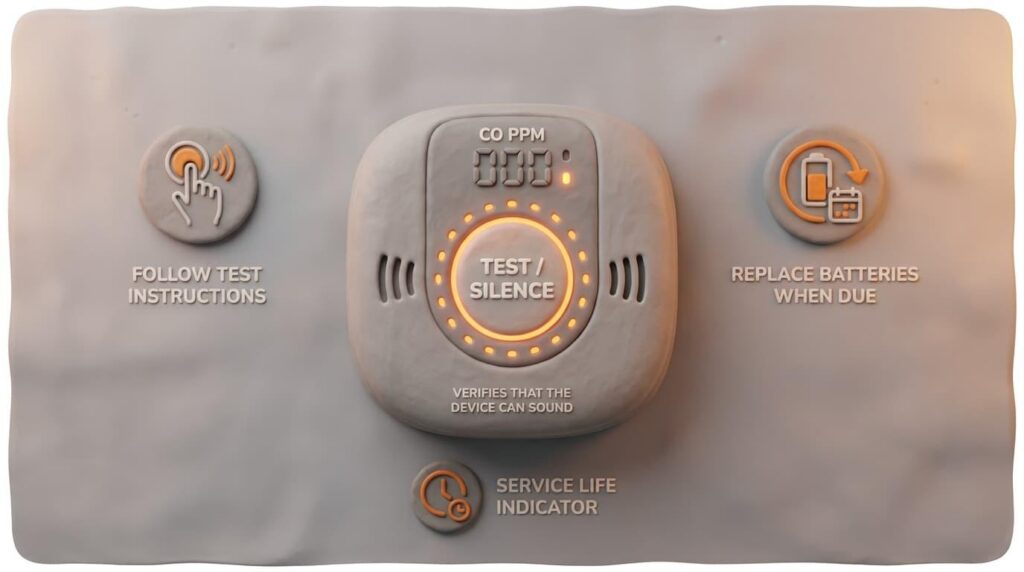
An alarm test verifies that the device can sound; it does not prove that a furnace is venting safely. A professional furnace inspection checks combustion, exhaust, and safety controls. If an alarm activates, move outside, call emergency services, and do not re-enter until authorities say it is safe.
8. Check the Condensate Drain and Visible Moisture
Condensing furnaces, air conditioners, and some heat pumps produce condensate. A blocked drain can trigger a safety switch, cause water damage, or create conditions that affect indoor air quality. If water returns after cleanup or the source is unclear, schedule repair rather than dismantling the drain assembly.
9. Review Energy Bills and System History
Higher energy bills do not point to a single failed part, but they can reveal that equipment is running longer or less efficiently. Gather the installation date, previous invoices, warranty information, and repair history. This context matters in homes with aging or builder-grade equipment because the best choice may be to replace small parts, complete a targeted repair, or plan a full replacement.
10. Schedule a Professional Fall Tune-Up
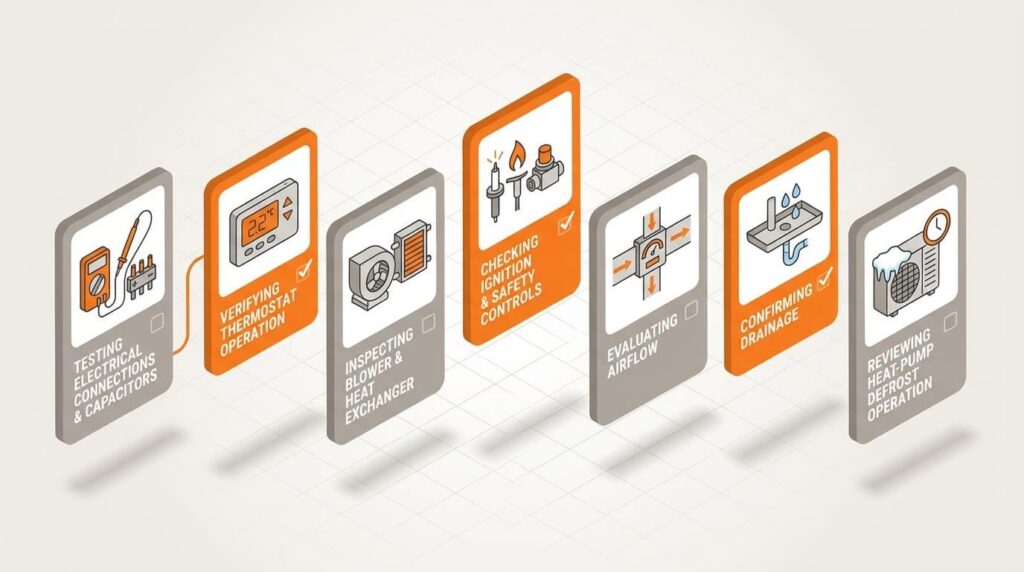
A thorough inspection should follow the needs of the specific system rather than a vague promise to ‘check everything.’ Depending on the equipment, the process may include testing electrical connections and capacitors, verifying thermostat operation, inspecting the blower and heat exchanger, checking ignition and safety controls, evaluating airflow, confirming drainage, and reviewing heat-pump defrost operation. Refrigerant work requires appropriately certified technicians.
Ask what is included, whether the technician holds the required credentials, and how findings will be documented. Reliable HVAC services should explain the condition of major components, distinguish urgent repairs from optional improvements, and provide transparent pricing before additional work begins.
When Maintenance Turns Into Repair or Replacement
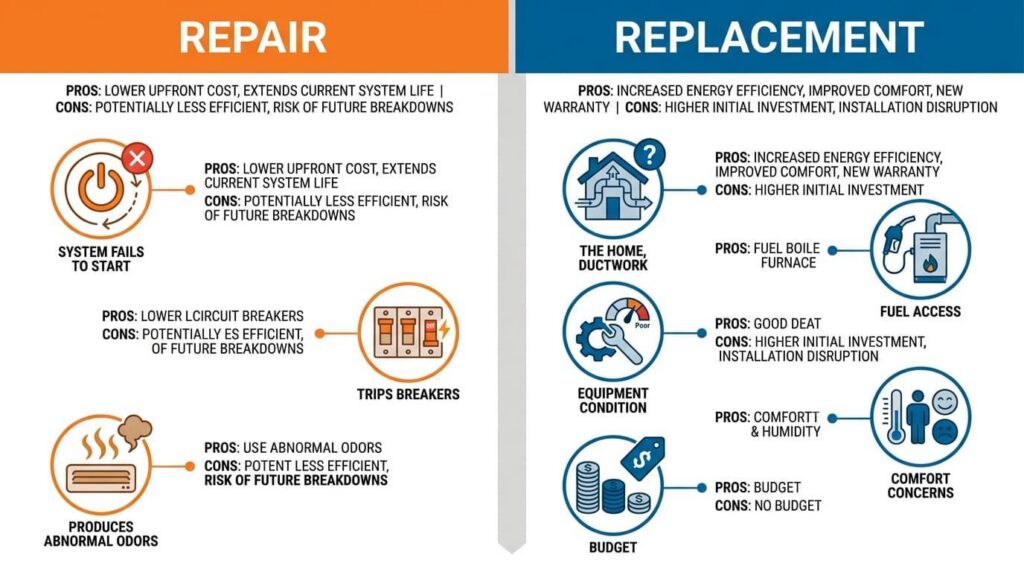
Routine maintenance cannot reverse a failed compressor, damaged heat exchanger, recurring electrical fault, or equipment that no longer meets the home’s needs. Call for furnace repair or AC repair when the system fails to start, trips breakers, produces abnormal odors, leaks, or cannot maintain temperature. Comfort Solutions also offers 24/7 emergency HVAC service for urgent heating or cooling loss in West Haven and Weber County.
Replacement deserves a broader conversation. The right solution depends on the home, ductwork, fuel access, equipment condition, comfort concerns, and budget, not age alone. Furnace installation, air-conditioner replacement, high-efficiency equipment, and heat pumps each have different installation requirements. A properly selected heat pump can move more heat energy than the electrical energy it consumes and may operate efficiently in cold conditions when designed for the climate, but performance still depends on sizing and installation.
Some qualifying heat-pump installations in an existing primary residence may be eligible for federal tax credits. Eligibility rules, product requirements, documentation, and tax treatment can change, so verify the current IRS requirements and consult a tax professional before relying on a credit.
Schedule Your HVAC Repair or Replacement Today
Keep Your West Haven HVAC System Running Efficiently
A fall checklist protects the home’s comfort and helps keep the home warm by catching simple problems before winter places sustained demand on the heating system. Complete the homeowner tasks once, record anything unusual, and schedule professional service for internal, electrical, refrigerant, fuel, or combustion work. Repeating the process each year supports year-long comfort and helps the system operate efficiently.
Comfort Solutions has served Utah homeowners and businesses since 2000, with decades of experience. The West Haven team specializes in HVAC maintenance, furnace repair, AC service, furnace installation, system replacement, and heat pumps across Weber County and nearby Wasatch Front communities, serving a community of roughly 20,000 residents in West Haven and nearby businesses. When technicians arrive, homeowners can rely on them to inspect the equipment, clearly explain their findings, and recommend the right solution so the job is done correctly for the home and the specific situation.
Schedule your fall HVAC service before your system is doing its hardest work of the year.
Frequently Asked Questions About Fall HVAC Maintenance
These quick answers address the final scheduling and service questions homeowners often have after completing the checklist.
How often should an HVAC system receive routine maintenance?
A common schedule is one professional visit for the cooling system before summer and one for the heating system before winter. Equipment type, age, use, manufacturer instructions, and warranty terms may change the appropriate schedule.
How long does a fall HVAC service call take?
The time depends on the system, accessibility, and whether the technician finds a problem that needs diagnosis. Ask the company what its tune-up includes rather than choosing service based on a universal time estimate.
Can maintenance guarantee that my HVAC system will not fail?
No. Maintenance can identify developing issues, reduce avoidable strain, and support efficient operation, but any mechanical system can still fail. The value is finding problems earlier and making repair decisions before an unexpected breakdown becomes an emergency.
What should I do if my furnace fails in the middle of the night?
Check the thermostat setting and the breaker once, if it is safe to do so. If the system still does not operate, or if you smell gas, see smoke, or suspect carbon monoxide, leave the home when appropriate and contact emergency services or an HVAC professional. Do not open panels or bypass safety controls while waiting.
Recent News

Furnace Tune-Up Cost in Sandy, UT: What Homeowners Need to Know
September 28, 2026

How Much Does It Cost to Replace a Furnace in Sandy, Utah: A Homeowner’s Guide
September 23, 2026
How Long Do Furnaces Last for Salt Lake City Residents? A Guide to Warning Signs and Replacement Timing
September 7, 2026
How to Improve Indoor Air Quality During Utah’s Wildfire Season
August 28, 2026
AC Stopped Working in Ogden? Common Causes and What to Do Next
August 24, 2026
Best AC for Ogden Home: The Homeowner’s Guide to Choosing the Right AC System
August 14, 2026