Serving The Wasatch Front Area


Back to Blog
Furnace Not Blowing Hot Air? Common Causes in Sandy Homes
November 12, 2026
The furnace is running, but your Sandy home keeps getting colder. Maybe the vents are pushing out cool air, the bedrooms never reach the thermostat setting, or the heat starts and disappears minutes later. If your furnace is not blowing hot air, the cause could be as simple as a fan setting or dirty filter, or as serious as an ignition or safety-control problem. The timing of the cold air is often your first clue.
At Comfort Solutions, we help Sandy homeowners figure out what is keeping the heat from reaching their rooms. This guide starts with the symptoms you can recognize, moves through safe checks you can make yourself, and explains when a professional repair is the right next step.
Key Takeaways
- Check the thermostat first. Heat mode, a higher set temperature, and Fan Auto can resolve some cold-air complaints.
- A clogged filter can restrict airflow enough to overheat a gas furnace and shut off its burners.
- Briefly cooler air at startup or shutdown can be normal. Cold air throughout the heating cycle is not.
- Repeated shutdowns, ignition faults, and gas or electrical issues need professional diagnosis.
- If you smell gas or a carbon monoxide alarm sounds, leave immediately and call emergency services from a safe location.
What the Cold Air From Your Vents Is Telling You
Before changing any settings, notice when the air turns cold, how long the blower runs, and whether the problem affects every room. These details can help distinguish normal furnace operation from a heating fault.
| What you notice | What it could mean | Best next step |
| Cool air only at startup or shutdown | Air in the ducts has not warmed yet, or the fan is finishing a cycle | Let the heating cycle finish |
| Room-temperature air between heating cycles | Thermostat fan set to On | Switch Fan to Auto |
| Air starts warm, then turns cold | Burners shut off early; possible overheating or ignition fault | Check filter, then request service if it repeats |
| Little or no airflow anywhere | Power, blower motor, or control issue | Check accessible power controls once; call if unresolved |
| One room stays cold | Blocked register, duct leak, or distribution issue | Open vents and note affected rooms |
A two-stage gas furnace may also deliver gentler, less-hot air when running at low fire. And if your home uses a heat pump or dual-fuel heating system, supply air can feel cooler than the air from a traditional gas furnace even while it is heating properly. The deciding question is whether the indoor temperature is rising toward the thermostat setting.
Safe Furnace Troubleshooting Checks to Try at Home
Start with the controls and airflow you can safely access. These checks can resolve simple issues or give our technician useful clues, without opening the furnace cabinet or handling gas and electrical components.
Thermostat Settings Can Keep the Fan Running Without Heat
Set the thermostat to Heat and raise the target a few degrees above the current room temperature. Select Fan Auto rather than On. With Fan On, the blower runs between heating cycles and can push room-temperature air through the vents even when the burners are off. If the display is blank, replace accessible thermostat batteries if your model uses them. A faulty thermostat or wiring problem needs a technician.
A Dirty Furnace Filter Can Trigger an Overheating Shutdown
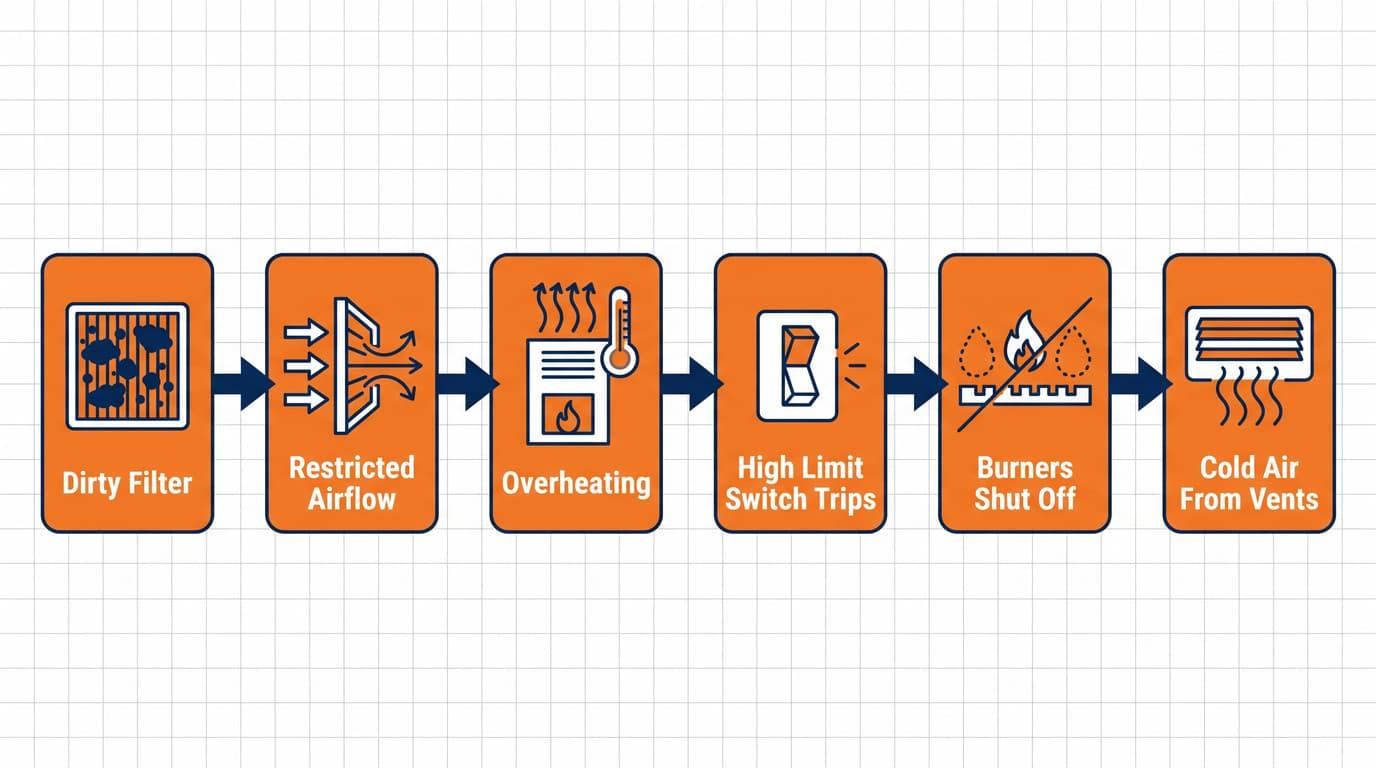
A dirty air filter restricts Air flow across the heat exchanger. In some gas furnaces, that restriction can cause overheating, trip the high limit switch, and shut the burners off while the blower keeps moving cool air, so dirty filters can make the furnace blow cold air instead of heat. Check an accessible furnace filter and replace it with the correct size and compatible type if it is clogged. Replace filters every 30 to 90 days based on home conditions and manufacturer guidance to support air quality, and because a clogged filter can raise energy bills by putting more strain on the system.
Blocked Vents and Return Airflow Can Leave Rooms Cold
Make sure registers are open and not covered by furniture, rugs, or curtains, since blocked vents and registers can restrict airflow in the furnace system. Blocked supply or return airflow can contribute to uneven heating and system strain as the blower pushes heated air through the air ducts to each room. If one bedroom stays cold while nearby rooms warm up, note the location; duct leaks can let warm air escape before it reaches rooms, causing uneven temperature levels in homes and increasing energy costs by up to 30%. Do not cut into or seal ductwork based on guesswork.
Power Interruptions and Error Codes Offer Useful Clues
If the furnace is not running, check the thermostat display and any clearly labeled, accessible furnace power switch or breaker. Furnace power interruptions can happen when a circuit breaker trips, and if it trips again, the electrical system needs professional diagnosis; do not keep resetting it. If your furnace displays an error code, write it down or photograph it without removing a safety panel. Codes vary by brand and model, so diagnostic error codes can point to specific furnace issues, but they are still a clue, not a diagnosis.
Why the Furnace Runs but Stops Producing Warm Air
If the thermostat and filter are fine but your furnace is still blowing cold air, the problem may be inside the heating process. These are common technician-level causes, and several can produce nearly identical symptoms.
Ignition, Pilot Light, and Flame Sensor Problems

Older gas furnaces may use a standing pilot light, while newer systems commonly use electronic ignition, and on older units the pilot light can go out, so checking it is an essential troubleshooting step. If the pilot does not stay lit or the ignition system cannot establish a burner flame, the blower may circulate air without heat production. A dirty or failing flame sensor in a gas furnace verifies ignition, and a dirty flame sensor can cause the burners light briefly and then shut down because the control board cannot confirm a stable flame. Blocked burners can also prevent fuel from igniting, so any gas-ignition repair should be left to a professional. Do not attempt to bypass safety controls or repeatedly relight a pilot without following the equipment manufacturer’s instructions and safety guidance.
High-Limit Switch Trips and Restricted Airflow
A high limit switch is one of the furnace’s safety switches, and in modern furnaces it monitors operating temperature to protect against excessive heat. When airflow is blocked and the unit overheats, the switch can trip and shut down the burners to prevent overheating while the blower fan continues to move air and may blow cold air. A recurring trip can reflect a clogged filter, blocked ductwork, blower problem, or a faulty switch. Replacing a switch without finding the underlying cause can leave the real problem unresolved, and a malfunctioning high limit switch can also keep the blower running after burner shutdown, which should be professionally diagnosed rather than bypassed.
Gas Supply, Burners, and Control Board Faults
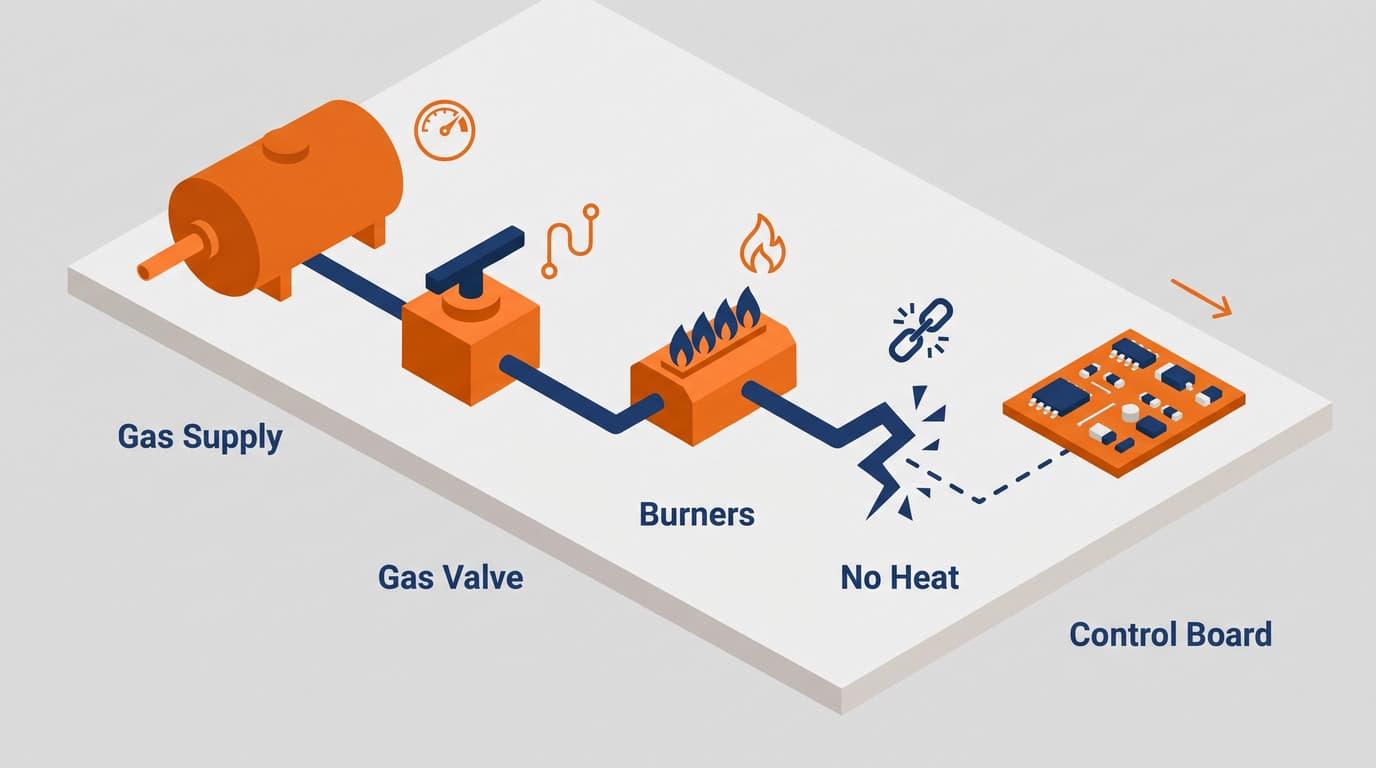
A gas supply interruption, malfunctioning gas valve, clogged burners, or faulty control board can leave the blower operating with the furnace running but no heat, or cause a furnace blowing cold air because gas supply issues can prevent ignition and stop the system from producing heat; a closed gas valve can keep the burners from lighting, and a faulty gas valve may cause repeated cycling. A technician may need to check ignition sequencing, gas pressure, flame sensing, and safety interlocks. These gas components should not be adjusted as a DIY furnace troubleshooting step. Electric furnaces have different heating elements and electrical controls, and an oil furnace may also need a basic fuel supply check to confirm the tank is not empty, while a gas furnace may need confirmation that the gas valve is open, but fuel-related diagnosis should be left to a technician.
Blower Motor and Condensate Drain Problems
A failing blower motor can cause weak airflow, grinding noises, or no air at all. In some high-efficiency furnaces, which create condensation that must drain properly, a blocked condensate line or drain safety switch can interrupt heating and lead to cold air blowing if a clogged condensate drain line keeps the burners from igniting or lets the blower run without heat. Both problems call for equipment-specific testing rather than repeated resets. If the blower runs constantly, tell the technician whether the fan setting is Auto or On and whether the burners ever light.
When the thermostat and airflow checks do not restore heat, the next step is finding out why the furnace is shutting down or failing to ignite. Our Sandy furnace repair technicians can test the relevant components, explain the cause, and outline the repair before work begins.
Why a Sandy Cold Snap Makes a No-Heat Problem More Urgent
When your furnace stops keeping up, a chilly Sandy afternoon can turn into an uncomfortable night. Winter temperatures along the Wasatch Front regularly drop below freezing, so reliable overnight heat matters. The NOAA climate normals provide historical temperature context for nearby Salt Lake City International Airport, although conditions at your Sandy address can differ. If the house keeps losing warmth, do not wait for another cold night to investigate.
Hard-running heating systems may reveal clogged filters, aging ignition parts, or airflow restrictions during extended cold weather. A winter breakdown does not automatically mean your furnace needs replacing; the repair decision depends on the failed part, system condition, and safety assessment. If temperatures are falling and your household cannot stay warm safely, seek prompt professional help.
When Cold Air Means It Is Time for Furnace Repair
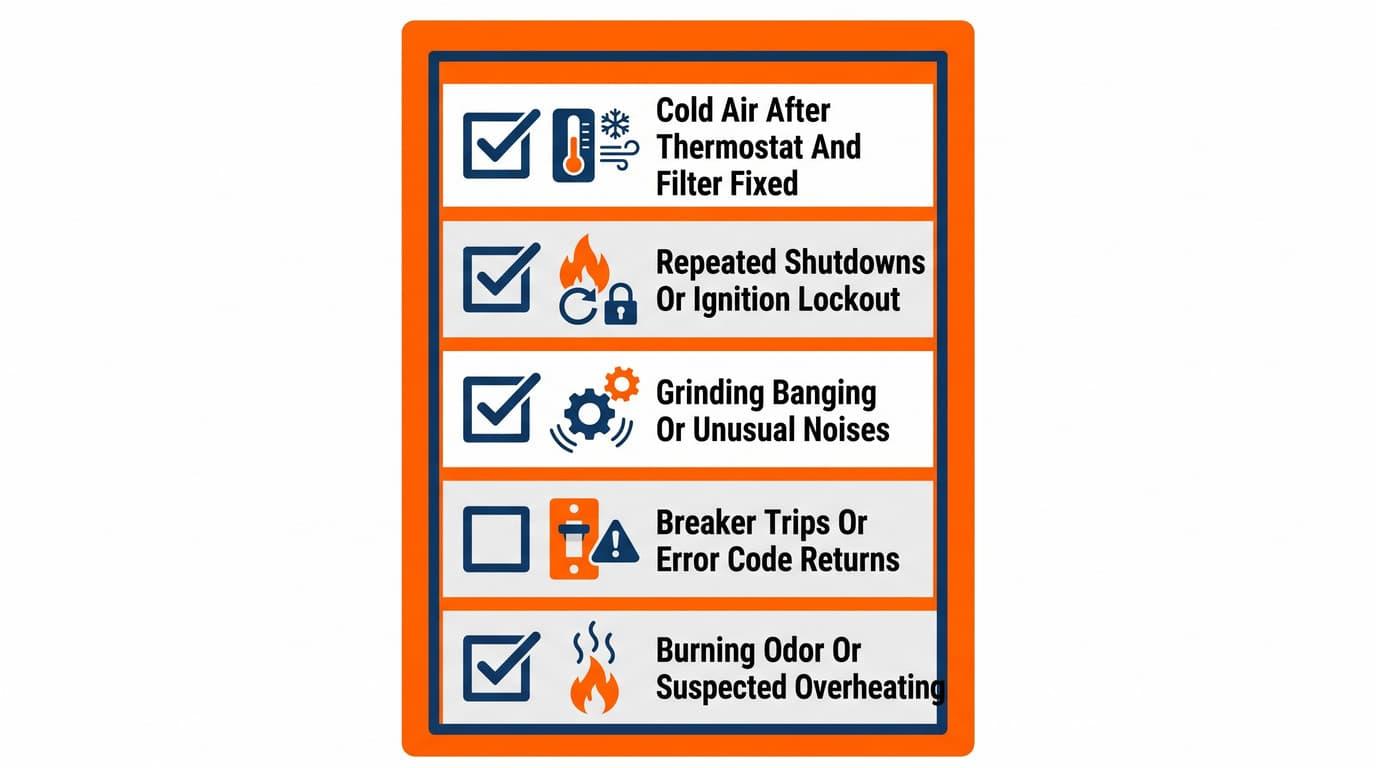
You do not need to identify the failed part before calling. Once the basic checks are done, these symptoms warrant professional diagnosis. If you are planning for the expense, knowing what furnace repair typically costs in Sandy can help you ask about diagnosis, parts, labor, and the complete estimate:
- The furnace keeps blowing cold air after you correct the thermostat and filter.
- Burners start and shut down repeatedly, or the system enters ignition lockout.
- The furnace makes grinding, banging, or persistent unusual noises.
- A breaker trips repeatedly or an error code returns.
- A burning odor persists, or you suspect overheating.
Some warning signs call for immediate action, not another troubleshooting step. If you smell gas, Enbridge Gas advises leaving immediately without touching switches or searching for the leak. Call 911 or your gas utility from a safe location. If a carbon monoxide alarm sounds, evacuate and call emergency services. Carbon monoxide is odorless, so do not rely on smell to judge whether it is safe to stay.
What Our Furnace Technician Checks During a Repair Visit
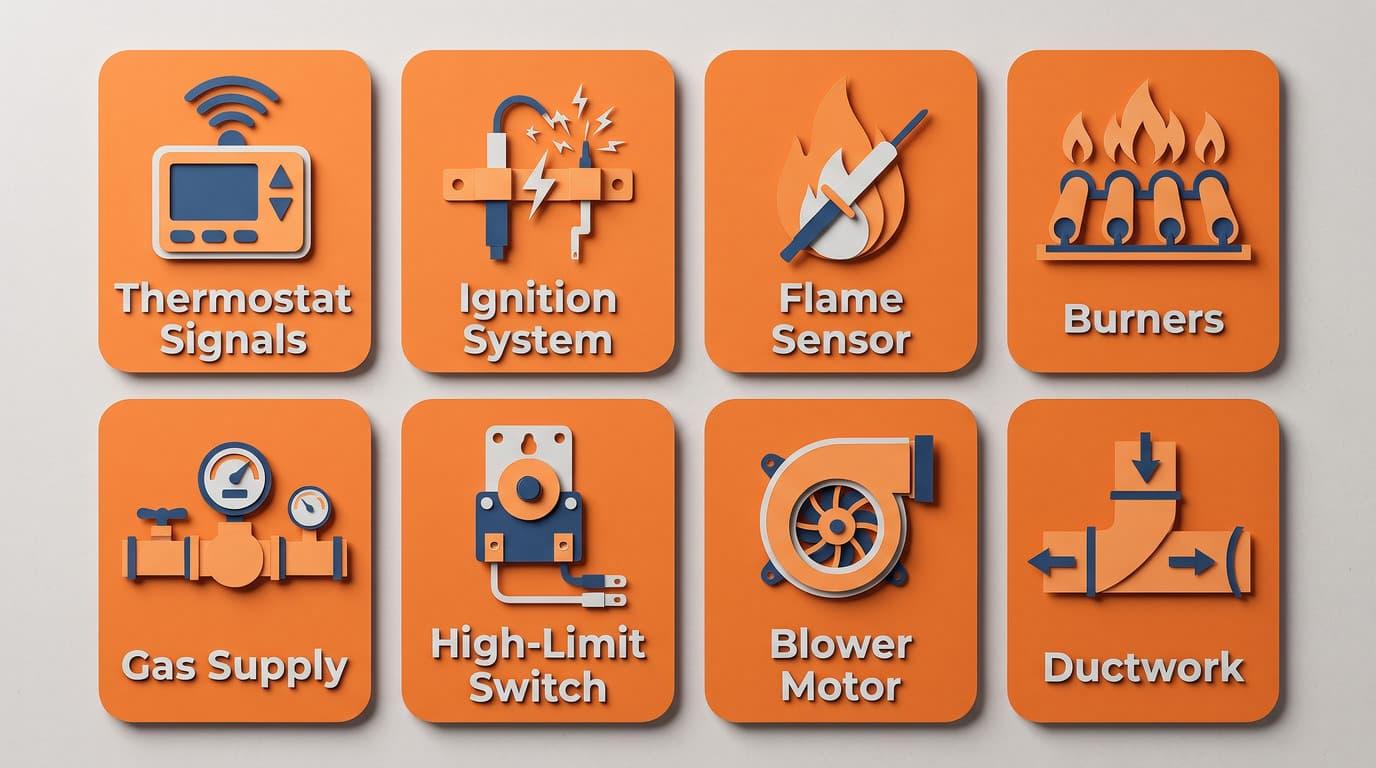
A professional HVAC technician can move beyond the symptoms to test the actual heating system. Depending on the furnace and reported problem, diagnosis may include thermostat signals, the ignition system, flame sensor, burners, gas supply, high-limit switch, blower motor, electrical controls, airflow, and the condition of accessible ductwork. The goal is to identify why the system stopped producing warm air, not simply replace the first part that looks suspicious.
A repair visit should leave you with more than a replaced part. At Comfort Solutions, we explain what our testing found, what the proposed repair addresses, and whether it makes sense for the furnace’s age and condition. If repairs are becoming frequent, whether an older furnace needs replacement is worth considering alongside the estimate.
Keep the Same Problem From Returning With Furnace Maintenance
Getting the heat back comes first. Routine maintenance gives you a chance to address airflow restrictions, ignition wear, and other developing issues before they become another disruption. The CPSC home heating guidance recommends annual professional inspections of fuel-burning heating systems, including their vents and flues, and annual service from an HVAC professional helps keep your furnace running smoothly while improving HVAC system efficiency by about 5% each year; seasonal tune-ups for heating and cooling systems can also support the full HVAC system. Regular care cannot prevent every breakdown, but it supports safer, more reliable operation.
Professional maintenance can help prevent costly emergency repairs, and a well-maintained furnace may last 15 to 20 years.
If your furnace has recently overheated or short-cycled, tell our technician during the next maintenance visit. Knowing what a furnace tune-up costs in Sandy can help you compare the planned service with any repairs that need a separate estimate.
Schedule Sandy Furnace Maintenance
Get Your Sandy Home Warm Again With a Clear Next Step
A furnace not blowing hot air can leave a Sandy household guessing whether to change a setting, replace a filter, or prepare for a repair. Start with the safe checks, pay attention to whether the cold air persists through a heating cycle, and treat repeated shutdowns or unusual noises as signs that the system needs a closer look.
If the heat still will not return, we can help you move from symptoms to a clear answer. Comfort Solutions serves Sandy homeowners with furnace diagnosis and repair, and we’ll explain the options so you can decide what your home needs next.
Frequently Asked Questions About Furnaces Blowing Cold Air
These questions cover the situations that are easy to overlook when your home is already cold.
Why Does My Furnace Keep Turning On and Off Without Heating?
A furnace that starts and stops repeatedly without reaching the thermostat setting may be short-cycling. Restricted airflow, an overheating safety switch, or an ignition fault can interrupt the heating cycle. Check the filter and thermostat settings first. If the pattern continues, have a technician diagnose the cause rather than repeatedly resetting the system.
Should I Keep Resetting My Furnace if the Heat Comes Back?
No. If the furnace keeps shutting down or entering lockout, repeated resets will not address the underlying fault. Note any displayed error code and arrange professional diagnosis rather than repeatedly restarting the system.
When Is It Worth Repairing Instead of Replacing a Furnace?
An isolated fault in an otherwise reliable furnace may be worth repairing. Replacement deserves consideration when major repairs keep recurring, parts are difficult to obtain, or a qualified technician identifies serious safety concerns. Compare the complete repair estimate with the installed replacement cost rather than deciding by age alone.
Does a Heat Pump Blow Cooler Air Than a Gas Furnace?
Often, yes. A heat pump can deliver air that feels less hot than gas-furnace supply air while still heating the house. Watch whether the thermostat reaches its set temperature. If the room keeps cooling or the system repeatedly switches modes, have the equipment checked.
Can a Furnace Produce Heat but Still Leave Rooms Cold?
Yes. The burners may be working while warm air is lost through disconnected or leaky ducts, or airflow is too weak to reach distant rooms. A technician can check supply temperatures, blower performance, and duct distribution to identify where the heat is being lost.
Recent News
Who to Call for Furnace Repair in Sandy?
November 6, 2026
How Long Does It Take to Install a Furnace? A Sandy Homeowner’s Guide
November 3, 2026
Should I Replace 20 Year Old Furnace? A guide for Sandy Homeowners?
October 22, 2026
How Much Does Furnace Repair Cost in Sandy, Utah?
October 22, 2026
Furnace Tune-Up Cost in Sandy, UT: What Homeowners Need to Know
September 28, 2026
How Much Does It Cost to Replace a Furnace in Sandy, Utah: A Homeowner’s Guide
September 23, 2026