Serving The Wasatch Front Area


Back to Blog
When to Replace Furnace Equipment: 7 Warning Signs Before a West Haven Winter
November 19, 2026
The first cold nights in West Haven have a way of exposing furnace problems: a bedroom that won’t warm up, a new rattle at startup, or another repair bill when you thought the system was fine. If you’re wondering when to replace furnace equipment, look at the pattern: one repairable fault is different from repeated breakdowns, poor heating, or a safety concern.
At Comfort Solutions, we help West Haven homeowners make that decision before winter sets in. A furnace that’s nearing 15 to 20 years old, needs frequent repairs, or struggles to heat your home consistently may be worth replacing, especially when several warning signs appear together. Here’s what to look for, what can still be repaired, and when a new furnace makes more sense.
7 Furnace Warning Signs to Catch Before West Haven Turns Cold
Some furnace warning signs call for a routine service visit; others deserve urgent attention. Watch for these changes before the coldest weather arrives.
1. Some Rooms Stay Cold Even When the Thermostat Is Set Correctly
Cold spots and uneven heating may come from leaky ducts, blocked registers, a dirty filter, a blower that is struggling to move air, or other duct problems such as poor insulation or airflow imbalance. Start by checking accessible vents and the thermostat. If airflow remains weak, we can test the heating system and ductwork to confirm whether the furnace can still keep the house warm or whether the issue is with duct performance before recommending a major repair or replacement.
2. Your Furnace Is Making Noise It Never Made Before
A brief rattle can be a loose panel, while loud noises like squealing may point to a belt or motor bearing. Repeated banging, booming, grinding, or other strange noises deserve a prompt inspection. A furnace making noise does not automatically need replacing, but persistent sounds, especially on an older furnace, can signal worn components or ignition trouble.
3. It Starts and Stops Before the House Gets Warm
Short cycling means the furnace repeatedly shuts off before completing a normal heating cycle. A clogged filter, thermostat problem, restricted airflow, or an incorrectly sized system can cause it. Because several issues share this symptom, the next step is diagnosis, not guessing which part to replace.
4. Your Heating Bills Keep Rising Without an Obvious Reason
Compare energy bills from similar weather periods, not just one unusually cold month. If costs climb while your heating habits stay the same, several factors could be involved, including poor airflow, aging components, or declining efficiency. A tune-up may help, but rising bills alongside other problems can make a high-efficiency furnace worth discussing if your goal is saving money over time, especially since some older furnaces operate at roughly 60% to 70% AFUE and replacing an inefficient unit can lower future energy bills.
5. You Keep Paying for Repairs
One failed component may be cost-effective to repair, but as furnaces age, replacement parts can become harder to find, which makes repeat fixes less practical. Repeated repairs to multiple parts, especially as the furnace approaches 15 to 20 years old, change the calculation. Furnace repair costs can range from about $100 to $3,000 depending on the problem. Keep recent repair bills and warranty details handy so we can compare the next repair cost with whether you may need to replace the system.
6. The Furnace Is Around 15 to 20 Years Old
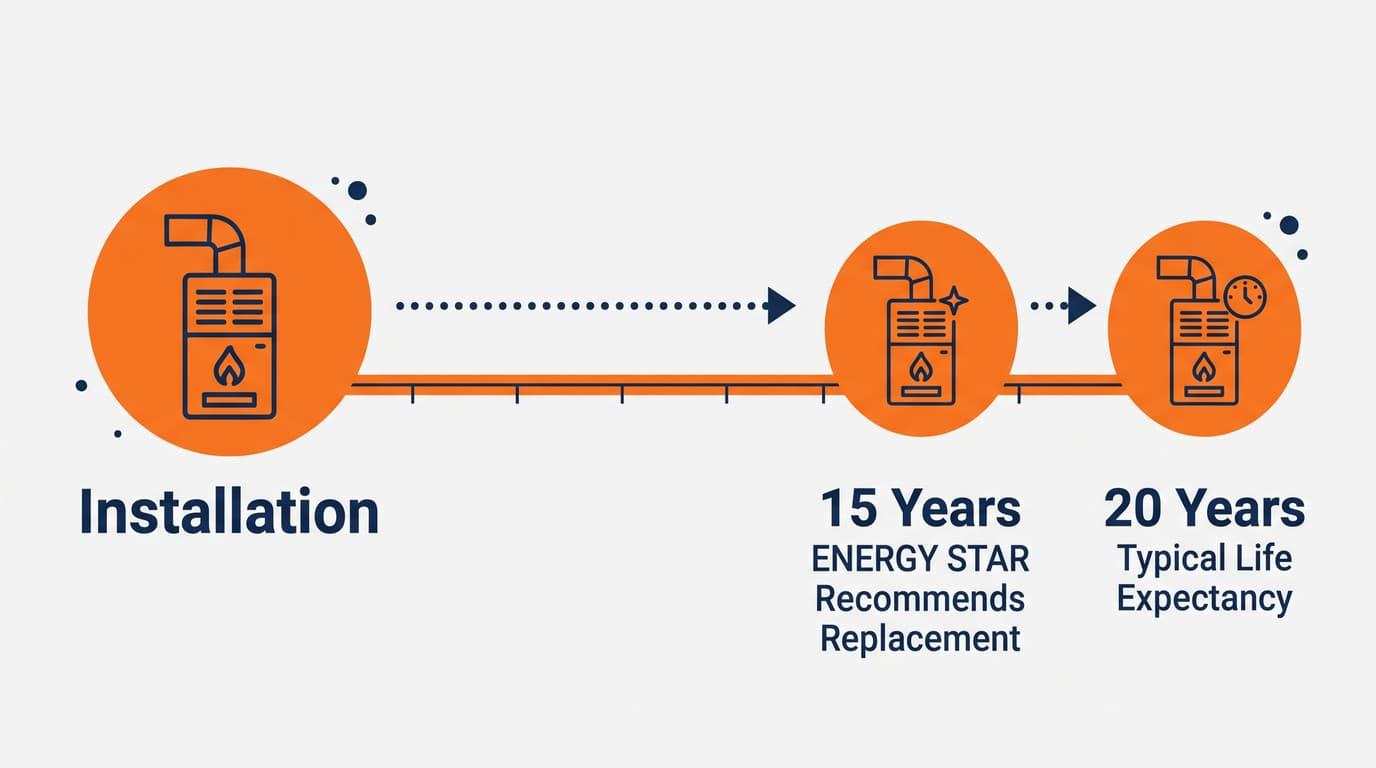
Many gas furnaces have a typical life expectancy of roughly 15 to 20 years, depending on installation, use, and regular maintenance. ENERGY STAR recommends considering replacement when heating equipment is more than 15 years old. Many furnaces reach that range, but some can fail earlier if installation quality, maintenance, or build quality were poor. That is a planning point, not an expiration date: a safe, well-maintained system with few repairs may still have useful life, so weigh the furnace’s age along with its repair history and overall condition.
7. You Notice Rust or Signs of a Combustion Problem
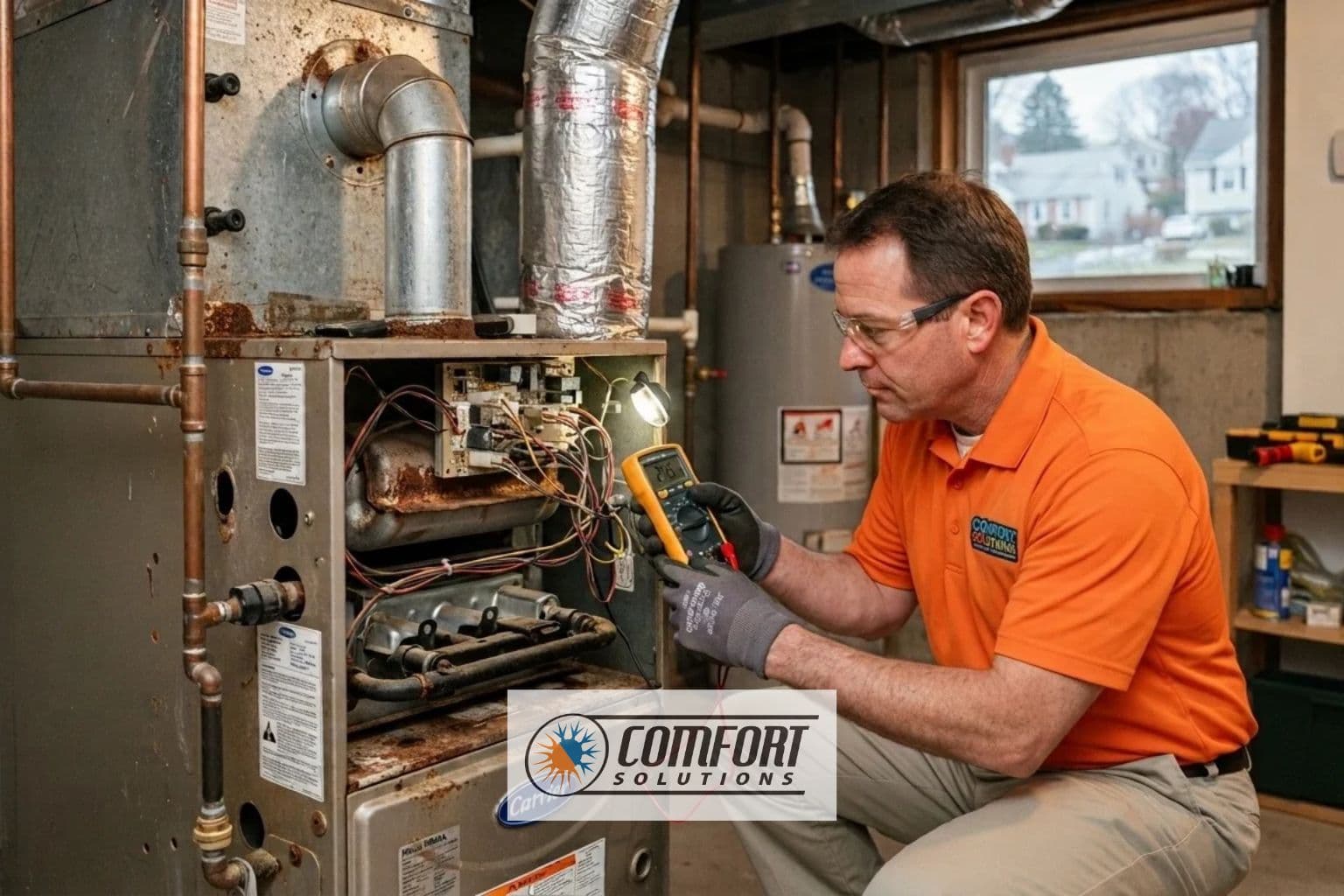
Visible corrosion near venting, repeated ignition failures, or a technician’s finding of a cracked heat exchanger are telltale signs that can raise serious safety concerns, and visible rust or cracks may point to structural issues rather than simple surface corrosion. A yellow or flickering burner flame may warrant professional combustion testing, but flame color alone cannot diagnose a failed heat exchanger. Rust can also come from different sources in standard systems versus high-efficiency units. If a cracked heat exchanger is confirmed, carbon monoxide is a serious risk.
If you smell rotten eggs or suspect a natural gas leak, leave the building immediately. Do not operate switches or try to restart the gas furnace. Call your gas company or emergency services from outside. Carbon monoxide is odorless, so working CO alarms and professional inspection are important even when you smell nothing.
Repair or Replace? Compare the Problem, Not Just the Furnace’s Age
Most signs above can have more than one cause. An accurate assessment from an HVAC company should identify the failed part, confirm whether the equipment is safe, and compare the full repair quote with replacement options, including furnace installation.
| Situation | Repair may make sense | Consider replacement when |
|---|---|---|
| Heating is uneven | Filter, thermostat, or duct problem is repairable | Major components repeatedly fail, and comfort stays poor |
| New noises or short cycling | A single worn part or airflow issue is identified | Failures return after repair, especially on an aging unit |
| Repair estimate | One affordable fix with good remaining equipment life | Repair approaches half the installed replacement cost |
| Safety issue | Technician confirms a safe, correctable fault | A cracked heat exchanger or other serious defect makes repair impractical |
The 50% rule is a starting point, not a hard cutoff. Warranty coverage, remaining equipment life, and safety matter just as much as the repair quote when deciding if it is time to replace. We can diagnose the issue and explain your options before you commit to a new system.
Schedule My West Haven Furnace Repair
What Changes With a New High-Efficiency Furnace?
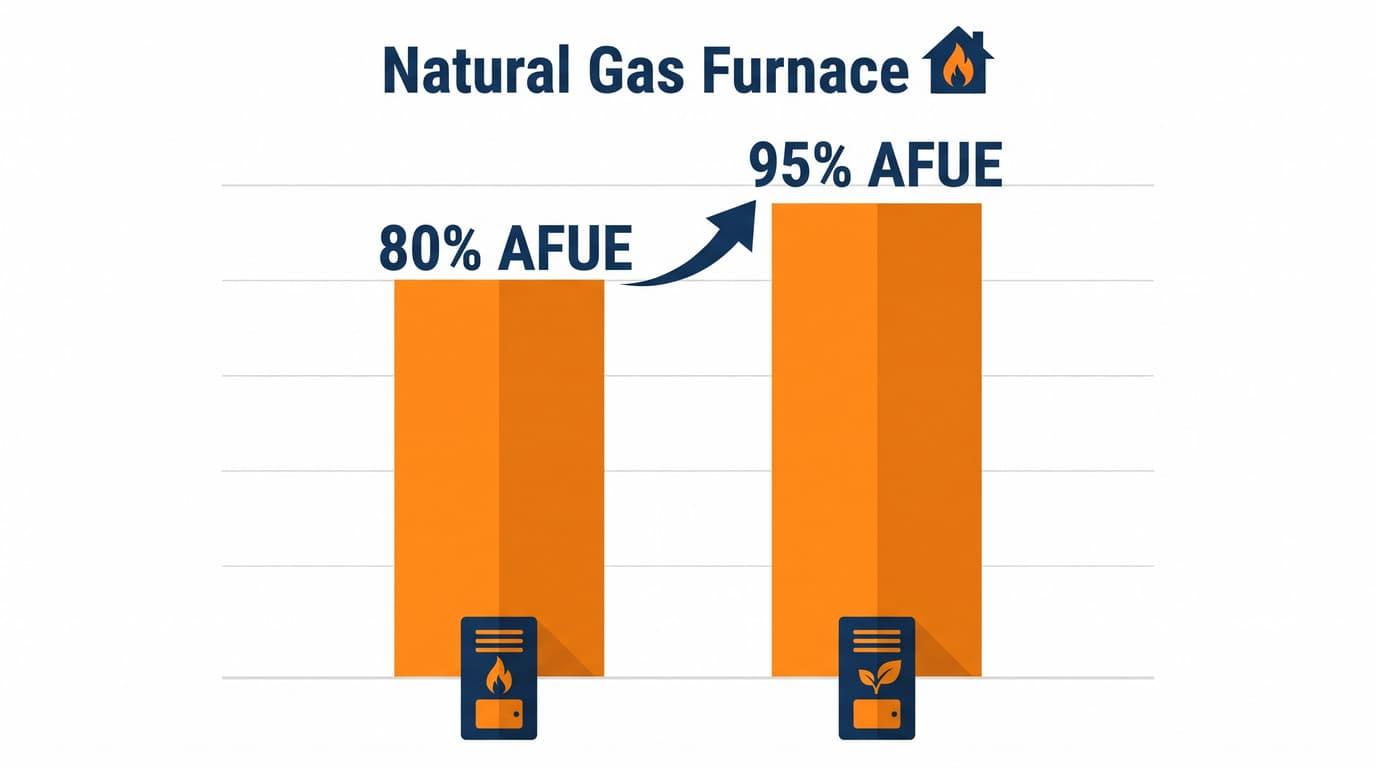
A new high-efficiency furnace may use less fuel, but the difference depends on what you’re replacing. For a simple comparison, 80% and 95% AFUE ratings are commonly used to compare natural gas furnaces: an 80% AFUE furnace converts about 80% of its fuel into usable heat under the rating method, while a 95% AFUE model converts about 95%. That is a 15-percentage-point difference in rated efficiency, not a guaranteed 15% reduction in your energy bills. Newer, more energy efficient models can also help reduce a home’s carbon footprint compared with older equipment. Insulation, leaky ducts, sizing, fuel prices, and how you use the system all affect actual costs, and a new furnace may also provide more consistent heating and improved comfort.
We also consider how replacement fits the rest of your HVAC system. Your air conditioner may share ductwork and a blower with the furnace, so the cooling system matters too, while a heat pump could be another option for some homes. Before recommending a new system, we assess the home’s heating needs so you aren’t paying for equipment that’s too large or too small. New furnace installation may also include warranty coverage, which matters when comparing long-term value.
What to Do Before West Haven’s First Hard F
reeze
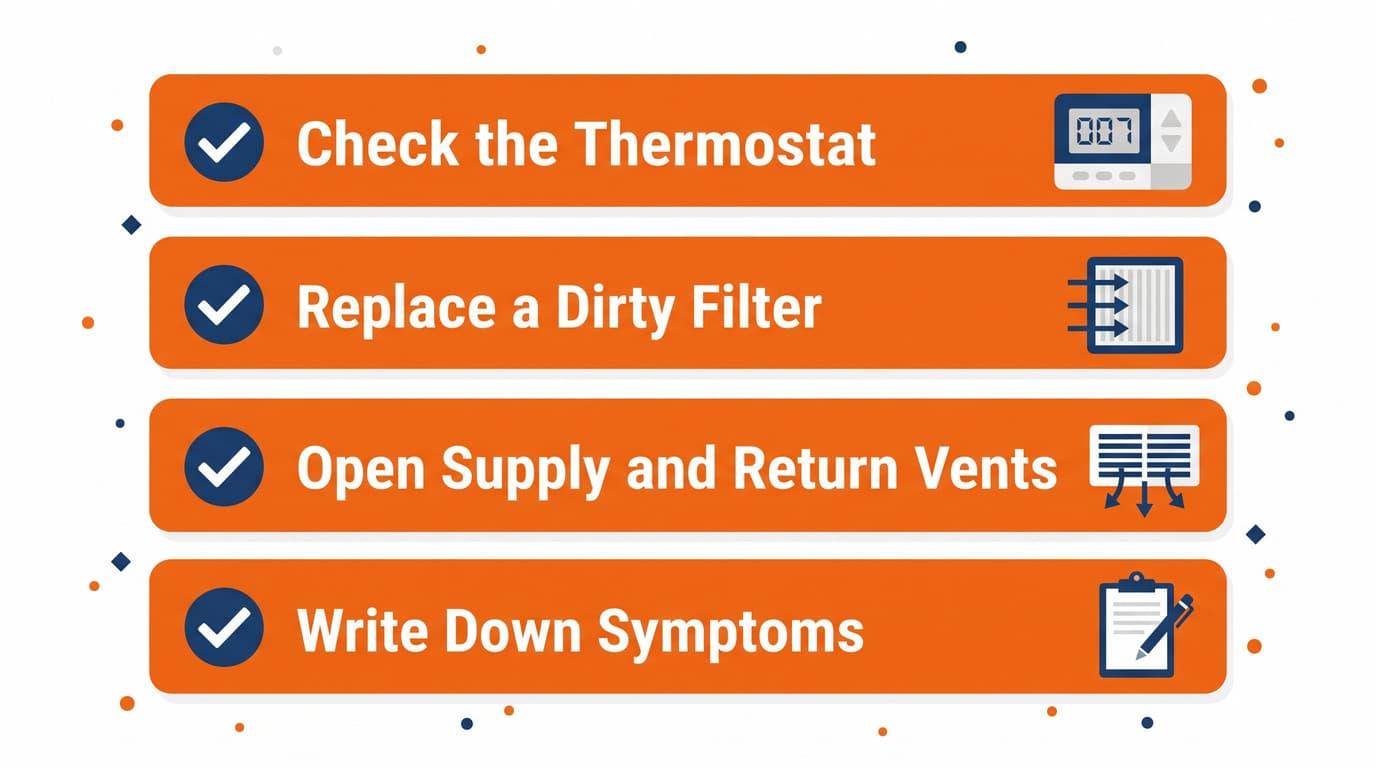
If the furnace is still operating safely, a few simple checks can help you avoid an unnecessary service call and give a technician useful information.
- Check the thermostat: Confirm heating mode, setpoint, and batteries if applicable.
- Replace a dirty filter: Use the correct size and type specified for your equipment.
- Open supply and return vents: Move furniture or rugs that restrict airflow.
- Write down symptoms: Note when the noise, cold spots, or short cycling started.
These checks are only for a furnace that is operating safely. Leave gas, combustion, and electrical work to a qualified technician. If symptoms persist, we can inspect airflow, ignition, controls, and venting during a pre-winter maintenance visit, giving you time to address small problems before a cold-weather breakdown. If the same issues keep coming back, start planning before a no-heat emergency forces a rushed decision.
Keep My Furnace Maintenance On Track
Know When to Replace Furnace Equipment Before Winter Arrives
Signs that you may need to replace your furnace are rarely based on age alone. The more telling pattern is repeated repair bills, rooms that stay cold, rising heating costs, or a safety problem that cannot be resolved reliably. Spotting those signs before West Haven’s coldest nights gives you time to compare your options and plan replacement now instead of waiting for an emergency without heat.
At Comfort Solutions, we’ll check what is causing the trouble, explain whether a repair is practical, and help you plan a correctly sized replacement only when it makes sense. You deserve a clear answer and a warm home, not pressure to buy equipment you may not need.
Questions West Haven Homeowners Ask Before Winter
These practical questions help with the next step after you’ve identified the warning signs.
Can a furnace fail even if it worked fine last winter?
Yes. Components can wear between seasons, and a furnace that ran last spring may still have ignition, venting, or airflow trouble when restarted. Test it before the first sustained cold spell.
How long does furnace replacement usually take?
A straightforward new furnace installation may be completed in a day, while duct modifications are sometimes needed when duct problems affect airflow or system fit, and venting changes, permits, or switching equipment types can extend the schedule. Ask for a project-specific timeline.
Should I replace my air conditioner at the same time?
Not necessarily. If the cooling equipment or air conditioning is relatively new and compatible, keeping it may be reasonable. If both systems are aging, we can compare efficiency, compatibility with your cooling system, and total installation costs before recommending a paired upgrade.
Does a programmable thermostat fix uneven heating?
It can improve scheduling and temperature control, but it cannot repair leaky ducts, weak airflow, or failing furnace components. Persistent cold spots need diagnosis.
When should I stop running my furnace?
Stop using it if a technician identifies an unsafe condition, a carbon monoxide alarm sounds, or you suspect a gas leak. For a gas leak, evacuate immediately and contact the gas utility or emergency services from a safe location.
Recent News
5 Best Plumber Salt Lake City for 2027: Find Your Fit
November 18, 2026
How to Choose an HVAC Contractor in West Haven, Utah
November 17, 2026
Furnace Not Blowing Hot Air? Common Causes in Sandy Homes
November 12, 2026
Who to Call for Furnace Repair in Sandy?
November 6, 2026
How Long Does It Take to Install a Furnace? A Sandy Homeowner’s Guide
November 3, 2026
Should I Replace 20 Year Old Furnace? A guide for Sandy Homeowners?
October 22, 2026