Serving The Wasatch Front Area



Back to Blog

When Your AC Is Running But Not Cooling: Guide for Sandy, Utah Homeowners
July 17, 2026
Your AC is running, the vents are blowing air, but your home still feels warm. During a Sandy, Utah, summer, such a frustrating experience can quickly turn your home into an uncomfortable place to be.
So, what’s stopping your AC from actually cooling?
In many cases, the cause is easier to identify than homeowners expect. What makes all the difference is knowing what to look for.
In this article, we’ll walk through the most common reasons your AC isn’t cooling, the simple checks you can do yourself, and the signs it’s time to call in a professional.
Why Your AC Is Running But Not Cooling in Sandy
Sandy’s dry, dusty climate means these problems tend to develop faster than in other parts of the country. Fine particulate matter clogs filters quickly, and the intense heat that comes with summer in this region pushes systems harder than they were designed to run daily. Here are the common reasons your AC won’t cool in this area:
| Cause | What It Does to Your System |
| Wrong thermostat settings | Circulates air without activating the compressor |
| Dirty air filter | Blocks airflow, reduces cooling capacity |
| Blocked condenser unit | Traps heat, forces the system to overwork |
| Frozen evaporator coil | Stops heat absorption entirely |
| Refrigerant leak | Prevents the system from transferring heat out |
| Failed capacitor or electrical issue | Fan runs while compressor sits idle |
| Ductwork leaks | Cooled air escapes before reaching living spaces |
Each of these issues has a distinct cause and solution . We’ll break them down one after the other in the sections below, starting with the easiest ones you can check yourself, and the problems that require you to call a professional AC technician.
The First Thing to Check When Your AC Isn’t Cooling:
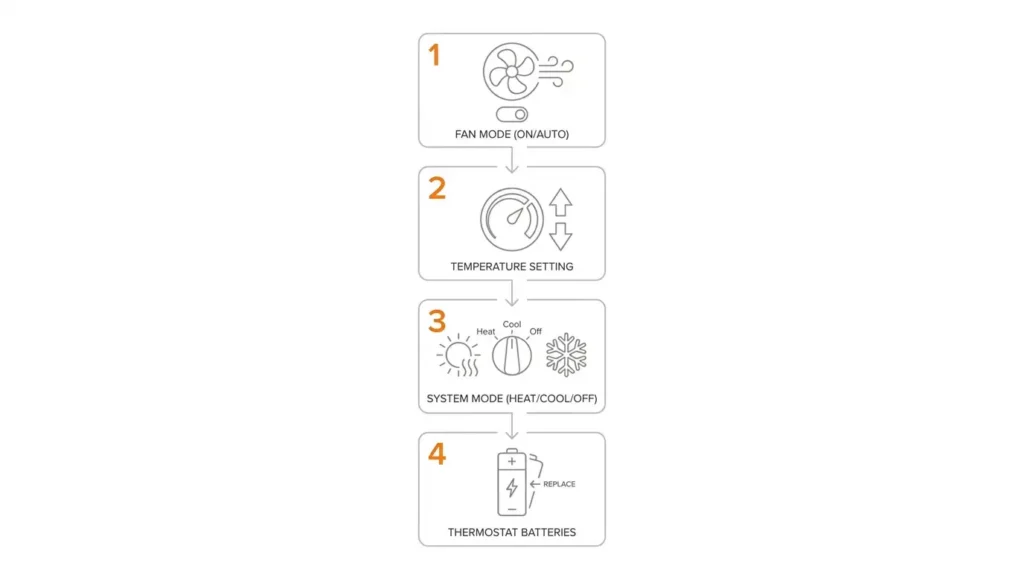
Before anything else, walk over to your thermostat and do a few simple checks there first. A surprising number of “AC not cooling” calls come down to a simple setting that’s easy to overlook.
Spend a minute checking these items before moving on to more involved troubleshooting.
- Fan Mode: Check the fan setting and make sure it’s set to AUTO, not FAN. When it’s left on ON/FAN, the system may only circulate air continuously, but the compressor may not turn on, so you’ll feel airflow without any cooling. If changing the fan setting doesn’t solve the problem, consider scheduling AC service in Sandy Utah with a qualified technician.
- Temperature Setting: Check the thermostat’s setpoint. If the thermostat is set to 78°F and your home is already at 76°F, the AC won’t run. Lower the setting a few degrees below the current room temperature to see if the system starts cooling.
- System Mode: Confirm the thermostat is set to COOL rather than HEAT or OFF. It’s surprisingly common for the mode to remain on HEAT after cooler spring weather or be changed accidentally.
- Thermostat Batteries: If your thermostat has replaceable batteries, install fresh ones if the display is blank, dim, or behaving erratically. Dead batteries are a common cause of thermostat trouble and can interfere with normal operation.
These checks only take a few minutes and often solve the problem without any tools. If everything looks correct and your AC is still running without cooling, the issue is likely somewhere else in the system, which we’ll cover next.
The Issue of Dirty Air Filters and Why Sandy’s Dust Makes It Worse
A dirty air filter is one of the most common reasons an AC runs without cooling, and in Sandy, Utah, it happens faster than most homeowners expect.
When a filter gets clogged, it causes restricted airflow across the evaporator coil. And without adequate airflow, the coil cannot absorb heat from your home efficiently, and cooling capacity drops noticeably. In many homes, weak airflow from the vents is an early sign of clogged filters or a frozen coil.
If you keep running your air conditioning system with a clogged filter, it can cause the coil to freeze entirely. When this happens, it puts serious strain on the compressor and can turn a simple filter replacement into a costly HVAC repair in Sandy. A dirty filter also reduces cooling efficiency and can raise energy costs because the system must run longer to cool your home properly.
Sandy’s desert environment makes this problem even worse. Fine dust, dry particulates, and the region’s arid summer air load up a filter much faster than you would see in a humid or less dusty climate. Utah’s dry climate causes air filters to clog faster with dust, so what might last 90 days elsewhere may need replacing in 30 to 45 days here. Utah’s indoor air quality challenges make this a year-round concern, not just something you deal with during summer.
Checking the filter should be your first physical inspection step. Pull it out and hold it up to light. If you can’t see through it, replace it before doing anything else.
A few things worth knowing about filter maintenance in Sandy:
- Air filters should be replaced every 30 to 90 days, but in Sandy or during heavy use they often need replacement every 1 to 2 months because dirty air filters can create airflow problems.
- Higher MERV-rated filters trap more particles but can contribute to airflow restriction, so balance filtration with your system’s airflow needs.
- Choosing the right air conditioning filter for your specific system is crucial more than most people realize.
A Blocked or Dirty Condenser Unit Cuts Cooling Power
The job of the outdoor condenser unit is to release heat effectively after the AC pulls it from inside your home. If that doesn’t happen, the AC unit may be unit running without cooling effectively.
In Sandy, condenser coils get coated with debris quickly. Contaminants like fine dust, cottonwood fluff, and airborne debris coat the coil fins and restrict the airflow the system depends on.
When the airflow around the condenser is blocked, the system can’t shed heat outside, which leads to poor cooling or insufficient cooling.
Blocked outdoor units can also drag down cooling performance, making the compressor work harder while less cold air reaches your living spaces.
You can address some of these issues by yourself. Start by checking for outdoor debris and blocked vents, then clear away any leaves, grass clippings, or debris from around the unit.
Ensure you have at least two feet of clearance on all sides for proper airflow around the outdoor condenser unit. Cleaning the outdoor condenser unit with a gentle rinse from a garden hose can wash surface dust off the coil fins; spray from the inside out if possible. Regular cleaning of outdoor units improves cooling efficiency.
A few things to avoid when cleaning around the condenser:
- Don’t use a pressure washer because it can bend the delicate aluminum fins, which reduces airflow permanently.
- Don’t let shrubs, fencing, or dense vegetation crowd the unit.
- Don’t rely on shade structures placed too close, as they trap heat around the condenser.
You may have heard your neighbors mention how they cleaned condenser coils successfully, but chemical coil cleaning goes beyond the safe DIY territory. When buildup is heavy, professional cleaning is the better option, because dirty condenser coils can overheat the system.
If a basic rinse doesn’t clean the fins effectively, or if they’re visibly bent or heavily fouled, it’s worth having a professional take a look.
Frozen Evaporator Coils: What They Are and Why They Happen
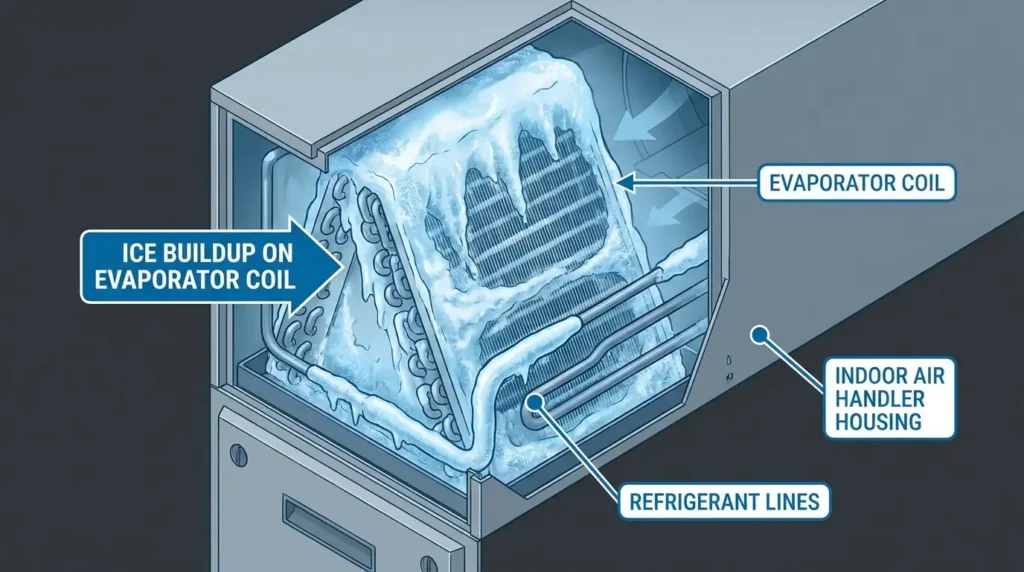
The evaporator coil is the critical component that sits in the indoor air handler, within the indoor unit, and does the actual work of absorbing heat from your indoor air.
The evaporator coil keeps your home cool as the refrigerant flows through it and airflow passes over it steadily.
When either of those conditions is out of balance, the coil temperature drops below the freezing point, and ice buildup starts to form on it. Ice formation on refrigerant lines can also point to airflow or refrigerant issues.
Once ice builds up on the coil surface, it creates frozen coils that prevent effective cooling and disrupt the cooling process because the system’s ability to absorb heat is blocked.
Common Causes for Frozen Evaporator Coils
Evaporator coils can freeze due to a variety of factors. Some of the most common ones include:
- A dirty air filter that chokes off airflow across the coil.
- A refrigerant leak that drops system pressure below safe operating levels.
- Blocked return vents that restrict airflow and can lead to freezing.
- Running the AC at extremely low temperature setpoints during cooler nighttime conditions.
Ignoring the issue only increases the likelihood of serious damage. However, the real danger is what happens when you keep running the system in this state. Ice forces the compressor to operate under sustained stress, and compressors are the most expensive component in your system.
Continued operation risks permanent compressor damage, turning a fixable problem into a full system replacement conversation. You can read more about frozen AC coils and their common causes, as well as what preventing overheating AC compressors actually requires.
If you suspect a frozen evaporator coil, turn the system off or switch to FAN ONLY mode immediately. Let it thaw naturally over several hours, and do not chip or scrape the ice. Once the ice melts, keep the system off until the underlying cause is addressed.
If the coil refreezes after thawing, then there’s an underlying issue, such as a refrigerant leak or short cycling, that requires a professional inspection.
Refrigerant Leaks, Electrical Failures, and Short Cycling
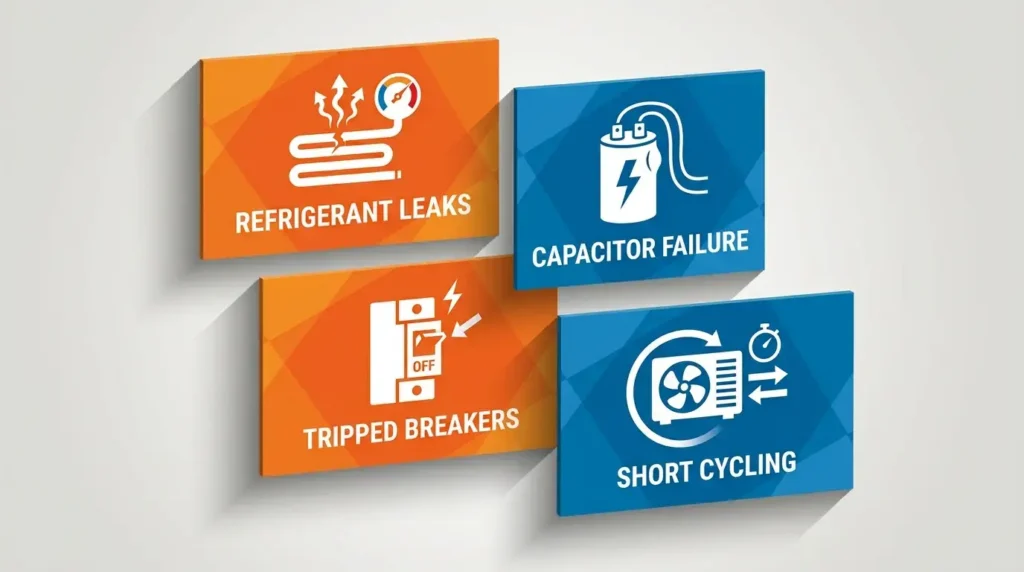
Once you’ve ruled out the simple fixes, the remaining problems are usually ones that require professional diagnosis and repair. Attempting to fix them yourself can create safety risks or cause even more damage to the system.
Refrigerant Leaks
Refrigerant is the substance that allows your system to absorb heat from indoor air and move that heat out of your home. When the level drops due to a leak, the system loses its ability to cool effectively, a problem our air conditioning services in Sandy can diagnose and resolve before it leads to poor cooling performance and longer run times.
When the level drops due to a leak, refrigerant does not get used up during normal operation, so low levels usually indicate a leak in the system. Common signs of refrigerant leaks include:
- Ice forming on the refrigerant lines
- A hissing sound near the indoor or outdoor unit.
- Warm air blowing despite the system running normally.
Refrigerant work is strictly reserved for licensed professionals. The refrigerant handling regulations by the Environmental Protection Agency (EPA) prohibit unlicensed individuals from purchasing or handling refrigerants. A qualified HVAC technician must locate the leak, repair it, and recharge the system to the correct pressure. Comfort Solutions’ certified, background-checked technicians can do this during your appointment.
Capacitor Failure
The capacitor starts and keeps the compressor and fan motors running. When it fails, you may hear clicking at startup, notice the AC struggling to turn on, or find the outdoor unit sitting completely idle while the air handler runs inside.
Tripped Breakers
Tripped breakers are related to capacitor failure because they’re often connected to the same underlying electrical problem. A breaker that trips once may be a fluke, so you can inspect the electrical panel once before resetting the AC circuit breaker, but one that trips repeatedly is indicating an underlying electrical fault. Resetting it without investigating the root cause creates a genuine safety hazard. If your circuit breaker keeps tripping, call a technician to identify and fix the problem before the system runs again.
Short Cycling
Short cycling means your AC turns on, runs briefly, then shuts off before completing a full cooling cycle. It’s a symptom of a larger issue within the system, not a standalone problem.
Refrigerant issues, an oversized system, or electrical faults are the most common drivers. Left unaddressed, short cycling puts significant wear on the compressor, shortens its lifespan considerably, and increases system wear.
Leaky Air Ducts Can Keep Your Home From Cooling
Your AC can run perfectly and still fail to cool your home if the conditioned air is escaping before it ever reaches the rooms you’re trying to cool. That’s exactly what happens with leaky ducts.
When there are gaps, cracks, or loose connections in your ductwork, cooled air bleeds out into unconditioned spaces like attics and crawl spaces.
That means your living areas will be warm while your system works overtime trying to compensate, and ductwork issues can keep cool air from reaching certain rooms while wasting up to 30% of airflow.
In older homes in Sandy or any home where there’s been recent attic work or renovations, this is a surprisingly common problem.
Signs of Leaking Ductwork
These are the signs to look out for that there may be a leak in your ductwork:
- Uneven cooling in certain rooms, where some areas stay noticeably warmer than others
- Energy bills that are higher than expected despite normal usage
- Dusty buildup around supply registers, which can indicate air pulling in from unconditioned spaces
- Signs of duct leaks, especially after attic work or remodeling
Duct inspection and sealing are not things you can accurately do on your own. Homeowners can spot the symptoms, but mapping and sealing a full duct system requires professional equipment and training.
There’s also an air quality benefit to having your ductwork professionally sealed. Sealed ducts reduce dust infiltration, which is crucial in Sandy’s dry, particulate-heavy climate.
When to Stop AC Troubleshooting and Call a Pro
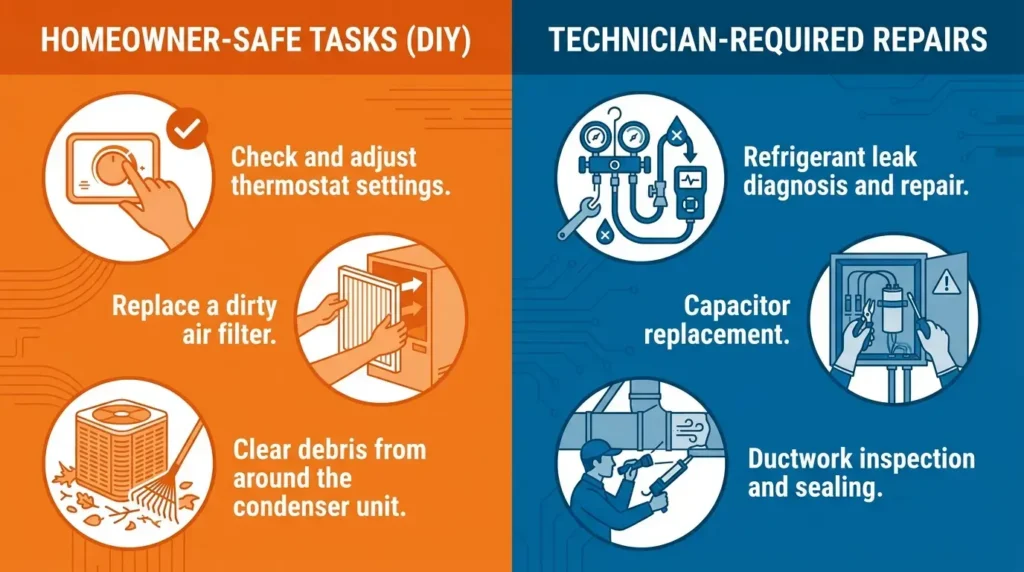
Some AC problems are safe for you to handle on your own, but others are not. Knowing the difference protects both your safety and your system, and issues beyond basic troubleshooting should be left to professional AC repair.
| What Homeowners Can Safely Do | What Requires a Licensed HVAC Technician |
| Check and adjust thermostat settings | Diagnose and repair refrigerant leaks |
| Replace a dirty air filter | Replace a capacitor |
| Clear debris from around the condenser unit | Address repeated circuit breaker trips |
| Let a frozen evaporator coil thaw naturally | Perform compressor diagnostics |
| Reset a tripped circuit breaker once | Inspect and seal ductwork |
| Address any HVAC issue involving electrical components, refrigerant, or the compressor |
As mentioned earlier, handling refrigerant without an EPA certification is illegal. Electrical repairs on HVAC components also come with shock and fire hazards that no online guide can safely walk you through, so it’s always better to trust a professional.
If you’re dealing with short cycling or a frozen evaporator coil that keeps returning, treat those as urgent. Both conditions put sustained stress on the compressor, and compressor failure is one of the most expensive issues you can face with a residential HVAC.
When any of these issues come up, Comfort Solutions is the company to turn to for help. We offer 24/7 air conditioner repair for Sandy homeowners, including nights, weekends, and holidays. Our experienced technicians diagnose the root cause quickly, explain your repair options clearly, and get your cooling system back up and running with as little disruption as possible.
Preventative Maintenance That Helps Sandy Homeowners Stay Ahead of the Heat
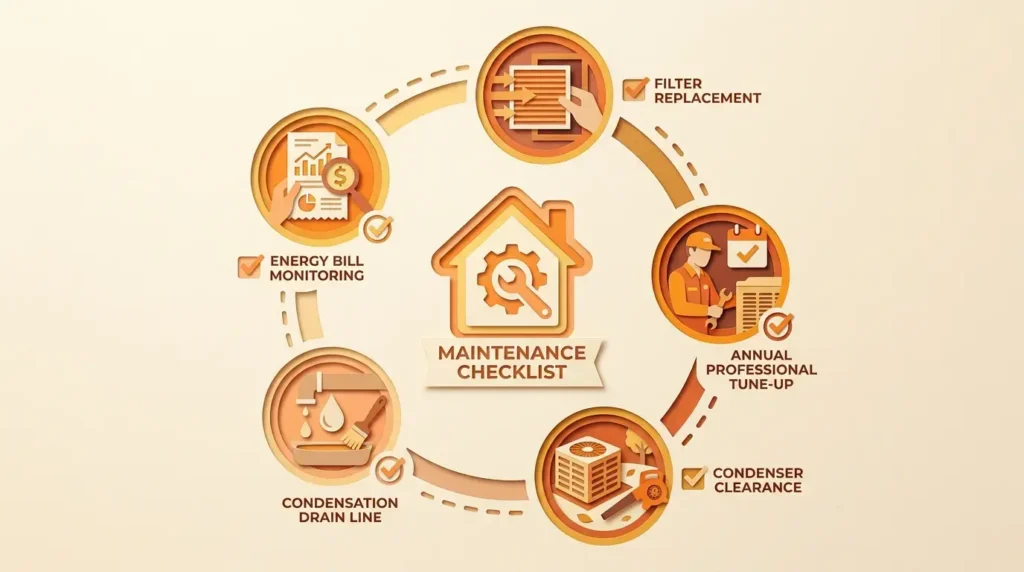
Most AC failures do not happen without warning. They build slowly through neglected filters, dirty coils, and small inefficiencies that compound over time.
In Sandy, the dry and dusty environment accelerates that process faster than national maintenance guidelines account for, which is why routine maintenance and regular maintenance help avoid breakdowns before temperatures climb.
Following HVAC preventative maintenance guidance is a good starting point, but local conditions demand a more aggressive schedule. Preventive maintenance catches issues before they escalate and helps your system run more efficiently. Here’s what regular maintenance looks like for Sandy homeowners:
- Filter Replacement: Swap your dirty air filter every 30 to 45 days during peak season, not the 90-day interval printed on the packaging.
- Annual Professional Tune-up: Schedule professional tune-ups before summer begins for consistent cooling performance, covering condenser coil cleaning, refrigerant level checks, and electrical component inspection; ASHRAE recommends annual or bi-annual HVAC tune-ups.
- Condenser Clearance: Keep the area around your condenser clear of debris, dust buildup, and vegetation, maintaining at least two feet of clearance on all sides
- Condensation Drain Line: Check and flush it periodically to prevent overflow and the mold and air conditioning concerns that come with moisture buildup
- Energy Bill Monitoring: A steady rise without a change in usage often signals a developing efficiency problem before any obvious symptoms appear; many air conditioning units cool about 20°F below the outdoor temperature, so extreme heat can limit results
Regular maintenance can help prevent unexpected breakdowns and keep your system running efficiently. Comfort Solutions’ Comfort Care Membership Plan includes two annual HVAC visits with cooling and heating tune-ups, 45-point inspections, priority scheduling, and a 10% service discount. These routine visits allow our technicians to identify minor concerns before they develop into costly repairs and help you make informed decisions as your system ages.
If your system is an aging unit and repairs are becoming frequent, the benefits of upgrading your AC system often outweigh the cost of continued patching. Regular maintenance can reduce repair frequency significantly, but repeated fixes often increase repair frequency rather than restoring long-term reliability. A newer, properly sized unit handles Sandy’s summer heat more efficiently and reliably than a system running on borrowed time.
Get Your AC Cooling Again with Comfort Solutions
When it comes to AC issues, knowing the right action to take is critical. Catching the problem early, addressing it promptly, and scheduling professional service when needed can save you time, money, and frustration.
Sandy’s dry, dusty summers demand more from your AC than average, making timely repairs even more important.
At Comfort Solutions, we’ve been helping homeowners in Sandy, Salt Lake City, Salt Lake County, and across Utah stay comfortable for over two decades. We understand the local climate, know the problems that commonly affect AC systems in the area, and provide honest recommendations backed by experienced technicians.
If your AC is still running without cooling after the basic troubleshooting steps, Talk to an HVAC Technician.
Frequently Asked Questions About AC Not Cooling
Why Is My AC Running But Not Cooling Down?
The most common causes include airflow restrictions such as a clogged air filter, incorrect thermostat settings, frozen evaporator coils, low refrigerant, or a failing capacitor, all of which can keep the system from cooling properly. Start with the simple checks first. If nothing changes, schedule a professional inspection.
What Are the Signs of a Refrigerant Leak?
Common signs include warm air from the vents, ice on the refrigerant lines, hissing sounds near the unit, and longer cooling cycles. Refrigerant leaks require licensed repair because the system must be sealed and recharged correctly.
What Is the 3-Minute Rule for AC?
After turning your AC off, wait at least three minutes before restarting it. This allows refrigerant pressure to stabilize, reducing unnecessary strain on the compressor and helping prevent premature component failure.
How Can I Tell If My AC Compressor Is Failing?
Warning signs include warm airflow, hard starts, clicking or grinding noises, short cycling, and an outdoor unit that won’t run. Compressor problems should be diagnosed quickly to avoid more extensive and expensive system damage.
How Often Should I Replace My AC Filter?
Most homeowners should replace their AC filter every 60 to 90 days. In Sandy’s dusty climate, checking it monthly and replacing it every 30 to 45 days during summer often delivers better performance.
Can a Dirty Condenser Keep My AC From Cooling?
Yes. Dirt, dust, and debris covering the outdoor condenser restrict heat transfer, forcing your system to work harder while producing less cooling. Cleaning around the unit regularly helps maintain efficiency and reliable performance.
When Should I Call an HVAC Technician?
Call a technician if your AC continues blowing warm air after basic troubleshooting, repeatedly freezes up, short cycles, trips the breaker, or makes unusual noises. These symptoms usually indicate problems requiring professional diagnosis and repair. The certified technicians at Comfort Solutions are available to take a look when you need reliable AC help fast.
Recent News

Furnace Tune-Up Cost in Sandy, UT: What Homeowners Need to Know
September 28, 2026

How Much Does It Cost to Replace a Furnace in Sandy, Utah: A Homeowner’s Guide
September 23, 2026
How Long Do Furnaces Last for Salt Lake City Residents? A Guide to Warning Signs and Replacement Timing
September 7, 2026
How to Improve Indoor Air Quality During Utah’s Wildfire Season
August 28, 2026
AC Stopped Working in Ogden? Common Causes and What to Do Next
August 24, 2026
HVAC Maintenance Services in West Haven, Utah: Fall Checklist for Homeowners
August 19, 2026