Serving The Wasatch Front Area



Back to Blog
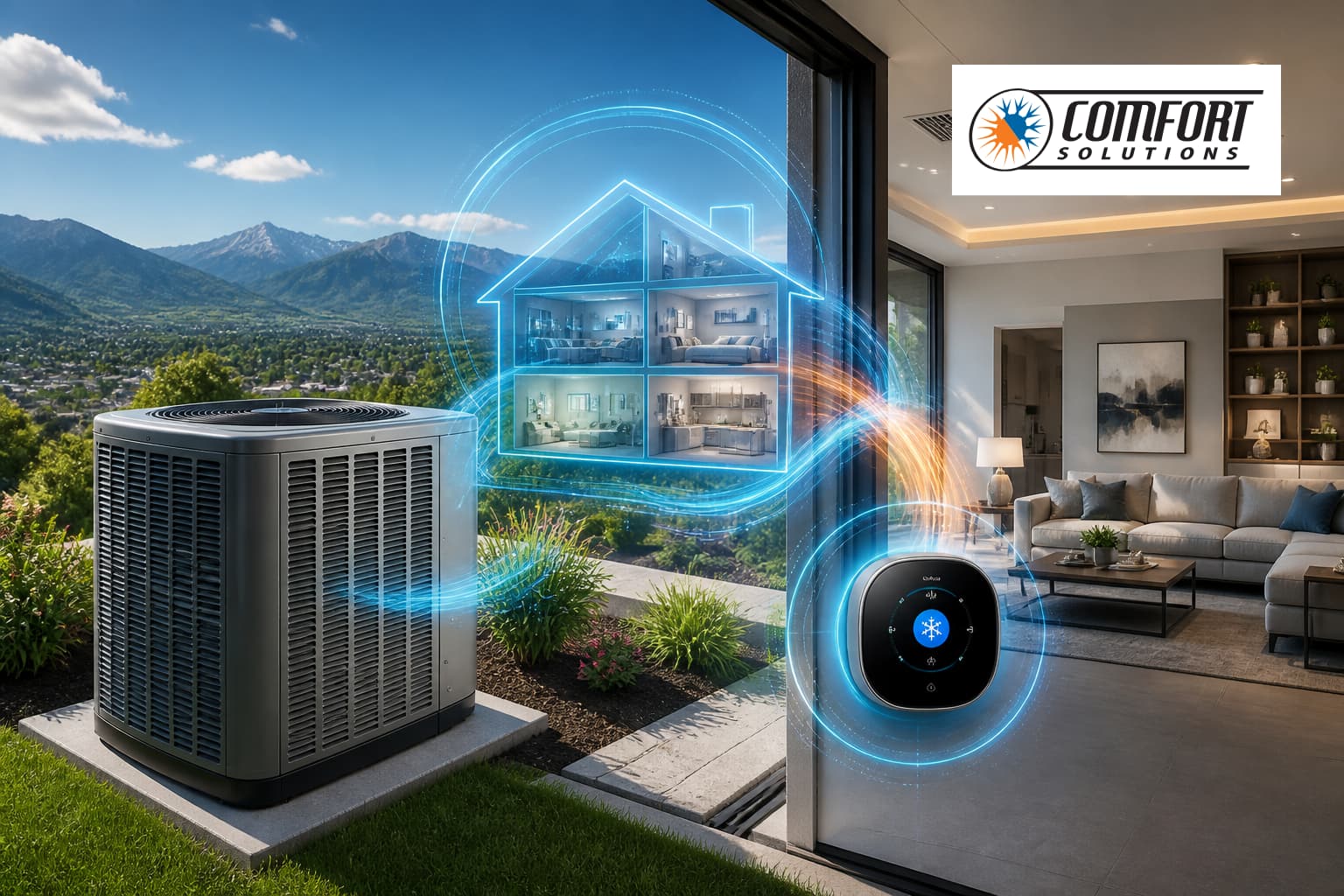
Best AC for Ogden Home: The Homeowner’s Guide to Choosing the Right AC System
August 14, 2026
Buying a new air conditioning system isn’t something most homeowners do often, so it’s easy to feel overwhelmed by all the options.
If you’re trying to find the best AC for an Ogden home, the right choice usually depends on your home’s layout, existing ductwork, local climate, and comfort needs—central air often makes the most sense for homes with ducts, ductless mini-splits fit homes without them, and heat pumps are a strong option if you want year-round heating and cooling.
So, how do you know which AC system is the right fit for your Ogden home?
The answer depends on more than just your budget. For Ogden homeowners, the local climate matters: hot, dry summers put a premium on proper sizing and the right system type, because an oversized or poorly matched unit can leave you with uneven comfort, higher energy bills, and weaker long-term performance.
In this guide, we’ll compare the most common AC system types, explain how Ogden’s climate affects your decision, cover proper sizing with Manual J load calculations and SEER2 ratings, and highlight the features worth paying for—plus what to look for when working with a local HVAC contractor—so you can choose with confidence.
Key Takeaways
- Choose an AC system based on your home’s layout, existing ductwork, and comfort needs, not just the purchase price.
- Central air, ductless mini-splits, and heat pumps each offer different advantages depending on your home and lifestyle.
- Ogden’s hot, dry summers and shorter cooling season make proper system sizing more important than buying the highest-capacity unit.
- A Manual J load calculation helps ensure your new AC is neither oversized nor undersized.
- Higher SEER2 ratings improve efficiency, but a properly sized mid-range system often provides the best value for Ogden homeowners.
- Features like variable-speed compressors, inverter technology, and smart thermostats can improve comfort while lowering energy use.
- Working with an experienced local HVAC contractor helps you choose a system that’s built for your home and Utah’s climate.
Which Air Conditioning System Should You Choose?
Choosing the right AC system starts with understanding your home. Here’s how the most popular cooling options compare for Ogden homeowners.
| System Type | Best For | Core Benefit | Key Tradeoff |
| Central Air | Homes with existing ductwork | Whole-home cooling from one system | Duct leakage can slowly reduce efficiency |
| Ductless Mini-Split | Older homes, additions, no ducts | Zoned cooling, no duct energy loss | Higher upfront cost per zone |
| Heat Pump | Homes needing year-round comfort | Handles both cooling and heating | Higher installation cost upfront |
Central Air Conditioners for Homes With Existing Ductwork
If your home already has ductwork, central air is often the most practical choice. One system cools the entire house, making it simple to operate and maintain. Before installing a new unit, though, have your ductwork inspected.
Leaks or damaged ducts can reduce efficiency and keep your new system from performing as well as it should.
Ductless Mini Split Systems for Homes Without Ductwork
Ductless mini-splits are a compact, space-saving option for older homes, additions, garages, or any room that isn’t connected to a central duct system.
They cool individual rooms, giving you better control over temperatures while avoiding the energy losses that come with ductwork, and the indoor fan delivers targeted airflow where you need it most.
Their inverter technology also helps maintain more consistent comfort while using less energy. Ductless systems are also known for quiet operation compared with traditional ducted ACs.
They can also support improved air quality because there are no ducts collecting debris and reducing dirt build-up over time.
Although the upfront cost per zone may be higher, cooling only the rooms you use can reduce wasted energy. Learn more about thebenefits of ductless air conditioners if you’re considering this option.
Heat Pumps for Year-Round Home Comfort
Heat pumps provide air conditioning in summer and heating in winter, making them a practical year-round option for many Ogden homes. When comparing models, look for cold-climate performance that can handle Northern Utah winters as well as summer cooling.
Installation can cost more than a traditional AC system, but one heat pump can replace separate heating and cooling equipment. The long-term value depends on the model, energy rates, and the system it replaces.
As noted earlier, the right choice of air conditioning system depends on your home’s age, existing ductwork, heating system, and comfort goals. Once you’ve selected the right equipment, pairing it with the best air conditioning filter for your system helps improve airflow, indoor air quality, and overall system performance year-round.
How Ogden’s Climate Affects Local AC Choice

Not every cooling system performs the same in Northern Utah. Ogden’s climate can make one type of AC a better long-term investment than another.
Climate Zone 5B and What It Means for Your AC
Ogden sits in IECC Climate Zone 5B, which means hot, dry summers, cold winters, and a much shorter cooling season than many parts of the country. That’s an important difference because many online AC buying guides are written for places where air conditioners run almost year-round.
For example, cities like St. George have far more cooling days than Ogden. A system designed for those conditions may not be the best fit for your home. Instead of focusing only on maximum cooling capacity, it’s better to choose a system that’s properly sized for Ogden’s climate and your home’s cooling needs. That’s where you’ll see the biggest gains in comfort and energy efficiency.
How Semi-Arid Conditions Affect AC Performance
One advantage of living in Ogden is that your air conditioner doesn’t have to remove as much moisture as systems in humid climates. In practice, an ac unit here also needs to handle wide temperature swings and stay efficient at higher elevation. That changes which features are worth paying for.
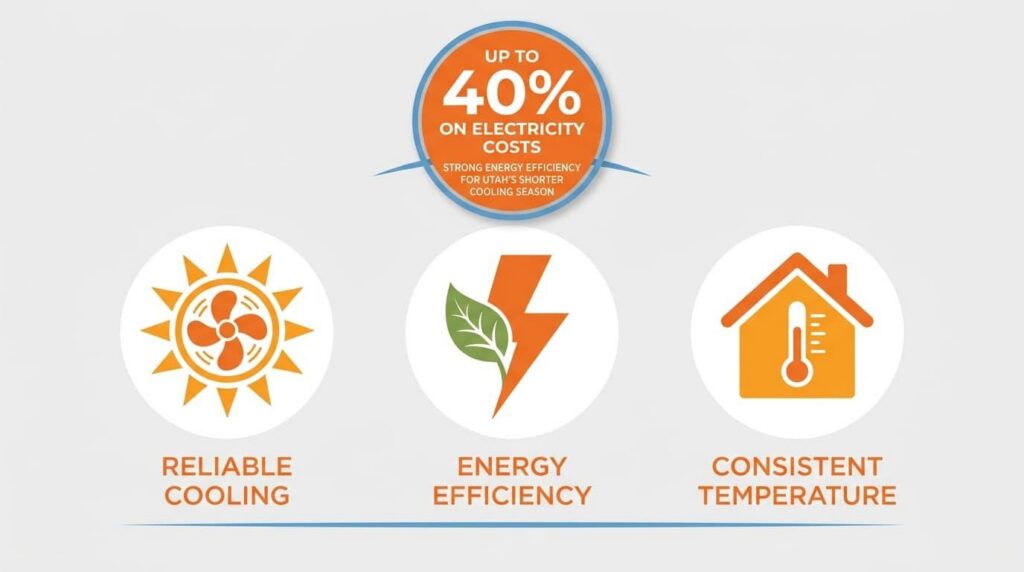
Instead of prioritizing dehumidification, look for a system that offers:
- Reliable cooling during hot summer afternoons
- Strong energy efficiency for Utah’s shorter cooling season
- Consistent indoor temperatures throughout your home
For the central air conditioners and heat pumps discussed here, focus on SEER2.CEER (Combined Energy Efficiency Ratio).) is primarily used for room air conditioners. Even then, efficiency ratings should be considered alongside Ogden’s climate and your home’s calculated cooling load. A properly sized system will usually provide better long-term value than one chosen based on ratings alone.
The shorter cooling season also affects how quickly you’ll recover the cost of a higher-efficiency system, which we’ll cover in the next section, but the right model can still save up to 40% on electricity costs over time.
Choosing the Right AC Size for Your Ogden Home
Choosing the right type of AC is only the first step. If the system isn’t properly sized for your home, you could end up with higher energy bills, uneven cooling, and unnecessary wear on the equipment.
Understanding BTUs and Cooling Load
BTUs (British Thermal Units) measure the amount of heat an air conditioner can remove from your home each hour. Choosing the right cooling capacity is one of the most important parts of selecting a new AC system.
Here’s why proper sizing is important:
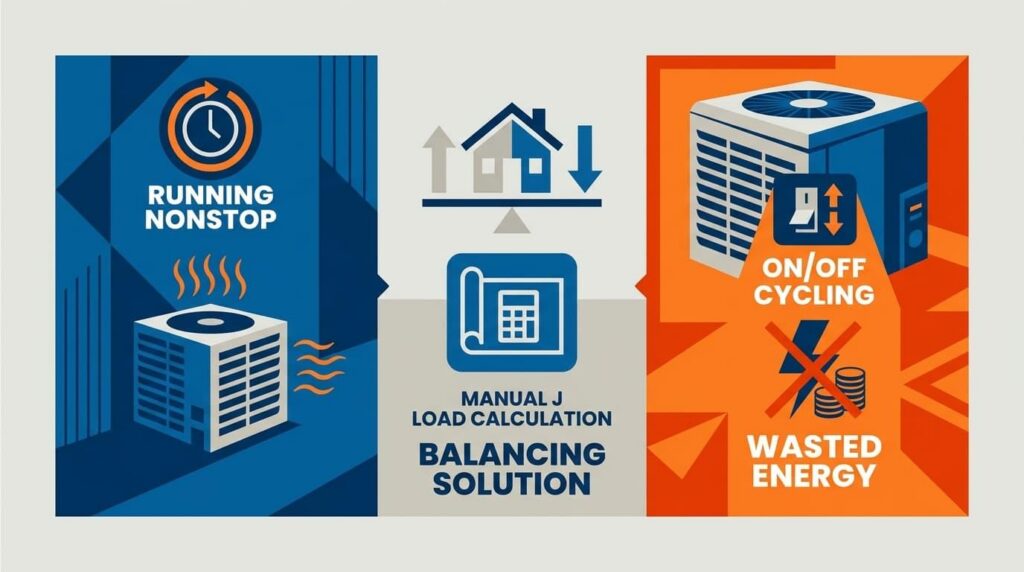
- An undersized unit runs almost nonstop and still struggles to cool your home.
- An oversized unit short-cycles, turning on and off too often, which wastes energy and increases wear.
- Rule-of-thumb sizing based only on square footage often overlooks factors unique to Ogden homes.
Local conditions such as elevation, insulation levels, window placement, and sun exposure all affect your home’s cooling load. That’s why it’s important to choose the right HVAC unit based on your home’s actual requirements rather than a simple square-footage estimate.
Why a Manual J Load Calculation Is Worth It
A Manual J load calculation is the industry-standard method for sizing an air conditioning system. Instead of relying only on square footage, it evaluates insulation, ceiling height, window orientation, occupancy, and Ogden’s local climate.
Because Ogden sits at a higher elevation and has a shorter cooling season than many parts of the country, a Manual J calculation often produces a different recommendation than generic sizing charts. That helps ensure your system delivers efficient, reliable comfort without being over- or undersized.
Many homes with oversized systems can be traced back to skipping this step. Pairing a proper load calculation with avoiding these common air conditioner mistakes helps improve efficiency, extend equipment life, and reduce the chance of costly repairs later.
How Much SEER2 and Energy Efficient Performance Do You Really Need in Ogden?
Once you’ve chosen the right system size, the next step is comparing efficiency. SEER2 ratings can affect both your upfront cost and your long-term energy bills, but the highest rating isn’t always the best value for every Ogden home.
How SEER2 Ratings Actually Work
SEER2 is the current federal cooling-efficiency metric for residential air conditioners and heat pumps. Introduced in 2023 by the U.S.Department of Energy, it replaced SEER with updated test procedures intended to better represent installed operating conditions.
When comparing systems, here’s what to know:
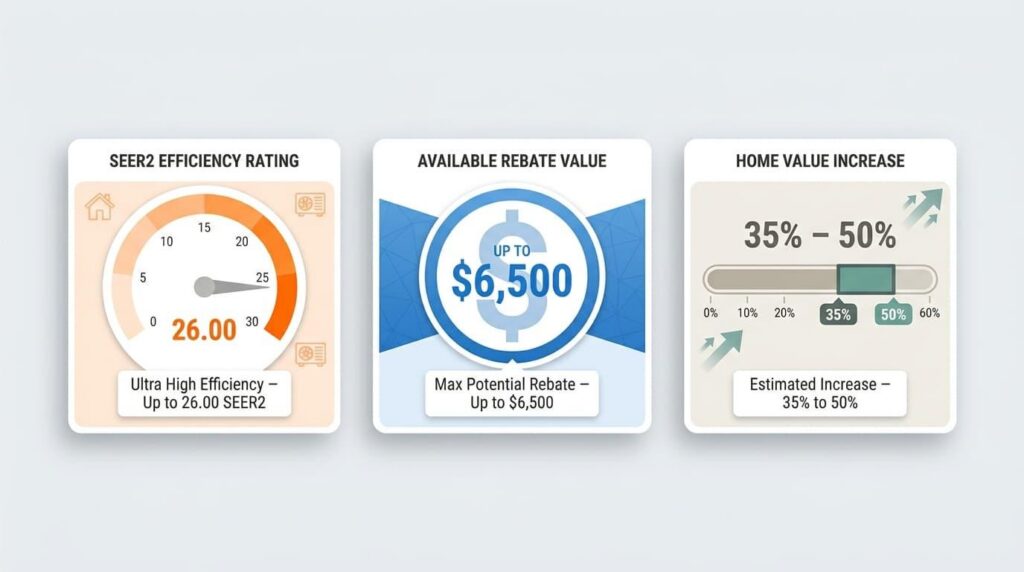
- Higher SEER2 Rating: A higher rating means the system uses less electricity to produce the same amount of cooling. For buyers prioritizing exceptional efficiency, top-tier Lennox AC units can reach up to 26.00 SEER2 efficiency.
- Variable-Speed Compressors: Many high-efficiency systems adjust their output instead of constantly turning on and off, improving comfort while reducing energy use. Inverter-driven compressors can use about half the energy of traditional single-stage AC systems under the right operating conditions.
- AHRI-Certified Performance: Check the matched system’s AHRI certificate to verify its listed cooling capacity and SEER2 rating before comparing equipment.
SEER2 measures cooling efficiency, not refrigerant impact. When comparing replacements, review the efficiency rating, matched-system performance, and available service support. Once you’ve chosen an efficient system, learning how toreduce cooling costs this summer can even help you get more value from your investment.
Does a Higher SEER2 Rating Always Make Sense?
Not necessarily. The biggest factor isn’t the rating itself; it’s how often you’ll actually use your air conditioner.
In places like Phoenix or Houston, air conditioners run for much longer each year, so investing in an ultra-high SEER2 system often pays for itself sooner.
Ogden is different. With a shorter cooling season, savings accumulate more slowly, extending the payback period for premium equipment. In Utah, rebates for cold-climate systems depend on meeting specific efficiency requirements. Lennox promotions and rebates can reach up to $6,500 on qualifying HVAC systems.
For many Ogden homeowners, a properly sized mid-range SEER2 system offers the best balance between upfront cost and long-term savings.
A higher-efficiency system may have a higher initial cost, but that doesn’t always make it the most affordable choice in Ogden’s milder cooling season.
So, when you compare efficiency ratings and explore the benefits of upgrading your AC system, you’ll have a clearer idea of where your money delivers the greatest return.
The goal isn’t to buy the most expensive system; it’s to choose the one that’s the best fit for your home and climate. A well-chosen new AC can also increase home value by roughly 35% to 50%, not just lower operating costs.
At Comfort Solutions, we’ve helped homeowners across Ogden and the Wasatch Front choose the right cooling systems for more than 25 years. Our experienced team can evaluate your home’s needs and recommend an air conditioning system that delivers reliable comfort and lasting value.
Which AC Features Are Worth Paying For?
Not every feature advertised on a new air conditioner is worth paying extra for. Some can improve comfort and efficiency, while others may not provide much value.
Here’s what to prioritize and which features are likely to provide the most value in Ogden.
Variable-Speed Compressors
Unlike a single-stage system that constantly turns on and off, a variable-speed compressor adjusts its output to match your home’s cooling needs. That means more consistent temperatures, quieter operation, and less energy wasted during mild Ogden mornings and warm summer afternoons.
Inverter Technology
Inverter technology allows the compressor to vary its speed rather than run at full power every time it starts. Systems equipped with inverter technology typically offer:
- Quieter operation than traditional single-stage systems
- Lower energy use during partial-load conditions
- More consistent temperatures throughout your home
Smart Thermostat Compatibility
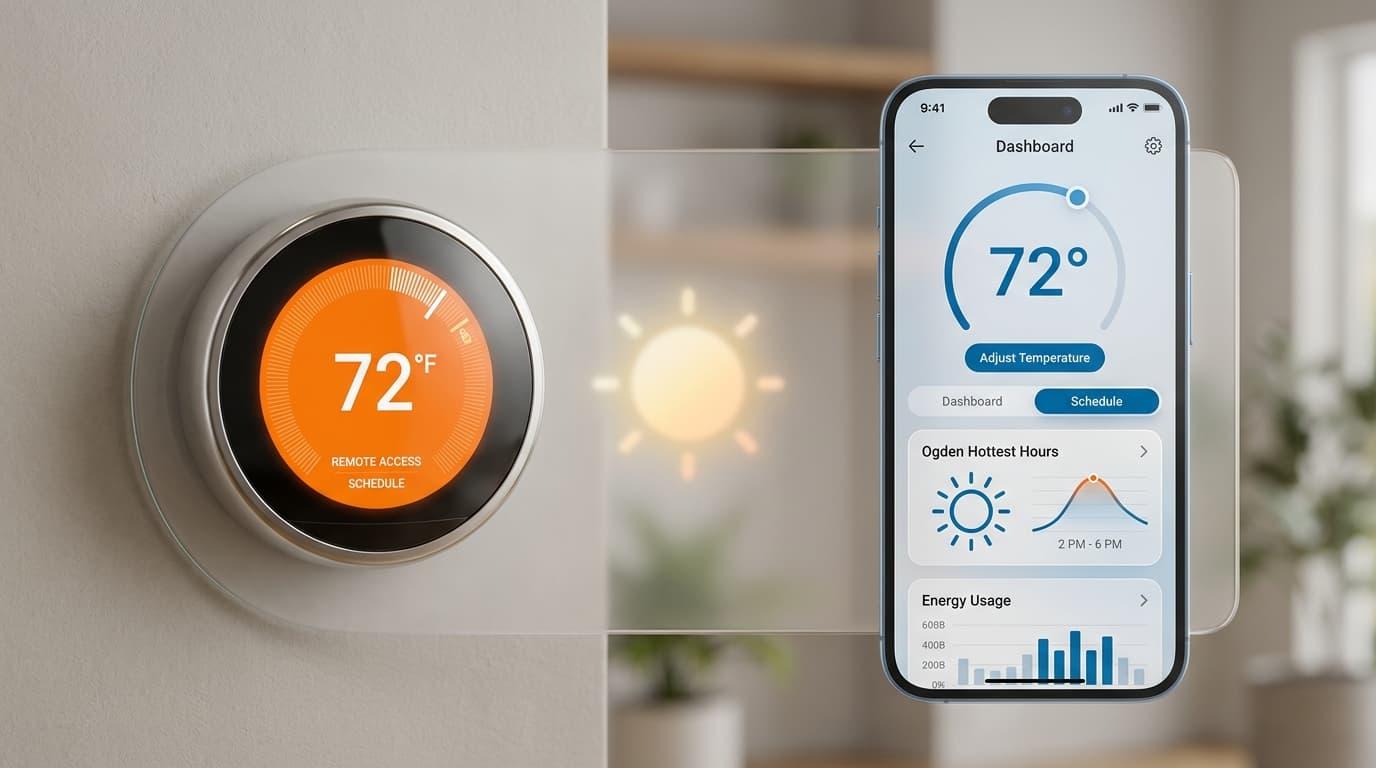
A smart thermostat gives you greater control over your cooling system. You can adjust temperatures remotely, create schedules around Ogden’s hottest hours, and monitor energy usage from your phone. It’s an easy upgrade that helps improve both convenience and efficiency.
Noise Levels
Not all air conditioners operate at the same sound level. If the outdoor unit will be installed near a bedroom, patio, or frequently used living space, comparing decibel ratings is worthwhile. A quieter system can make a noticeable difference in your household’s day-to-day comfort.
Dehumidification and Air Filtration
Ogden’s dry climate means dehumidification is usually a lower priority than it is in humid regions. Even in a drier climate, humidity still affects comfort because an oversized system can cool too fast without removing enough moisture.
Focus first on proper sizing, filtration, airflow, and condensate drainage. Routine maintenance can also help preventmold and air conditioning issues.
Choose the Right AC System for Your Ogden Home
Choosing a new air conditioning system is about more than picking the biggest or most efficient unit. The right choice depends on your home’s size, ductwork, budget, and how you use your cooling system throughout Ogden’s summer months.
Taking the time to compare your options now can help you enjoy better comfort, lower energy bills, and fewer problems for years to come.
Installation quality accounts for roughly 80% of HVAC system lifespan, so how your system is set up matters almost as much as what you install. AC systems should be installed by licensed technicians to protect warranty coverage and give you more confidence in the long-term guarantee.
At Comfort Solutions, we’ve been helping homeowners across Ogden and the Wasatch Front choose the right air conditioning systems for more than 25 years.
As a certified Lennox dealer, we’ll evaluate your home’s needs, answer your questions, and recommend a solution that’s built for lasting comfort, not a one-size-fits-all sale.
Frequently Asked Questions About Choosing an AC System in Ogden
What should I set my AC to in Utah?
For most Utah homes, 76°F to 78°F offers the best balance between comfort and energy savings. When you’re away, raising the temperature by a few degrees can reduce cooling costs without making your home uncomfortable.
Is there a tax credit for HVAC in 2026?
No. The federal Energy Efficient Home Improvement Credit under Section 25C ended for qualifying property placed in service after December 31, 2025. Ogden homeowners can still check current utility, manufacturer, and state rebate programs before choosing equipment.
How cool should my house be when it’s 100 degrees outside?
A fixed 20-degree difference isn’t a reliable test of AC performance. A properly sized system should maintain its target indoor temperature under Ogden’s normal summer design conditions, although it may run longer during periods of extreme heat. If your home cannot recover after outdoor temperatures ease, schedule an inspection for airflow, maintenance, or sizing issues.
How long should a central AC system last?
A well-maintained central air conditioner typically lasts 15 to 20 years, but that lifespan also depends on its maintenance and repair history and whether the original installation or any later replacement was done correctly. Regular maintenance, timely repairs, and scheduled air filter changes can help extend its lifespan and keep it operating efficiently.
Should I replace my air filter before summer?
Yes. Replacing your air filter before the cooling season begins improves airflow, helps your system run more efficiently, and supports better indoor air quality. It’s one of the simplest ways to prepare your AC for summer.
Recent News

Furnace Tune-Up Cost in Sandy, UT: What Homeowners Need to Know
September 28, 2026

How Much Does It Cost to Replace a Furnace in Sandy, Utah: A Homeowner’s Guide
September 23, 2026

How Long Do Furnaces Last for Salt Lake City Residents? A Guide to Warning Signs and Replacement Timing
September 7, 2026
How to Improve Indoor Air Quality During Utah’s Wildfire Season
August 28, 2026
AC Stopped Working in Ogden? Common Causes and What to Do Next
August 24, 2026

HVAC Maintenance Services in West Haven, Utah: Fall Checklist for Homeowners
August 19, 2026