Serving The Wasatch Front Area



Back to Blog
How to Improve Indoor Air Quality During Utah’s Wildfire Season
August 28, 2026
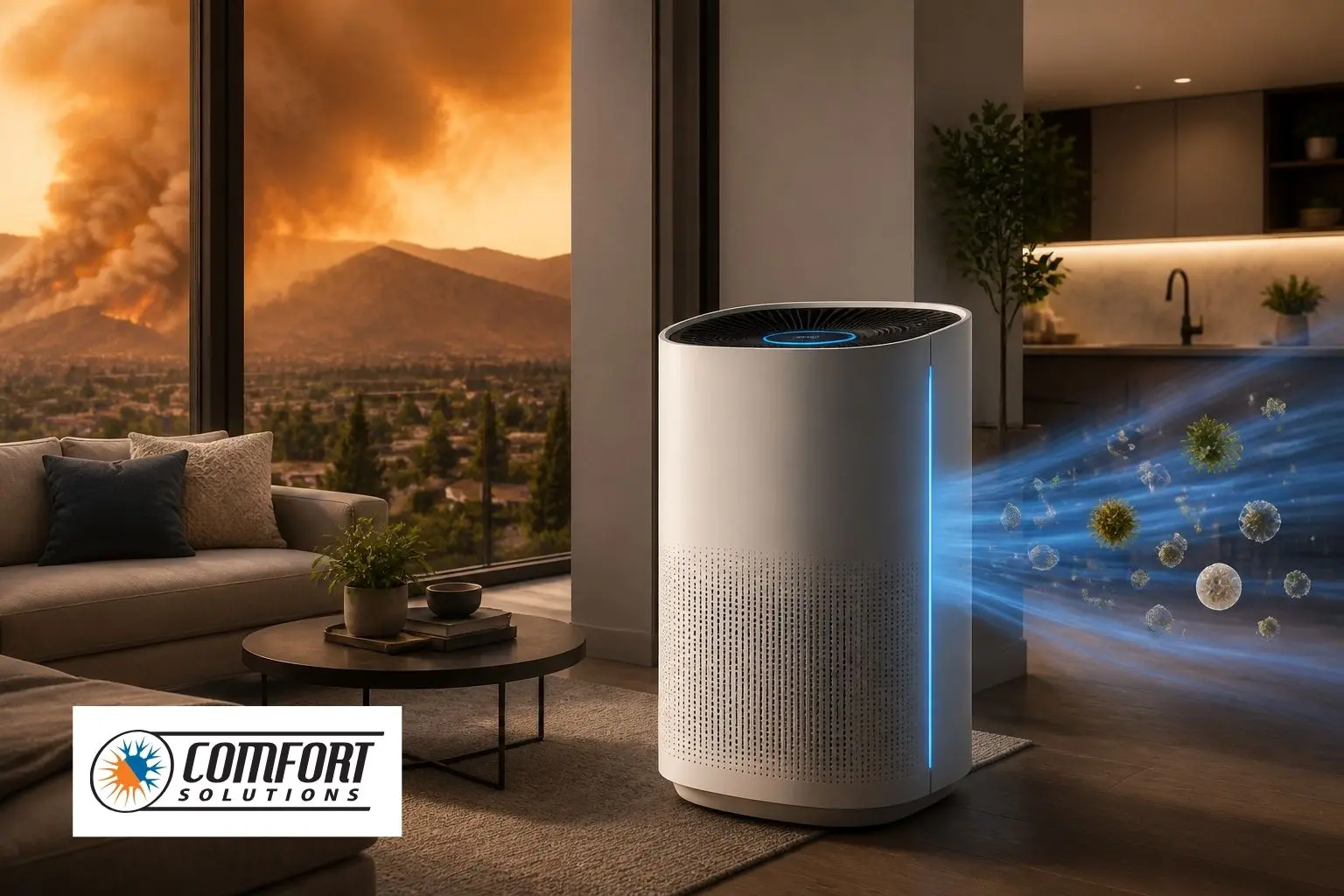
When wildfire smoke rolls into Utah, improving indoor air quality starts with closing windows and exterior doors, setting your HVAC system to recirculate air (if it supports it) with the right filter, replacing dirty filters, and using a properly sized HEPA purifier to create a cleaner-air room.
Tiny smoke particles can enter through gaps around doors, windows, and other openings, while your HVAC system may continue circulating particles that have already entered. Because those fine particles can affect breathing, heart health, comfort, and safety, Wasatch Front homeowners need a plan that limits smoke infiltration, reduces indoor pollution sources, and tracks local smoke conditions as they change.
The practical steps below focus on what to do during smoky conditions, including HVAC settings and filter choices, cleaner-air room setup, routine maintenance, and when an equipment check or upgrade makes sense, without assuming every home needs the same fix.
Seven Steps to Improve Indoor Air During Utah Wildfires
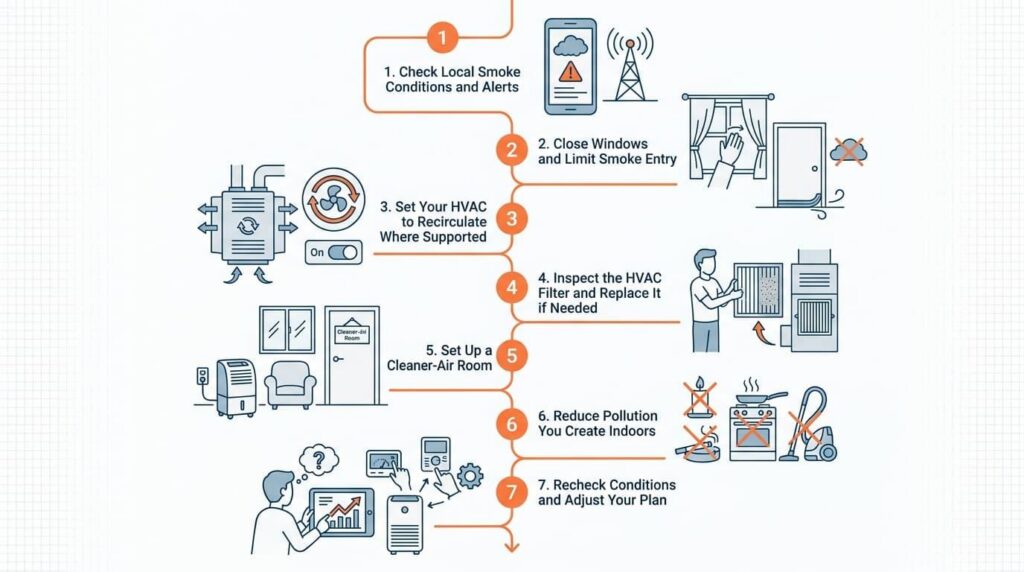
Start with immediate actions, then use the supporting sections to plan longer-term improvements.
You don’t need to tackle everything at once. Follow local evacuation instructions first; staying indoors is only an option when it’s safe to remain at home.
1. Check Local Smoke Conditions and Alerts
Check Utah air quality monitoring for your area before opening windows or planning outdoor time. Look at the reading’s location, pollutant, and update time. A morning reading near Salt Lake City doesn’t tell you what conditions will be in West Haven that evening.
Recheck conditions when smoke or wind changes. Check home and work separately. Agree on who’ll close windows and bring children indoors if conditions worsen.
2. Close Windows and Limit Smoke Entry
When outdoor air quality drops, keep your windows and exterior doors closed as much as possible. Try to limit how often doors are opened during periods of heavy smoke, especially for short trips in and out. Close an attached garage’s door promptly rather than leaving it open while unloading everything.
Check for obvious gaps around exterior doors and window frames, but don’t block required appliance vents or combustion-air openings. A fireplace damper needs appliance-specific instructions; never close it while a wood fire or embers remain. Smoke preparation shouldn’t interfere with safe venting or your ability to leave quickly.
3. Set Your HVAC to Recirculate Where Supported
Your HVAC system can help maintain cleaner indoor air during a smoke event, but the settings and filter you choose are crucial. If it has a fresh-air intake, follow its instructions for closing that intake or using recirculation. Not every thermostat has a recirculation button, and fan settings aren’t the same as ventilation settings.
For central systems that support it, running the fan more often can move more air through the filter. Confirm the setup first; recirculating air through an unsuitable or poorly fitted filter won’t deliver the result you’re expecting.
Utah homes with evaporative, or swamp, coolers need a different plan because these systems bring outdoor air inside. Use them sparingly during smoke if the intake isn’t appropriately filtered. Don’t improvise rooftop modifications or let the house become dangerously hot; arrange alternative cooling or go somewhere cooler and cleaner.
4. Inspect the HVAC Filter and Replace It if Needed
Check the filter’s condition and fit before relying on the HVAC system for filtration. Follow the equipment’s shutdown and replacement instructions, note the size printed on the filter, and install the replacement in the indicated airflow direction. Don’t leave gaps around the frame or run the system without its filter.
Keep a compatible spare on hand, so you’re not searching for the right size during a smoky week. The filter-selection section below explains how to choose the efficiency rating without compromising airflow.
5. Set Up a Cleaner-Air Room
Choose a room where your household can comfortably spend time, such as a bedroom that closes off from the rest of the house. Keep its windows and door closed, and use a properly sized portable HEPA purifier. This is a practical starting point when buying equipment for every room isn’t realistic.
Size the purifier for the room’s floor area and ceiling height using the manufacturer’s instructions. Include adjoining spaces unless you can close them off.
Pay attention to the purifier’s recommended room size and smoke clean air delivery rate, or CADR. A unit that’s too small may not move filtered air enough. Keep its intake and outlet unobstructed, run it continuously at the highest comfortable setting, and avoid devices that intentionally produce ozone.
For example, a Sandy family might use a bedroom for quiet activities and sleeping during a smoke event, rather than expecting a single small purifier to handle an open kitchen and living area. Keep the chosen space cool and easy to exit.
6. Reduce Pollution You Create Indoors
Once you’ve limited outdoor smoke, avoid adding pollution inside; the most effective way to do that is source control that cuts indoor air pollutants at their origin. Skip candles, incense, indoor smoking, and aerosol sprays. Choose meals that don’t require frying or broiling, since cooking can release a large number of pollutants indoors, especially from gas stoves. Use kitchen fans or exhaust fans while cooking, and note that some gas stoves can be adjusted to decrease emissions. If your family usually cooks a large evening meal, preparing something simple ahead of a smoky period can make this change less disruptive.
Damp-wipe surfaces and mop instead of dry sweeping, since regular cleaning helps remove dust, pet dander, and other allergens. Avoid vacuuming during smoke unless the machine has a HEPA filter. Cleaning products and air fresheners can be a common source of indoor air pollution, so choose low-VOC options and increase ventilation when conditions allow. If you’re caring for children or an older relative, focus first on the room they’re using; the aim is a manageable routine, not a spotless house.
7. Recheck Conditions and Adjust Your Plan
An indoor PM2.5 monitor can help you track particle trends and compare conditions before and after running filtration. Keep it in a consistent location according to its instructions. A CO₂ monitor measures a different pollutant and isn’t a substitute, and no single sensor reading proves that all pollutants are gone.
Record when readings rise and whether cooking, cleaning, or open windows might explain the change. Bring recurring concerns to your next service visit.
When outdoor air improves, ventilate if local guidance and conditions allow. If the home stays smoky, loses power, or becomes too hot, move to a cooler, cleaner location. Before leaving, confirm that your planned destination is open and has better conditions; don’t assume every public building is a designated shelter.
How Wildfire Smoke Affects Your Indoor Air Quality
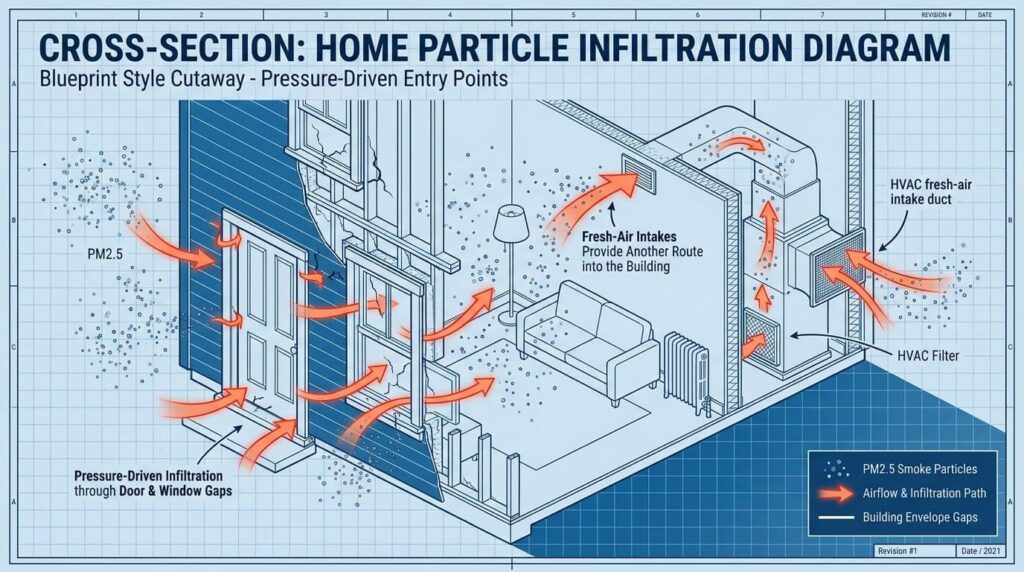
PM2.5 refers to fine particles measuring 2.5 microns or smaller. Because these particles are so small, they can enter through gaps and openings throughout your home’s building envelope. Pressure differences between indoor and outdoor spaces can draw smoke-laden air through these weak points. Fresh-air intakes provide another route into the building, so closed windows don’t eliminate every entry point.
Along the Wasatch Front, smoke can arrive from fires far beyond your neighborhood. Utah environmental guidance explains that smoke can travel long distances and remain trapped by weather patterns. A lack of nearby flames doesn’t mean your home in Salt Lake County or Weber County is unaffected.
Unlike Utah’s winter inversions, wildfire plumes may affect broad areas or a more limited region depending on the fires. That’s why advice for one valley shouldn’t replace checking your local conditions. Keep the focus on the air reaching your home rather than the distance to the nearest reported fire.
Wildfire smoke contains a mixture of fine particles, gases, and other combustion byproducts. Exposure can irritate the eyes and respiratory system and affect cardiovascular health. Children, older adults, and people with heart or lung conditions can be especially sensitive. Follow your clinician’s advice about symptoms or an existing condition that smoke can worsen.
That makes wildfire season different from ordinary dust or pollen problems. Knowing how allergies and your AC system interact is useful year-round, but smoke events require a stronger focus on limiting outdoor air infiltration, improving filtration, and keeping contaminated air from circulating throughout your home. The steps above address immediate exposure; the following sections help you prepare your equipment.
Choosing the Right HVAC Filter for Wildfire Smoke
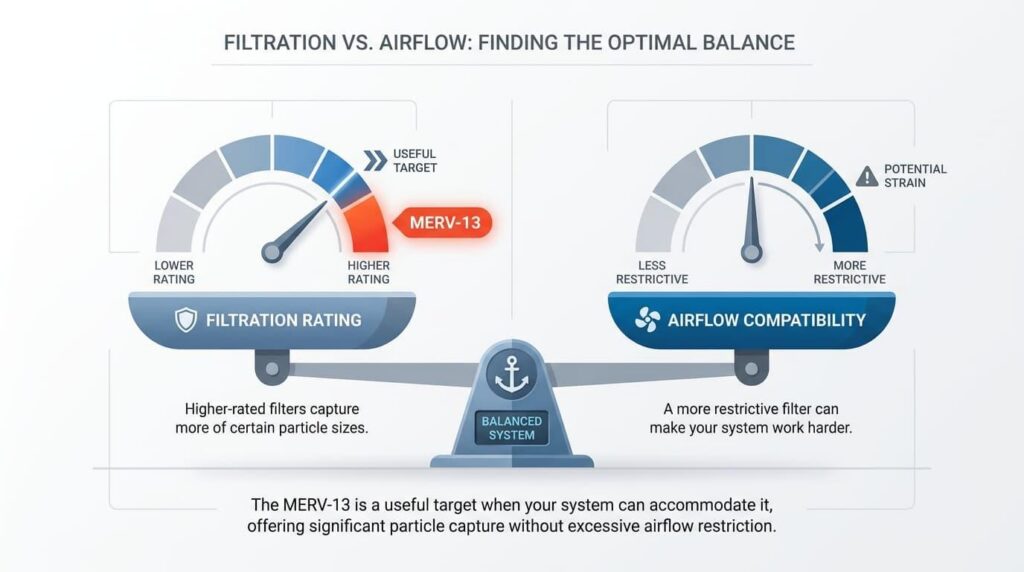
Your HVAC filter can make a noticeable difference during wildfire season, but higher filtration isn’t automatically better. The right choice depends on how well the filter captures fine particles while still allowing your HVAC system to move air properly. Start with compatibility rather than the largest number on the package.
Balance MERV Ratings With System Compatibility
MERV-13 is a useful target when your system can accommodate it. Higher-rated filters capture more of certain particle sizes, but that doesn’t make the highest available rating the right purchase. For example, a filter that physically fits a West Haven home’s slot still needs to meet the equipment’s airflow requirements.
That doesn’t mean you should automatically install the highest-rated filter available. A more restrictive filter can make your system work harder, particularly if your equipment isn’t designed to handle it. Before upgrading, check your manufacturer’s recommendations or talk with a technician about choosing the right air filter for your system.
Check Filter Condition During Prolonged Smoke
Wildfire smoke can load up a filter much faster than normal household dust. Instead of relying on your usual replacement schedule, check the filter regularly when smoke levels are high. Replace a dirty filter according to the equipment instructions, and note the date so you can adjust the next check to actual conditions.
If airflow stays weak after fitting the correct replacement, arrange an equipment check. Photograph the filter label so the technician can confirm its dimensions and rating.
Keep Your HVAC Ready for Heavy Smoke
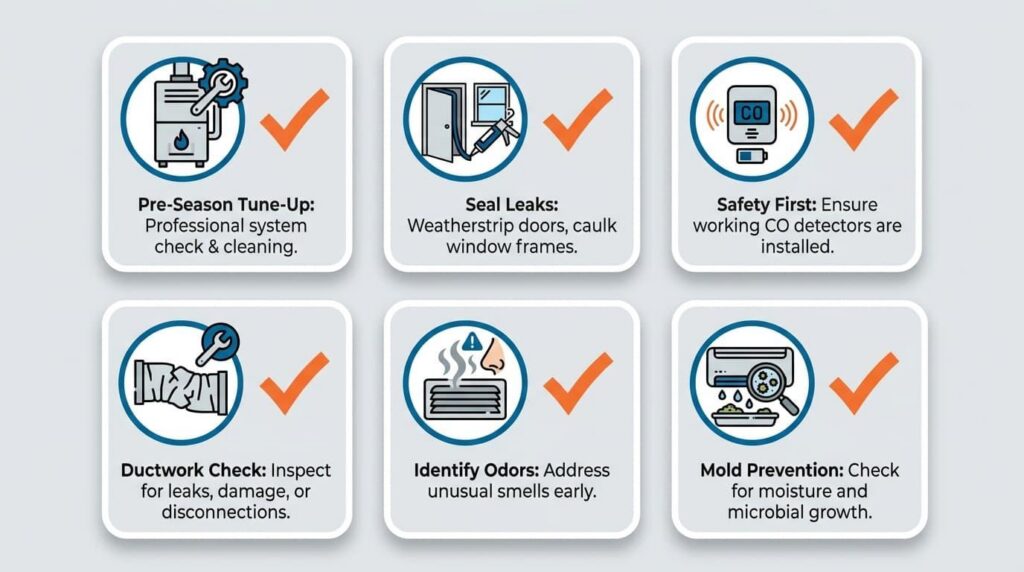
A pre-season tune-up is a good opportunity to make sure your system is ready for the extra workload. Your technician can check airflow, inspect key components, and make sure your filtration setup is appropriate for your equipment. In homes with fuel-burning equipment, working carbon monoxide detectors are essential for safety. Addressing problems early matters when keeping windows closed removes your usual fallback for an uncomfortable room.
Don’t wait for the first smoky day to look for places where outdoor air can get inside. Weatherstripping around doors and caulking around window frames can help tighten up your home’s envelope. You can also check attic hatches and utility openings for obvious gaps. Handle building repairs separately from HVAC maintenance, and don’t seal appliance vents or compromise required ventilation. If sealing work could affect older materials, avoid disturbing asbestos-containing materials; professional sealing can reduce indoor pollution where they are present and lower the health risk from damaged surfaces.
An AC tune-up checklist should cover filter fit and condition, blower operation, and components that affect airflow. Ask which checks are included before the appointment. A routine equipment visit isn’t automatically a comprehensive duct inspection or a pollutant-specific indoor air test.
Loose connections and damaged sections are signs your air ducts need repair or replacement. Explain whether uneven room temperatures are longstanding or new; don’t attribute every airflow issue to wildfire smoke.
Avoid common air conditioner mistakes such as postponing service when cooling changes. For example, if an upstairs Sandy bedroom becomes uncomfortable whenever you close its windows, mention that before smoke season. The practical question is whether the room can stay usable when outdoor ventilation isn’t appropriate.
It’s also worth paying attention to unusual HVAC odors during smoke season. New or persistent smells can point to an issue that deserves attention rather than something to simply ignore. Concerns involving mold and air conditioning may require investigating moisture and affected components; replacing a filter doesn’t address the underlying source.
At Comfort Solutions, our preseason HVAC maintenance can help identify equipment concerns before a smoky stretch. Tell us about weak airflow, unusual noises, or changes in cooling when you book, so the visit starts with the issues affecting your household.
When Is It Time for Whole-Home Air Quality Products?
A portable air purifier can work well for one bedroom or living room, but it may not be enough when smoke and other pollutants affect the entire house. For broader coverage, whole-home air purification systems are worth considering if your equipment supports them. A whole-home label alone doesn’t establish better smoke removal.
Comfort Solutions can help you discuss filtration upgrades for your existing HVAC system. For a West Haven household using several bedrooms, for example, the decision should account for room coverage, system runtime, replacement filters, and ongoing maintenance, not just the device’s marketing claims.
Compare Your Filtration Options
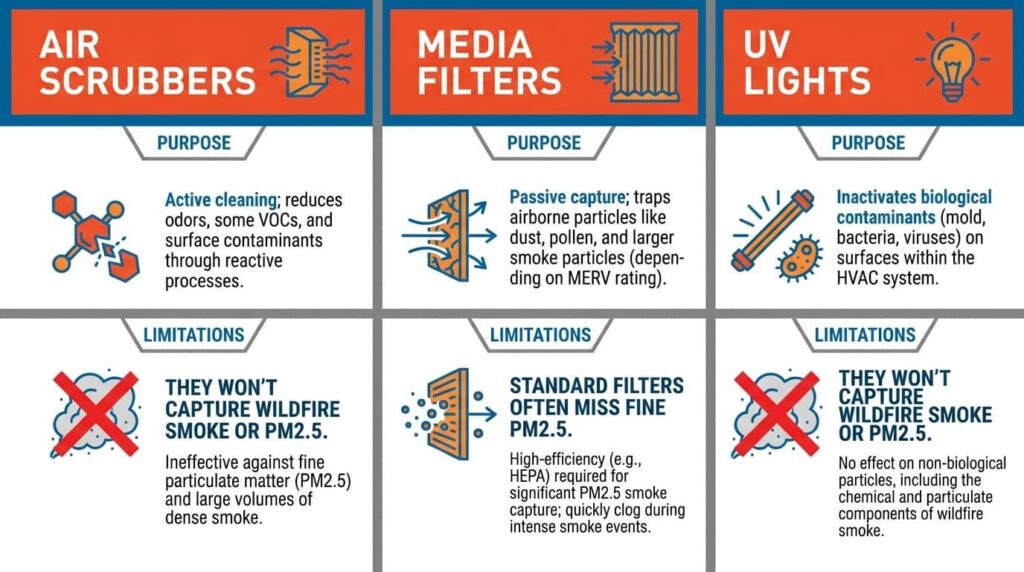
Air Scrubbers
The label ‘air scrubber’ doesn’t refer to a single standard technology. When considering air scrubbers for home use, confirm what the proposed model removes and whether its testing addresses smoke particles. Ask about installation requirements, maintenance, and any ozone emissions before treating it as a solution for wildfire exposure.
Activated carbon can help with some gases when there’s enough of the right media, but particle filtration and gas removal aren’t interchangeable. A thin odor-control layer isn’t evidence of broad gas protection. No air cleaner removes every pollutant, so this equipment should complement smoke-entry control rather than replace it.
Media Filters
If your main concern is dust, pollen, or wildfire smoke, upgrading your HVAC filtration may be enough. The key is choosing a filter that matches your equipment. A technician can check your system’s airflow and static pressure before recommending an upgrade. A deeper media filter can provide more surface area, but its dimensions and airflow requirements must still match the system.
If you’re already replacing aging equipment, the benefits of upgrading your AC system can include planning compatible filtration at the same time. That doesn’t mean wildfire preparation requires a new AC. Compare the work needed to improve your existing setup with the reasons you’re considering replacement independently.
UV Lights
UV lights serve a different purpose from particulate filtration. Installed inside your HVAC system, properly designed UV treatment can help control certain biological contaminants, including mold and bacteria, on components such as the coil. They won’t capture wildfire smoke or PM2.5, so they shouldn’t replace a quality air filter.
You don’t necessarily need every available air quality product. The best approach is to identify what’s affecting your home’s air and choose equipment that addresses those concerns without compromising your HVAC system’s performance. If a proposal includes UV, ask which separate problem that component is intended to solve.
Get Your Home Ready for Utah’s Wildfire Season
Improving indoor air quality during Utah’s wildfire season starts with a plan your household can follow. Check local conditions, close windows and doors, use compatible HVAC settings and filtration, create a cleaner-air room, and reduce indoor particle production. Keep monitoring conditions because smoke can shift across the Wasatch Front, and leave if your home becomes too smoky, loses power, or can’t stay safely cool.
Preparation also matters before the next smoke event. Replace overdue filters, address airflow or cooling concerns, and choose air-cleaning equipment based on room coverage and system compatibility, rather than assuming every home needs the same product. Keep humidity levels between 30% and 50% to help prevent mold and dust mites, especially in damp areas. Indoor plants can add visual appeal and some minor pollutant absorption, but they should not replace ventilation, filtration, or source control.
Comfort Solutions provides indoor air quality services for Utah homeowners who still have questions about their equipment or filtration after taking those initial steps. Tell us your location, HVAC setup, filter information, affected rooms, and what you’ve already tried. We’ll help identify the most appropriate service or upgrade for your home.
Schedule Your Indoor Air Quality Assessment
Frequently Asked Questions About Utah Wildfire Smoke
These answers cover decisions that often come up once you’ve put the basic smoke precautions in place.
Is it better to stay inside when air quality is bad?
Yes, when local guidance recommends staying indoors. Keep windows and doors closed, use HVAC recirculation when available, and run a properly sized air purifier to reduce indoor smoke exposure.
What are the signs of poor indoor air quality in your home?
Smoky or stale odors, visible haze, irritated eyes, coughing, or unusual HVAC smells can indicate an indoor air quality problem and potential health concerns due to high levels of indoor pollutants. An indoor PM2.5 monitor can provide a clearer picture of what’s happening by tracking fine particles correlated with higher mortality rates.
How do you improve indoor air quality quickly during a smoke event?
Close windows and doors, switch your HVAC to recirculation, and use a properly sized HEPA air purifier in the rooms you use most. Check your filter and replace it if it’s dirty.
Can an air purifier remove wildfire smoke from my home?
A HEPA purifier can capture fine particles from wildfire smoke, but its effectiveness depends on proper sizing and placement. Run it continuously in the room where your household spends the most time.
Should you turn off your HVAC during a wildfire smoke event?
Not necessarily. If your system can recirculate indoor air, running it with an appropriate filter can help remove smoke particles. Check with an HVAC professional to confirm the filter is compatible with your system.
How often should you check your air filter during wildfire season?
Check your filter more often when smoke levels are high, as particle buildup can occur faster than usual. Replace it when it becomes dirty or noticeably restricts airflow rather than waiting for your normal replacement schedule.
Recent News
Furnace Tune-Up Cost in Sandy, UT: What Homeowners Need to Know
September 28, 2026

How Much Does It Cost to Replace a Furnace in Sandy, Utah: A Homeowner’s Guide
September 23, 2026
How Long Do Furnaces Last for Salt Lake City Residents? A Guide to Warning Signs and Replacement Timing
September 7, 2026
AC Stopped Working in Ogden? Common Causes and What to Do Next
August 24, 2026
HVAC Maintenance Services in West Haven, Utah: Fall Checklist for Homeowners
August 19, 2026
Best AC for Ogden Home: The Homeowner’s Guide to Choosing the Right AC System
August 14, 2026